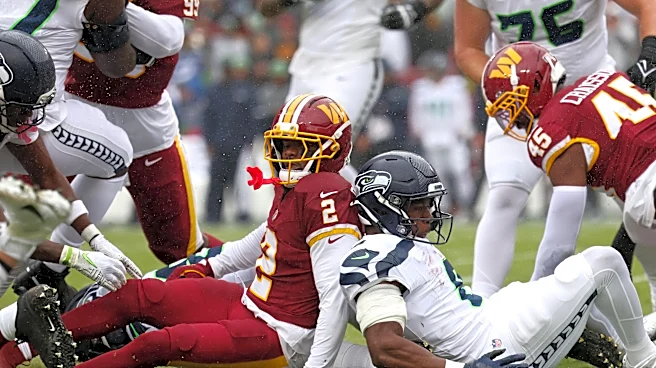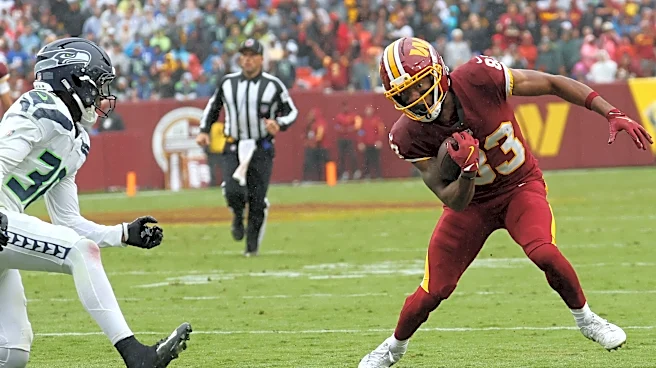


Shaky defensive backfields have cost the best teams in the league big games so far this regular season. The Denver Broncos couldn’t tackle the Kansas City Chiefs once they reached the second level, and got embarrassed in Week 1. The Detroit Lions’ defense couldn’t keep track of Josh Allen and the Buffalo Bills’ receivers when they got blown out in Week 2. In Week 3, the Seattle Seahawks fell victim to the Washington Commanders. They were down their first four safety options, and were forced to play it safe while executing their usual coverages.
To lose one starting safety is tough, but after losing the first four on the depth chart, the entire game plan needs to be rebuilt. That’s exactly what head coach Mike Macdonald and defensive coordinator
Aden Durde have had to do for the past month. Julian Love and Ty Okada are injured and Nick Emmanwori has been on a limited snap count as he returns to full health.
This hole can be traced back to Coby Bryant’s departure in free agency. Bryant led the entire Seahawks defense in total snaps in 2025 with 1,163 (Linebacker Ernest Jones IV was second with 1,086). Cornerback Riq Woolen (962) was third on that list, who they also lost to free agency. The team invested second- and third-round picks in Bryant’s and Woolen’s replacements, Bud Clark and Julian Neal. Clark broke his right ankle during the preseason and is out for the year. Neal missed most of training camp with a lower-body injury and has taken only two defensive snaps through three weeks.
As a result, Seattle had AJ Finley and Rodney Thomas II take all 69 snaps together as their safety duo on Sunday. They signed both as practice squad depth right when the new league year began, and are more than thankful they did. If you want to feel ‘safe’ about your safeties, you must maximize their ability to communicate. Former Seahawks safety Quandre Diggs showed this as well as any. He made up for a lack of size and speed by controlling traffic on the backend and preventing big plays.
Similar to a center back partnership in soccer, this communication takes experience and time to become effective. Finley and Thomas have been able to work on this with each other throughout the offseason, but they can’t be expected to replace Love’s production. He was the best safety in the NFL through two games. His athleticism and quick eyes allowed him to play the pass conservatively while flying downhill in the run game. This is arguably the biggest key to Seattle’s defense, as Tom Brady identified during last year’s divisional playoffs.
With three All-Pro candidates in Witherspoon, Emmanwori, and Love, and Bryant a high-profile starter himself, the Seahawks were able to play two-high safety shells while defending the run effectively. Without Love, Bryant, and Emmanwori on a snap count, it’s no wonder they had to cede some ground last week. NFL defenses will rarely risk getting beat over the top to stay all in on run support, even when they prioritize it as much as Seattle does.
With Love on track to play Sunday, the secondary’s problems might be fixed. If not, maybe Emmanwori can play more than half the game and solidify Seattle’s structure in the backend. Either way, Finley and Thomas will continue to see opportunities until Okada returns. Even though they face a 0-3 Los Angeles Chargers team in Week 4, Justin Herbert has a howitzer of an arm that will keep Seattle’s defense deep and honest.
This article originally appeared on Seahawks Wire: Why Seahawks' elite safety room barely scraped by vs. Commanders