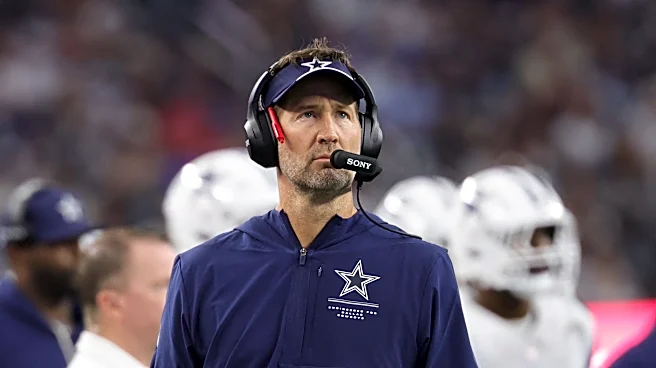


Asked Tuesday how the Cowboys can get more from their pass rush, Dallas head coach Brian Schottenheimer pointed first to the players covering receivers.
“The coverage has to be better,” Schottenheimer said. “You want to get better pass rush, got to have better coverage.”
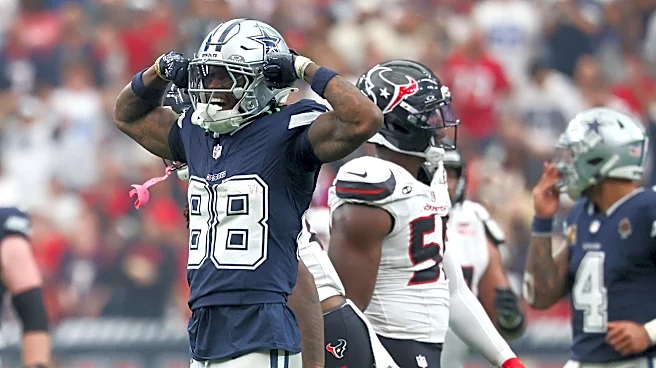
Dallas found reasons for encouragement against Houston, including sacks from Quinnen Williams and Rashan Gary. Schottenheimer praised Williams’ performance and described the interior rush as “really, really good,” adding that it could help create opportunities for the outside rushers.
But encouragement and confirmation are different things. The performance against Houston gave Dallas something to build on, not a clean bill of defensive health.
Houston left important questions unanswered
Before Sunday, Schottenheimer had identified
several recurring challenges: stopping the run, containing athletic quarterbacks and generating pressure against offenses that release the ball quickly.
The Texans presented a different assignment.
Houston ran just 19 times, averaging 3.3 yards per carry. Every previous Dallas opponent had attempted at least 30 rushes. Limiting the Texans’ efficiency was encouraging, but the Cowboys did not have to withstand the same sustained rushing workload.
C.J. Stroud, the third-most-sacked quarterback in the league, also presented fewer escape-and-extend challenges than the quarterbacks Dallas faced in its first three games. That made Sunday an incomplete test of whether the Cowboys had corrected their containment problems.
The passing numbers offered another reason to keep the celebration measured. Stroud’s 3.15-second average time to throw was the longest of any opposing quarterback Dallas has faced this season, yet his pressure rate (28.6%) was the lowest.
That combination complicates the idea that the pass rush turned a corner. Stroud held the ball longer, but Dallas still pressured him less frequently. The winless quarterback also produced the highest completion percentage the Cowboys have allowed this season (67.7%) and his own highest passer rating of the year (126.7).
Add Houston’s explosive plays, and the encouraging moments did not amount to a complete defensive repair.
Chasing sacks cannot create escape routes
Schottenheimer’s emphasis Tuesday made clear that the pass rush cannot be evaluated in isolation.
“Got to be stickier in coverage,” he said.
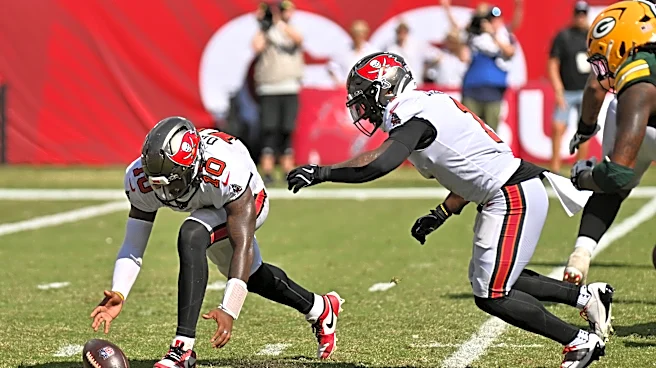
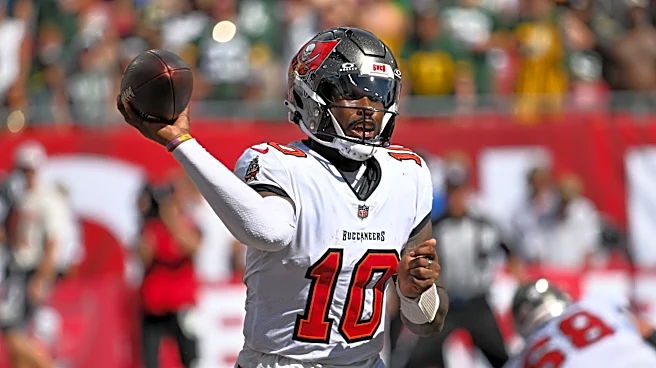
But tighter coverage is only part of the equation as Dallas prepares to face another athletic quarterback Thursday against Tampa Bay. Baker Mayfield’s backup, Jalon Daniels, may be an undrafted rookie, but that is no reason to overlook the challenge he presents.
In the Buccaneers’ Week 4 loss to Green Bay, Daniels completed 19 of 27 passes and ran eight times for 55 yards. Schottenheimer singled out one explosive run on which Daniels “got loose in the front side B gap.”
His résumé may be different, but his mobility presents a familiar problem for a Cowboys defense that has struggled to contain athletic quarterbacks.
Dallas must generate pressure without giving Daniels a way out. Schottenheimer identified gap integrity and rush-lane discipline as essential corrections.
“We can’t try so hard to go get sacks that we open up an A gap or open up a B gap,” he said. “This guy is very, very good at kind of stepping up, in, and out, not out. So, he doesn’t vacate around the tackles. He kind of steps in and up and out. … We got to have our gap discipline.”
Pressure without an escape route
Schottenheimer went on to share even more details about how the Cowboys defense is expected to function as well as challenges presented by their match coverage. Once edge rushers get even with the quarterback, Schottenheimer wants them closing toward him, not continuing upfield and giving him a way out. The goal is to squeeze the pocket without opening an escape route in the chase for a sack.
That becomes especially important in Dallas’ match coverage, where defenders may be following receivers rather than watching the quarterback. If he takes off, they might not see it right away.
That doesn’t necessarily mean they’re looking in the wrong place. They can be doing their coverage jobs correctly and still miss the start of a scramble. That puts the responsibility on the defensive front to keep the quarterback contained.
“And so that’s part of the reason why we’ve let guys get out a little bit,” Schottenheimer said.
Linebackers face another difficult choice. Step forward to stop a potential scramble, and an experienced quarterback can throw behind them. Stay back, and the running lane can remain available.
“We got to keep him in the pocket and make him be a passer,” Schottenheimer said.
On Monday, Schottenheimer explained why he wanted to recognize the positives.
“When you win, you celebrate. You find the positives … because you want to celebrate those things.”
He also said the areas needing improvement are “pretty obvious.”
Both assessments can be true. Williams’ performance and the interior pressure deserve recognition. But Thursday’s test is not simply whether Dallas collects more sacks. It is whether the Cowboys can pair tighter coverage with a disciplined rush and make the encouraging moments look less like exceptions.
This article originally appeared on Cowboys Wire: Schottenheimer explains what’s missing from Cowboys’ pass rush