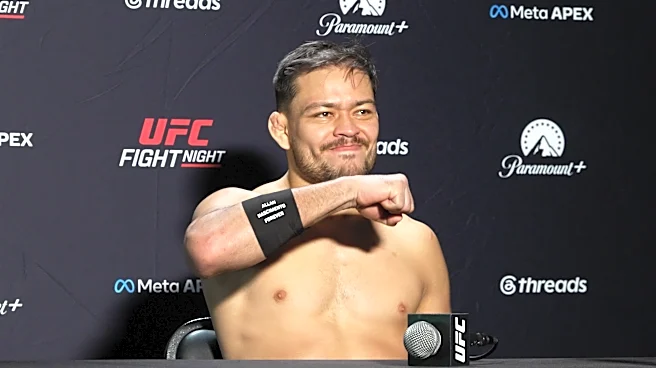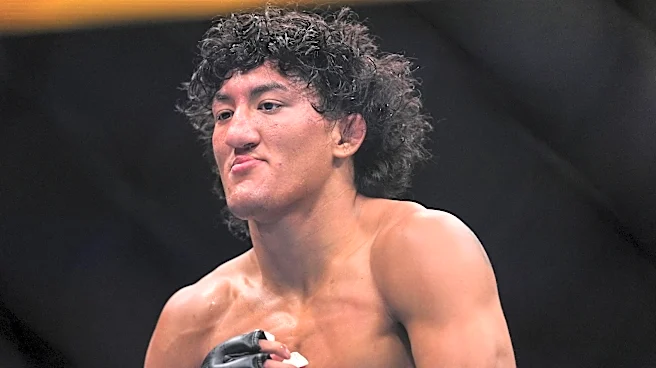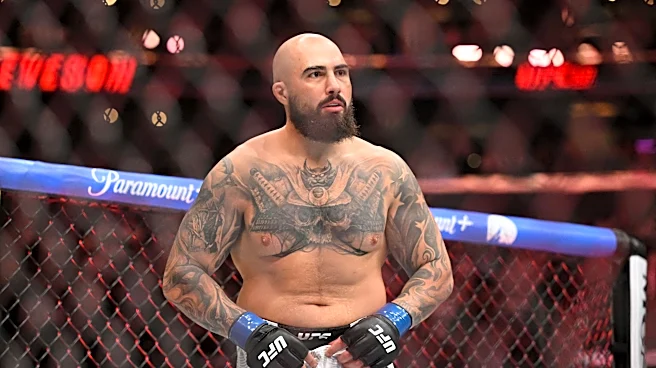



Sean Sharaf has made plenty of headlines this past month.
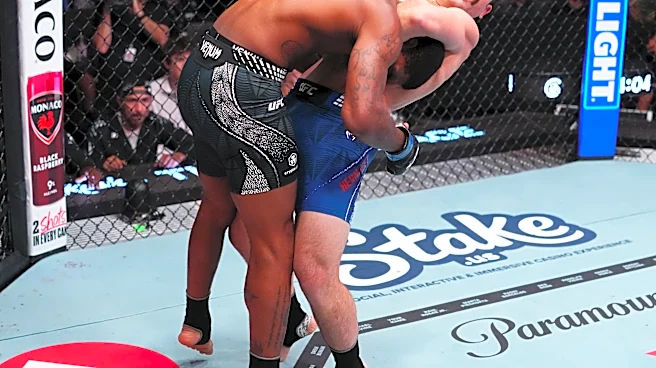
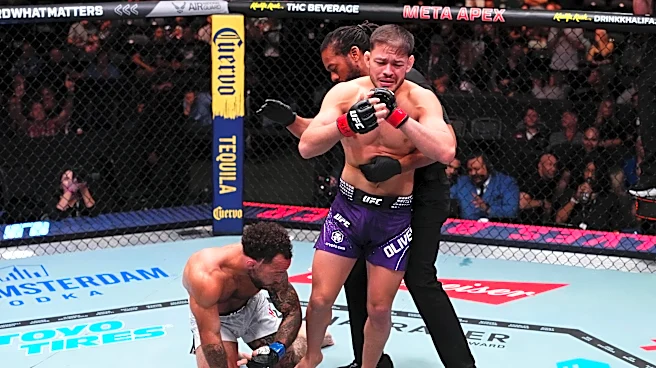
About two weeks ago, on the main card of UFC 331, Sharaf pulled off one of the biggest upsets in MMA history. In a fight many thought he was bound to lose, Sharaf knocked out Olympic gold medalist Gable Steveson, who was undefeated at the time, in just 12 seconds. The result shocked many in the MMA world, but that wasn't the only thing that left fans in disbelief. Days before the fight, Sharaf revealed that he had accumulated $600,000 in credit card debt.
Sharaf's financial troubles began during the pandemic, driven by a series of bad decisions.
"I had this period where I couldn't fight, and I couldn't train clients, and I got into option trading," Sharaf said on "The MightyCast." "I started
learning how to make money digitally. I found a few videos of guys making like thousands of dollars, and they had 40 grand on their phones, and I was like, 'I want to learn how to do this.' So, I started learning how to option trade, and I learned by myself on YouTube.
"The whole debt thing – some of it came from option trading, some of it came from gambling, but bro, I've had zero sponsors. I've had no f*cking sponsors. All of my tattoos are paid for by credit card. I got f*cking PRK and LASIK surgeries on my eyes on my credit card, I took my mom to Mecca on my credit card. I was just like, 'Charge it to the f*cking card, man. I don't give a f*ck.' I was just so in on this; all I wanted to be was a f*cking UFC fighter. I'm very financially irresponsible. I'm a f*cking Marine. We literally get financially audited. This is not financial advice; this was just my logic at the time. COVID was happening; I was just like, 'I don't f*cking care. I just want to be a UFC fighter.'"
Gambling, option trading, and reckless spending got Sharaf in the hole. He was surprised to find himself in this situation, given that he had straightened up his life when he joined the Marines prior to his UFC run. However, when COVID-19 hit, Sharaf went back to some old habits.
"I was the most disciplined guy," Sharaf said. "I still had that Marine mindset. I was so driven when all this stuff happened. I reverted to my old ways of smoking weed. I used to be a huge pothead before the Marines. I was smoking, drinking, and doing coke since I was like 13, 14 years old. I had closed that chapter when I became a Marine. I was really into coke at the time, and I quit cold turkey, on my father's grave. I was so disgusted with myself and completely changed my life to become a United States Marine, but when COVID came around, I opened up Pandora's box."
During this freefall into credit card debt, Sharaf made little money from his fighting career, if any at all. His desire to become a UFC fighter drove him to Las Vegas, where he started training at Xtreme Couture. Looking to get his foot in the door, Sharaf began visiting high-limit gambling rooms, hoping he'd run into UFC CEO Dana White – who's an avid gambler.
"When I got to Vegas, that's when I started gambling," Sharaf said. "I was like, 'Maybe I'll go play high-limit at f*cking Red Rock, and I can meet Dana.' That was my thought process. I started playing high-limit, gambling money on margin, and doing the dumbest sh*t."
Apart from his standard fight purse for his win at UFC 331, Sharaf also won the "Proper Chaos" bonus – a $50,000 bonus created to promote Paramount+'s show "MobLand." White said he would match the bonus with his own money, giving Sharaf a total of $100,000 so he could pay down some of his credit card debt.
This article originally appeared on MMA Junkie: UFC heavyweight Sean Sharaf explains how he got into massive $600K debt