


As numerous NFL general managers often say, much of the narratives and speculation leading up to the trading deadline is simply not true.
And yet, when breathless league “insiders,” whose sources are largely agents, spout incomplete rumors about what’s supposedly being offered, many fans and, yes some in the media, lap it up and believe it as if it’s gospel without asking important questions about those reports much less employing critical thinking about whether it actually makes sense.
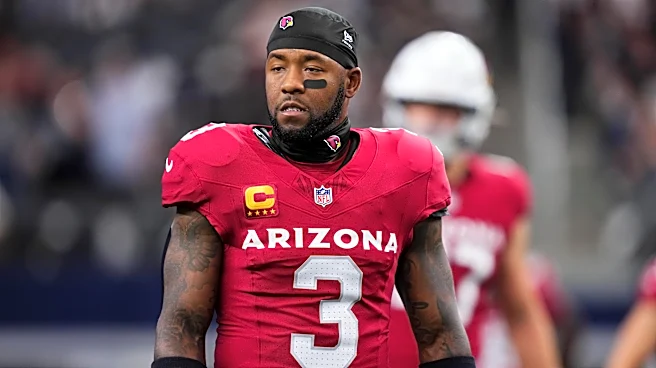
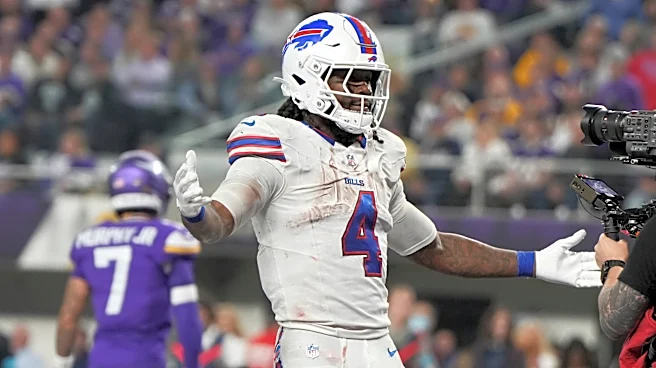
That was surely the case surrounding the Buffalo Bills and their alleged serious interest in Arizona Cardinals safety Budda Baker.
First, there were the reports that the Bills had offered the Cardinals a “quality Day 2” pick for Baker. Then, after the Bills acquired
safety Amani Hooker from the Tennessee Titans, reports circulated that Buffalo had offered a “compelling package.” One league reporter, Jordan Schultz, claimed the Bills were “dying” to acquire Baker and that the Cardinals could have received much more than that bandied about “quality Day 2” pick.
There were, of course, no details, because whatever agent Schultz talked to didn’t provide any specifics.
Many have run with all that, proclaiming it to be worthy compensation for Baker, who will be 31 in January and is scheduled to enter the final season of his contract.
But what does it all mean in reality? The important question is the definition of a “quality Day 2” pick or a “compelling package.” No one even wondered or asked those questions. After all, there were headlines to write, promos to be blasted (“DEADLINE DISASTER” for one) and criticisms to be leveled at the clueless Cardinals and general manager Monti Ossenfort.
The basic truth is that Day 2 has two rounds, the second and third, and the 7-1 Bills are very likely to be selecting quite late in both rounds. Schultz’s report insinuated the Cardinals could have acquired a first-round pick, which is pure fantasy.
But that’s not the end of the story. No one knows from outside the organizations, and it obviously wasn’t reported or even speculated what else might have been included in the actual trade negotiations, even if they were actually happening.
It’s certainly plausible and perhaps likely that if a second-round pick was being offered, the Bills were also demanding a pick back from the Cardinals while also wanting them to pay a chunk of the salary Baker is owed for the rest of this season and in 2027.
All anyone had to do was remember back only a week when there was widespread surprise that the Cardinals had acquired a fourth-round choice from the Baltimore Ravens for quarterback Jacoby Brissett. They did, but that incredulity was tempered when it was learned that the Cardinals were sending a fifth-round pick back to the Ravens and that the Cardinals are paying about half of his remaining salary for this season.
Yes, the Cardinals did get a fourth-round pick, but the overall value isn’t the same as a stand-alone pick would be rather than one being sent in the following round.
Still, the real gist of this story, according to my sources (none of whom are agents and some who are familiar with the Bills' thinking), is that they had been working on the Hooker deal for at least one or two weeks prior to the deadline. They were in search of a safety proficient in pass coverage, something that is not Baker’s strong suit.
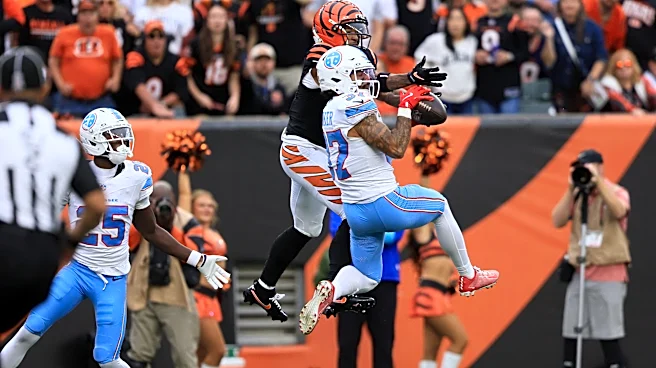
Hooker is currently tied for the NFL lead with five interceptions, and he has 17 in his 7.5-year career, including two seasons with five and one with four. Baker has nine in 9.5 seasons, two in the last 3.5 seasons, and his career high is three in 2021.
Most important is that Hooker is two years younger (he turns 29 in June) and is under contract through 2028 with a salary this year of $8.4 million, $6 million less than Baker’s $14.4 million; $9.57 million in 2027 compared to Baker’s $17.075 million that includes a $1 million roster; and $12.79 million in 2028 that includes a $1 million roster bonus.
The contract terms are significant because to complete the Hooker trade, on Tuesday afternoon, the Bills had to do a quick restructure of left tackle Dion Dawkins’ contract to remain compliant with the salary cap.
My sources insisted that the Bills weren’t as serious about Baker as the reports suggested. Lending credence to that is that it was also reported in Buffalo that the Hooker deal came together late on deadline day and that general manager Brandon Beane believed no deal for a safety would be consummated. That means Baker wasn’t on the radar at that point.
The bottom line is that, in my mind, if there were legitimate offers for Baker, all of the above answers Schultz’s startling take that he couldn’t understand why the Cardinals didn’t pull the trigger. That’s because he was unable to provide any analysis in his report or consideration of the any of the facts addressed here.
And then there’s this: a crucial aspect that would add to the compelling reason not to make a deal is that rookie quarterback Carson Beck will hopefully be the starter for the final eight games of the season.
You might wonder what that has to do with Baker, or even the fact there was no trade involving edge rusher Josh Sweat, a player I wonder if the Cardinals bring back after this season considering he has two years remaining on his contract with a $17 million (non-guaranteed) base salary and cap charges each year of $23.6 million.
Sweat will be 30 in March, has injury issues and that is why the Cardinals structured his four-year contract in 2025 without any guarantees beyond the first two years. It’s also why there wasn’t much of a market for Sweat, where there has been noise about him wanting a new contract (no thanks).
But back to Beck.
Yes, on one level, the Cardinals need to look to the future and acquire as many draft choices as possible. However, just as important and perhaps for the future is being able to properly evaluate Beck.
The Cardinals' defense has performed much better in recent weeks, so continuing that trend will help keep games competitive, especially considering the current state of the offense surrounding Beck, and thus be able to see how he handles everything beyond the operation and process that head coach Mike LaFleur emphasizes.
Games that get out of hand relatively quickly could change the offensive approach and would surely affect how opposing defenses play with big leads.
So, there’s what I believe is my “compelling package” of all aspects of how this all went down and why it made sense to stand pat.
Some of my critics doubt that I have established sources in my five decades covering the NFL and that all I do is support the Cardinals only because some of my analysis differs from the crowd that apparently wakes up very day looking for something, anything, to criticize.
I know this: Anyone who has objectively read or listened to me over the years realizes that my approach is balanced and thoughtful, rather than knee-jerk and emotional.
Get more Cardinals and NFL coverage from Cards Wire's Jess Root and others by listening to the latest on the Rise Up, See Red podcast. Subscribe on Spotify, YouTube or Apple Podcasts.
This article originally appeared on Cards Wire: Why the NFL trade deadline was quiet for the Arizona Cardinals