


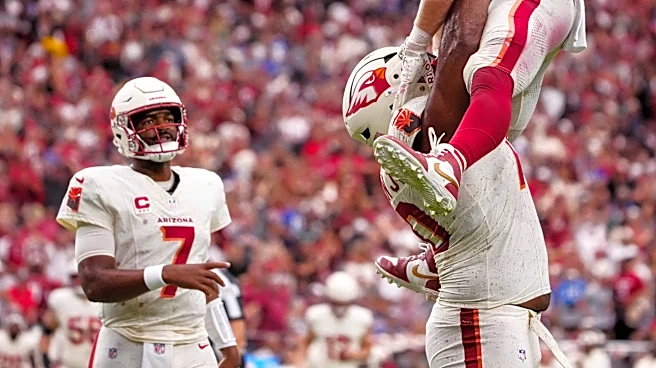
The Arizona Cardinals lost to an NFC West opponent for the eighth straight time on Sunday, falling 36-30 to the San Francisco 49ers on the road. They never had the lead, but they had a pretty good offensive performance.
They finished with 365 yards a week after getting held to only 151.
There were some good things offensively to take away from the game.
These are the biggest observations from the game on offense.
Jeremiyah Love's workload
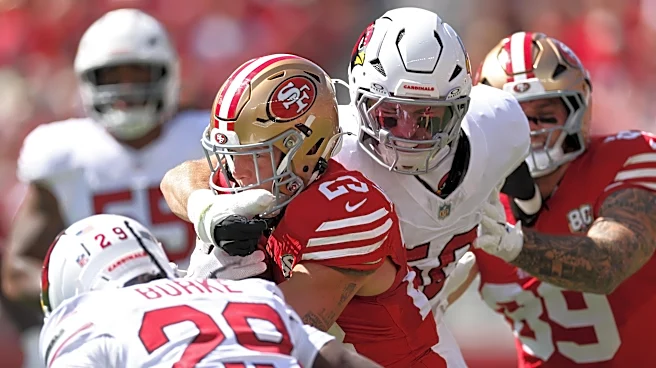
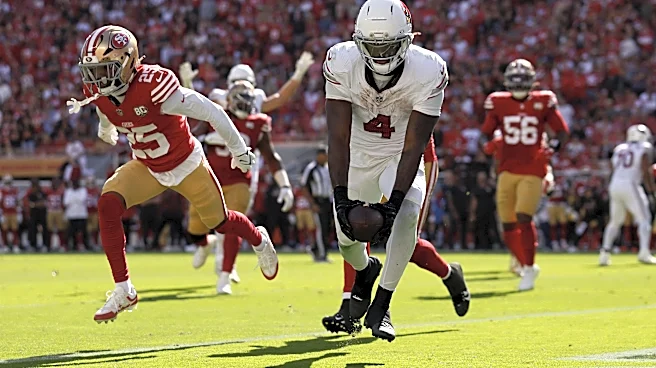
For the first time, Love was featured on offense. He was the starter and played 56 of the 87 offensive snaps, compared to Tyler Allgeier's 31. After 20 combined rushing attempts in Weeks 1 and 2, he ran the ball 21 times for 90 yards. He also scored his second touchdown, this time on a reception. He had five catches for 19 yards and a touchdown, totaling
109 yards of offense. And after averaging 3.7 and 3.2 yards per carry, he averaged 4.3, and his longest run was only eight yards, meaning he was consistently getting positive yards on Sunday.
Big passing yards, but also not great
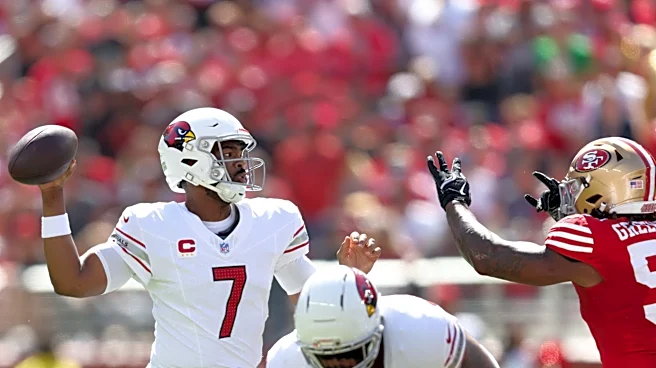
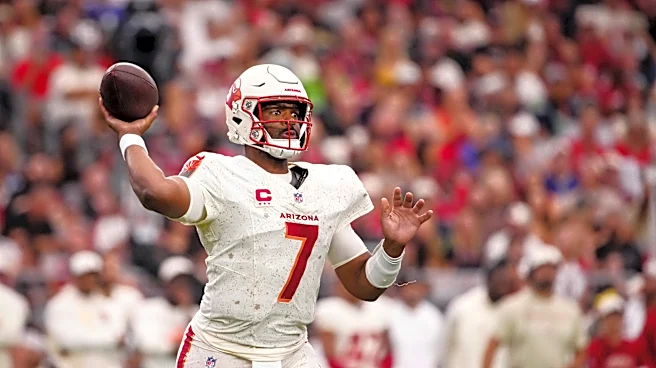
The raw numbers for quarterback Jacoby Brissett look good. He passed for 280 yards and two touchdowns. That is great! He didn't turn the ball over.
However, it took 52 passing attempts, meaning he averaged only 5.3 yards per attempt, which is bad. He had only one pass for more than 20 yards, and only nine of his 38 completions went for more than 10 yards.
Red-zone woes, and then better
The Cardinals' first two trips to the red zone ended in field goals. At that points, in eight trips to the red zone in three games, they had scored touchdowns on three, which is an awful rate.
However, they made three more trips to the red zone after that and scored touchdowns all three times. They are now 6-for-11 scoring touchdowns in the red zone, which isn't good still, but now it isn't awful.
Pass catchers produce, in catches
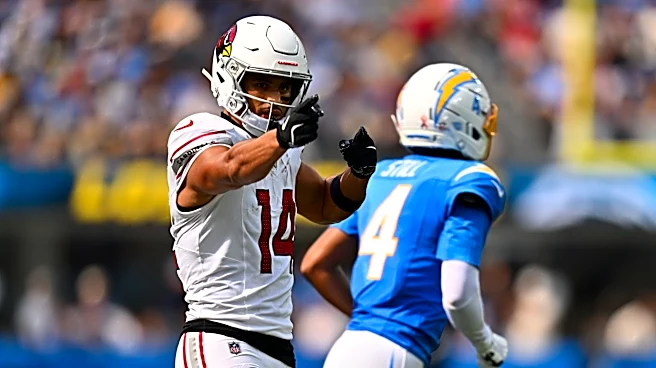
With 38 completions, guys got catches. Michael Wilson had 11 receptions, although it was for only 89 yards. He did score a touchdown. Trey McBride had nine catches for 75 yards.
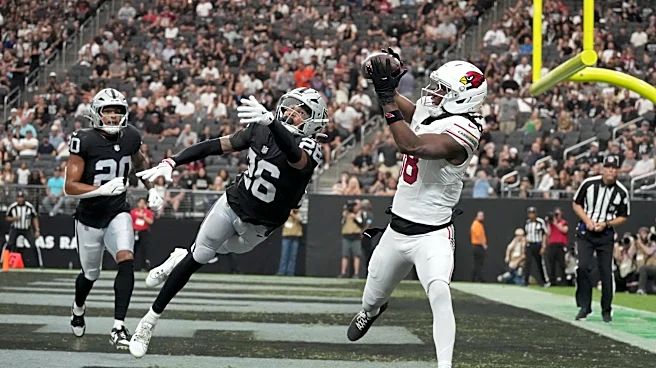
Marvin Harrison Jr. had more looks, getting targeted five times and catching three passes for 40 yards. His 19-yard catch was the longest downfield completion of the game.
Time of possession
The Cardinals controlled the ball, winning time of possession. They possessed the ball on offense for 38:44. They scored 30 points, something that they have not done since 2024. However, the other side of that stat is the fact that they allowed 36 points when the 49ers had the ball for just more than 21 minutes.
Penalty problem
The offense was penalized six times, and another two were declined. They lost 10 yards in penalties on each of their first three possessions, all of which were punts.
Head coach Mike LaFleur said that was the difference between the first and second halves.
“We couldn’t overcome the penalties, and it’s hard to overcome penalties," he said postgame. "We were moving the ball. It was hard in terms of not getting explosives, but we were efficient. Our runs were hitting, but the penalties were knocking us back, and that absolutely killed us. In the second half, we didn’t have penalties. For the most part, we played pretty clean, and because of that, we scored points.”
After three consecutive punts, they scored on six of their next seven possessions, and the one punt they had was muffed and they got the ball back and scored.
Get more Cardinals and NFL coverage from Cards Wire's Jess Root and others by listening to the latest on the Rise Up, See Red podcast. Subscribe on Spotify, YouTube or Apple Podcasts.
This article originally appeared on Cards Wire: 49ers 36, Cardinals 30: 6 observations on offense