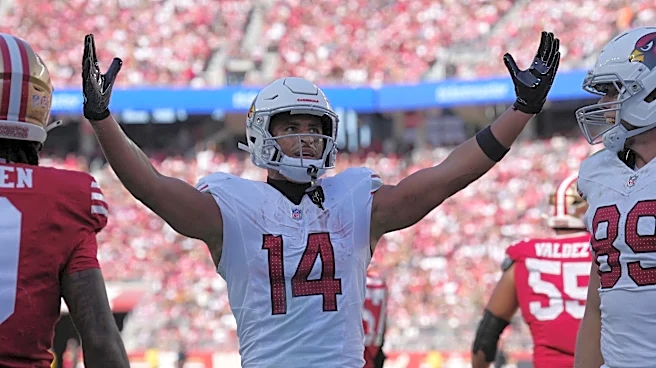


When Arizona Cardinals head coach Mike LaFleur talked to the media Monday, one day after his team’s 36-30 loss to the San Francisco, much of the discussion was about explosive plays, and for good reason.
The Cardinals were generally efficient offensively in the game with four possessions that lasted at least 12 plays from scrimmage.
However, they had no plays of 20 yards or more with the longest run eight yards, while quarterback Jacoby Brissett averaged 7.4 yards per completion and 5.38 yards per attempt.
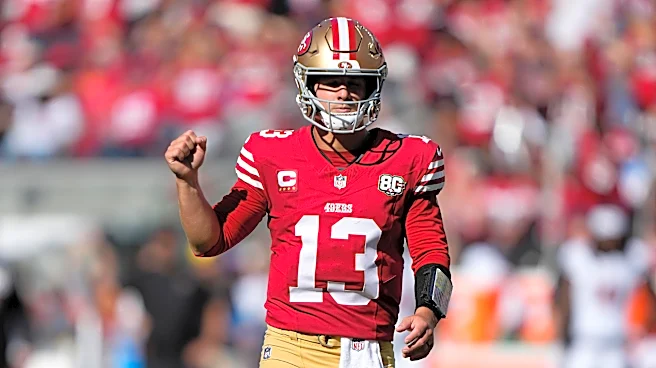
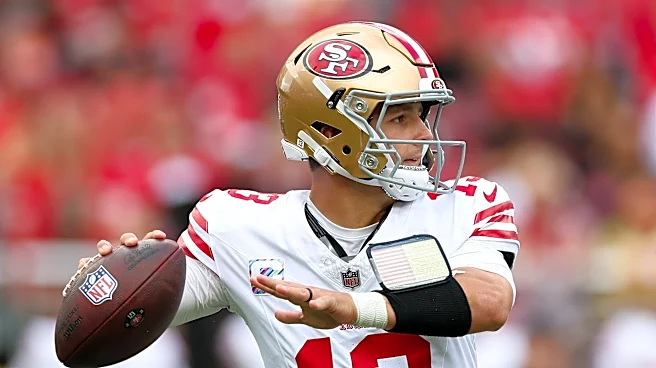
Conversely, the 49ers had six plays of 20 yards or more as quarterback Brock Purdy averaged 19.8 yards per completion and 11.0 per attempt.
In the NFL, where so many games are decided by one score (there were 12 in Week 3), the difference is often
traced to explosive plays for or against. It is notable that after Sunday’s loss, the Cardinals have lost nine consecutive one-score games dating back to Week 3 in 2025.
Even with a small sample size of three games, the Cardinals are currently last in the NFL in average yards per completion (8.0), 31st in yards per attempt (5.57), last in yards per completion against (14.5) and last in average per attempt on defense (9.26).
As LaFleur says often, “It takes all 11. I thought our receivers blocked really well. I thought they were getting connected, but sometimes maybe just not (having their) feet in the ground well enough at times. There are little details across the board, but again, you don’t force those long runs. They just kind of naturally pop. Then in the pass game, it’s a real thing right now.”
Defensively, he said, “There’s no question in my mind that we have the right play-style, but we have to do some of the little things better, and it starts with coaching. (We have to) continue to provide the clarity to these guys so that they are in the right alignments and doing the things necessary to play good team defense. 11 is one.”
It might be one block needed on offense to spring a big play in the run game, or better pass protection that allows Brissett to have time to get the ball down the field.
Defensively, it’s better tackling, while knowing that one player not adhering to the details of their job can result in game-changing plays.
The reality is there’s a lot of good happening on many plays, but the lack of big plays on offense and too many on defense creates slim margins that result in losses.
LaFleur emphasized, “I know this, when you’re trying to play good offensive football in this league and you’re having to do it through drives, drive in and drive out, it’s tough. I actually give our guys credit in terms of — for I’d say the good part of 10 out of the 12 quarters this year - they’ve done a pretty good job of staying efficient, but man, at some point we’ve got to get a little bit more explosive.
“You can’t force that, but I do think there’s been opportunities with the little details in terms of, ‘Hey, we've got them out of there. Let’s check the ball down. There’s a lot of space. Let’s get connected once we get those checked down so that we can turn these six-yard completions into 16, 20, 25 yards — whatever it might be.’ It’s all encompassing.”
He also noted that “a lot of (the 49ers success) was underneath stuff that turned into (big plays). Versus the Rams in Week 1, they basically threw one shot down the field. Everything else was just a dink and dunk and guys were running. The explosive play is the right call at the right time with the right protection and with the receivers getting from point A to point B as fast as humanly possible (with) the quarterback going through his progression, reading with his feet and if it’s not there because the defense dictated it, check it down.”
Realizing that the goal throughout the league is to limit those big plays, LaFleur said, “You have to generate it sometimes through some of those transitions and the YAC (yards after catch) — stuff like that, but it’s not just the player; it’s all-encompassing. It’s everyone else getting connected on the second and third levels, right ball placement — stuff like that. I think we’re close, but we've got to go do it.
“I liked where our guys were getting (to). I liked the spots they were getting when you watch the all-22. I liked the distribution we were getting. It’s easy just to say, ‘Hey, that’s not what we’re doing well right now, so don’t do that.’ No, that’s the easy way out. We need to be all-encompassing. We need to marry the run with the pass. We need to be under center. We need to be doing all that stuff. Not just because we’re hardheaded, because I do believe when we get to the spot we want to on offense, that’s what’s going to make us as good as we can be.”
As he concluded with confidence, “Those have got to organically happen and they will; they’ll pop.”
We’ll see about that while understanding the Cardinals have to also prevent them from “popping” on defense.
A closer look at explosive plays in the NFL
- Five teams with average yards per completion under 10.0: Indianapolis 9.4, N.Y. Giants 9.4, Tennessee 9.2, Washington 9.2, Cardinals 8.0
- Five teams with average per completion of at least 13.0: Baltimore 14.2, Buffalo 14.0, San Francisco 13.2, Carolina 13.0, Green Bay 13.0
- Four teams with average per pass attempt under 6.0: N.Y. Giants 5.77, Tennessee 5.73, Cardinals 5.57, Washington 5.54
- Five teams with average per attempt of at least 8.0: Baltimore 9.80, Buffalo 9.14, San Francisco 9.51, Seattle 8.63, Kansas City 8.29
- Six teams with average per completion against higher than 13.0: Cardinals 14.5, Vikings 13.7, Indianapolis 13.4, Jacksonville 13.2, Chicago 13.1
- Seven teams with average per completion lower than 10.0: Baltimore 9.8, New England 9.6, Kansas City 9.3, L.A. Rams 9.3, San Francisco 9.3, N.Y. Jets 9.2, Seattle 7.7
- Seven teams with average per attempt against higher than 8.0: Cardinals 9.26, Miami 9.12, Indianapolis 8.82, Jacksonville 8.79, Chicago 8.69, Washington 8.58, Houston 8.08
- Four teams with an average per attempt against lower than 6.0: N.Y. Jets 5.96, Kansas City 5.80, L.A. Rams 5.22, Seattle 4.96
Get more Cardinals and NFL coverage from Cards Wire's Jess Root and others by listening to the latest on the Rise Up, See Red podcast. Subscribe on Spotify, YouTube or Apple Podcasts.
This article originally appeared on Cards Wire: Arizona Cardinals are bottom-feeders on big plays offensively and defensively