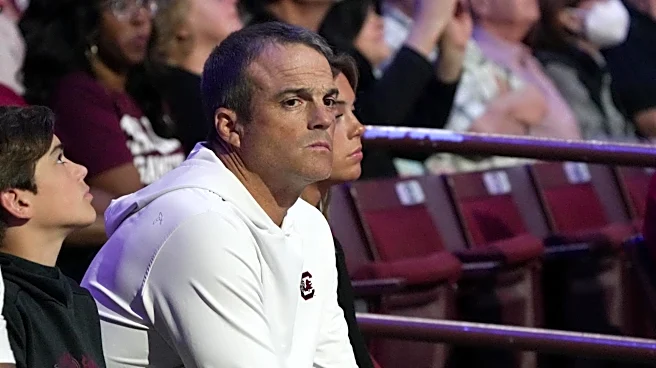

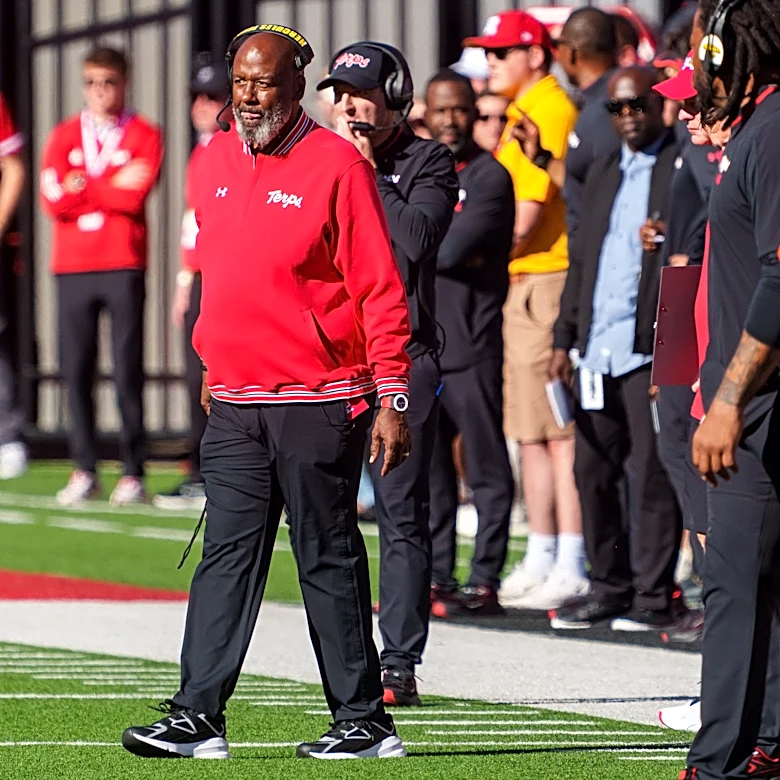

There is a difference between losing a game and exposing what a football program has become. South Carolina’s 35-34 overtime loss to Kentucky on Saturday continues to be evidence of the latter. Again, the Gamecocks had a double-digit lead. Again, they watched it disappear. Again, mistakes compounded. Again, an offense that had shown flashes of being capable of controlling the game in the first quarter became increasingly difficult to watch. And again, Shane Beamer stood in front of a microphone afterward and talked about responding, finishing, culture, and getting back to work.
At some point, though, South Carolina has to stop responding to the same problems and start eliminating them. This isn't one loss. It isn't one bad quarter or one bad call.
It absolutely is a pattern, and that is why the support surrounding Beamer has changed drastically. Beamer said he was “proud as hell” of the players in his locker room and acknowledged that he had not done a good enough job putting them in position to finish the game in overtime. But caring isn't the standard. Winning games is. Coaches are judged by wins and losses and South Carolina is now 2-3 overall and 0-3 in SEC play after blowing a 17-point lead against Kentucky. It is the second consecutive home game in which the Gamecocks surrendered a three-score advantage. And that is the part no one can explain away with the culture of this team, the adversity they have faced, or how great practice was. At some point, the results must become the evidence.
Beamer's own words illustrated the frustration
Why did South Carolina continue throwing the football when the running game was working? Beamer explained that the Gamecocks didn't really go away from the run because many of the plays were RPOs and the read dictated the decision. What happened on the failed fourth downs? One was an aggressive decision to trust Mo Brown in a one-on-one situation. The other was a crack speed option that got thrown off because of a bad snap.
Then came the question about how another three-score lead could disappear. South Carolina fumbled deep in its own territory, again. “A killer,” Beamer called it, and he was right. But that is also the problem, because South Carolina has become remarkably good at producing the kind of mistakes that turn the games they control into games they lose.
When adversity becomes identity
Notre Dame, Georgia, Florida, LSU, Texas A&M, Mississippi State, and now Kentucky, just to name a few. That's seven double-digit leads that have been squandered during Beamer's tenure as head coach, including a 27-point lead against Texas A&M in 2025 that we would all like to forget.
At some point, it all stops being adversity, and it becomes identity. And that is the uncomfortable question that the Gamecocks have to start answering. What if the problem isn't that this team doesn't respond well enough, but that it keeps putting itself in situations where it needs to respond to begin with?
Beamer was asked after the Kentucky loss whether he believes he has the support of the administration. He said yes, based on everything he has been told, but then he was then asked what gives him the confidence that he is the person who can turn the program around. And that answer was all too familiar. South Carolina has faced adversity before, and his coaches have won games. His players and coaches are the "right kind of people," and he pointed back to 2024, when the Gamecocks were 3-3 before winning six consecutive games.
And then he said what we've all heard so many times before: They'll respond.
Stop talking about responding, start winning
South Carolina fans have reached their breaking point. Again, no one expects the South Carolina Gamecocks to go undefeated, and no one expects every offensive possession to be perfect. But fans are allowed to demand progress. They are the ones that have spent years buying tickets, traveling to games, buying merchandise, donating money to the university, and investing emotionally in this program. They have defended South Carolina when the criticism was warranted and when it wasn't. They have more than shown up every single time in every single way for this team.
But what they're getting in return is another season of the same questions. Why can't this team finish? Why are there so many penalties? Why does the offense look so inconsistent? Why do leads keep disappearing? Why does South Carolina repeatedly look like a different team as games progress? And perhaps most importantly, when does accountability become more than saying, “I'm well aware it is not good enough”?
South Carolina has a coaching problem
At this point, everyone from fans to media knows it needs to be fixed, but the real questions are who is responsible for fixing it and how is it going to be fixed. College football has changed dramatically in the last few years with the NIL, transfer portal, etc. Players are being compensated, coaches are being paid enormous salaries, and programs are investing millions of dollars into facilities, staff, recruiting, and resources. This is big business, but college football has also become just that: a business. And when you're being paid at this level, “we need to get better” cannot be the end of the conversation.
If Beamer truly believes he is the man to fix this, then say it and fix it. If he doesn't believe he can, then there should be enough conviction to acknowledge that, too. Imagine hearing a head coach say: "If I can't get this thing turned around in the next few weeks, I'll tender my resignation and walk away from the buyout."
Now, of course that will never happen, but that level of accountability would certainly get my attention. Because right now, there is very little skin in the game for the people making millions of dollars while fans continue paying to watch the same failures. If you're not the guy, you're not the guy.
That's not personal. It's business.
South Carolina may be trapped by the cost of change
And this is where the conversation gets considerably more complicated for South Carolina athletic director Jeremiah Donati. If David Cloninger’s reporting is accurate, this is no longer just a straightforward question of whether Donati thinks Shane Beamer should stay on as head coach. It's a question of whether South Carolina can afford to even make the change.
Cloninger reported Sunday that a source with knowledge of the situation told him that Beamer is expected to remain safe even after the Kentucky loss, largely because of the financial ramifications of firing him at this time. According to Cloninger, South Carolina would owe Beamer more than $24 million, and when the cost of the coaching staff, roster turnover and hiring a new coach is factored in, the total financial hit could approach $50 million.
That changes the entire conversation. It doesn't make the losses less frustrating, or the blown leads acceptable. And it certainly doesn't make South Carolina fans wrong for demanding accountability. But what it does explain is why a decision that might appear obvious from the outside isn't necessarily an easy one inside the athletic department.
Of course, there is a legitimate argument that a midseason coaching change could make a bad situation even more chaotic. Players love Beamer, and if he was fired midseason, the roster would have to navigate another coaching transition. The staff would change, recruiting would be affected, and South Carolina would be asking a new coach to walk into the middle of an already difficult season.
From Beamer Ball to Beamer Stall
If South Carolina believes that Shane Beamer is still the person capable of fixing this, then the athletic department needs to have a plan, because the financial argument cuts both ways. Yes, firing a coach in the middle of a season can cost an enormous amount of money, but continuing to invest in a program that is losing the confidence of its fan base carries a cost, too.
Empty seats cost money, lost concessions cost money, lost parking revenue costs money, declining donations cost money, and recruiting momentum can cost money. Not to mention the damage to the perception of the program can become far more expensive if fans begin deciding that the product isn't worth their time or money. South Carolina fans have already shown they will support this program, but there is a limit to how many times you can ask people to pay premium prices for the same ending.
If the university is truly boxed in by the buyout, then Donati's job becomes even more difficult. He has to determine whether the remaining season can be salvaged, whether Beamer can realistically change the trajectory, and whether waiting makes more sense than making an expensive move now.
Maybe the answer is to wait until the offseason, and maybe the answer is to see whether Beamer can somehow turn this season around. Maybe the answer is that the financial damage of making a change this season is simply too great, but there is another possibility South Carolina cannot ignore: waiting only delays the inevitable. There are enormous financial consequences attached to making the decision to fire Beamer now, but there are consequences attached to keeping him, too.
Because $24 million is a staggering amount of money, but so is the cost of spending another year going nowhere.
Contact/Follow @College_Wire on X and @College_Wires on Threads. Like our page onFacebook to follow ongoing coverage of college sports news, notes, and opinions.
This article originally appeared on College Sports Wire: South Carolina has a Beamer problem, and a change is price | Opinion