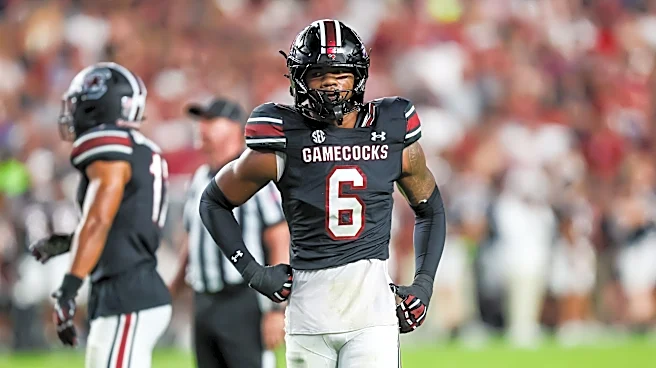

The definition of "emergency" is a serious, unexpected, and often dangerous situation requiring immediate action. In college football, what exactly qualifies as an emergency, and more specifically, at what point does Shane Beamer determine it’s an emergency?
It's a question South Carolina fans have every right to ask after watching the Gamecocks turn a promising four-game winning streak into a crushing 34-6 loss to Arkansas. It's not about demanding perfection, or expecting a coach to have an answer for every injury or turnover. It is, however, about leadership, preparation, transparency, and the decisions made when a game begins slipping away. Because there is a difference between a bad night and a program that keeps finding ways to make the same
mistakes. South Carolina's 34-6 loss was certainly the latter, and at some point, the question has to shift from what went wrong to why there isn't anything being done about it.
The Sellers situation raised questions long before kickoff
On Nov. 8, Beamer offered a reassuring update on LaNorris Sellers, who had been dealing with an ankle injury sustained in the game against Texas A&M. "Everything looks good with him today," Beamer said. He added that Sellers had felt good the previous night and again that morning, and that testing had produced encouraging results.
Shane Beamer updates LaNorris Sellers: Everything looks good with him today. He felt good last night at 9:30. He felt good this morning. Tests were done this morning. Looked good.
— Jack Veltri (@Jacktveltri) November 8, 2026
Concern level is "very low."
Fully expects him to play at Arkansas.
That update seemed particularly confident, especially since Beamer said the concern level for Sellers' injury was "very low." He even went further to say that he fully expected QB1 to play against Arkansas.
Obviously, injuries are unpredictable because a player's condition can change, and no coach should be expected to put a player on the field simply to satisfy public expectations. If Sellers wasn't healthy enough to play, sitting him was absolutely the right decision.
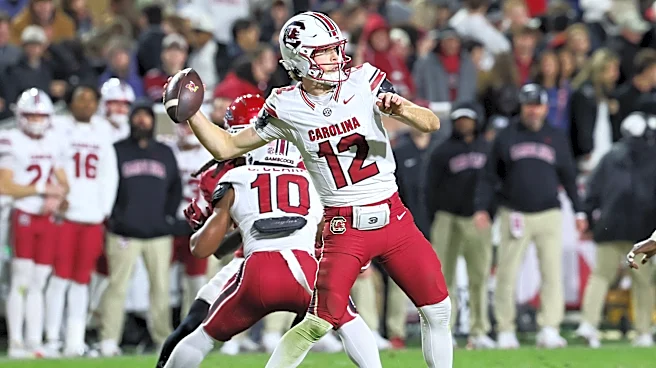
But the message Beamer put out created an expectation and fueled some hope. But by the time kickoff arrived, it was announced that Cutter Woods would be starting at quarterback. It was a significant development, especially when the public conversation earlier in the week had centered around a quarterback Beamer fully expected to have available. Even more so when Beamer said on the pregame show that he was available.
"He's available. He just was never quite to the point where we felt like he gave us the best option tonight." - Beamer on Sellers on the SEC Network pregame
— GamecockCentral Game Day (@GCgameday) November 15, 2026
The Gamecocks subsequently delivered one of their most disappointing performances of the season, made even more puzzling and frustrating by watching Sellers toss a few balls during a timeout during the game.
Sellers was throwing passes during the timeout pic.twitter.com/1Y1NJwU72I
— SportsTalk Media Network (@SCSportsNow) November 15, 2026
The real problem isn’t that Beamer chose not to put Sellers in the game, but rather how the staff planned for the possibility that he might not.
A team always needs to be ready for unexpected situations and injuries. But an injury should never throw the whole offense off track. It’s up to the coaching staff to make sure all players are prepared to step in when needed. Woods was put in a difficult position, but the circumstances surrounding his first start matter. The performance cannot be separated from the larger questions about preparation, personnel, and the offensive plan.
The numbers were bad, and the response was worse
The Gamecocks actually outgained Arkansas, 369 yards to 355. South Carolina threw for 271 yards but managed only 98 on the ground. They also committed four turnovers without forcing a single turnover of their own. Let's not forget they also had 12 penalties for 91 yards.
Those are not isolated problems; they are failures across multiple areas of the entire team. But perhaps the most revealing part of Beamer's postgame comments came when he discussed responsibility.
"We weren't ready to play," Beamer said when discussing the mistakes.
South Carolina coach Shane Beamer opening comments following loss at Arkansas pic.twitter.com/yyVNADtYYT
— SportsTalk Media Network (@SCSportsNow) November 15, 2026
That's a good starting point for accountability. But acknowledging responsibility after the final whistle is different from demonstrating the ability to correct problems while they are happening. There were decisions worth examining.
Beamer chose not to attempt a field goal at the end of the first half, instead opting for a shot at the end zone with six seconds remaining. South Carolina came away with nothing. After their sole touchdown, Beamer decided to go for a two-point conversion, and failed, leaving them stuck with just six points on the board.
Scoring only six points is not a formula for winning football, regardless of who is under center. The red zone production was equally concerning, as South Carolina converted just one of five opportunities, leaving points on the field. The Gamecocks repeatedly failed to capitalize on chances to make the game even remotely competitive. The penalty count didn't help, either.
There were obvious problems at every level: execution, discipline, ball security, and the ability to respond when things started going sideways. Which brings us back to Beamer.
No, a head coach cannot control every missed assignment, every turnover, or every injury. But he is responsible for the preparation, the adjustments that need to be made in the moment, and the overall product his program puts on the field.
When the offense is struggling, what changes? When the game plan isn't working, how quickly does the staff recognize it? When mistakes begin piling up, what accountability follows? Those are not unreasonable questions. They are the questions that come with the job.
More importantly, when does South Carolina Football realize it’s not just dealing with an emergency in one isolated game, but that it might actually be the emergency itself?
At what point does a bad performance become a pattern?
South Carolina's four-game winning streak was encouraging, and it gave the fanbase something to believe in after a frustrating start to the season. But one short winning streak doesn't erase the larger concerns that have plagued the team for years when it comes to consistency.
The Gamecocks are now 6-4 overall, 4-4 in SEC play, and the remaining schedule includes No. 1 Georgia and Clemson. There is absolutely no room left for the kind of performance South Carolina delivered in Arkansas.
And the problem extends beyond one Saturday. South Carolina fans have remained remarkably loyal through coaching changes, disappointing seasons, and repeated promises that the program is moving in the right direction. They also understand that injuries happen, young players make mistakes, and not every season unfolds according to plan. But what they should not have to accept is the idea that every significant setback can be explained away as an isolated incident.
Beamer has repeatedly emphasized the importance of competing, improving, and holding the program to a high standard. But when will those words translate into something tangible?
Emergency situations go beyond what happens on the field during game time. They involve making tough personnel calls when needed, giving honest assessments of the coaching staff, pinpointing why the same issues keep recurring, and making changes before another season gets away. It also means recognizing when the situation demands more than another week of adjustments and another round of assurances. Because in Fayetteville, the warning signs were everywhere.
Beamer isn't going anywhere simply because South Carolina lost to Arkansas. The program is going to have to live with the decisions already made, and the fanbase is going to have to watch what happens next. But patience should not mean the absence of accountability.
Because at what point do you stop treating the symptoms and start addressing the source? Maybe it's time to look in the mirror.
Contact/Follow @College_Wire on X and @College_Wires on Threads. Like our page on Facebook to follow ongoing coverage of college sports news, notes, and opinions.
This article originally appeared on College Sports Wire: South Carolina needs a reality check, not an emergency plan | Opinion