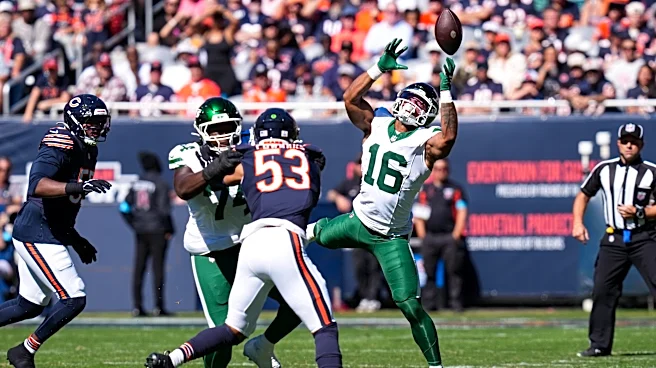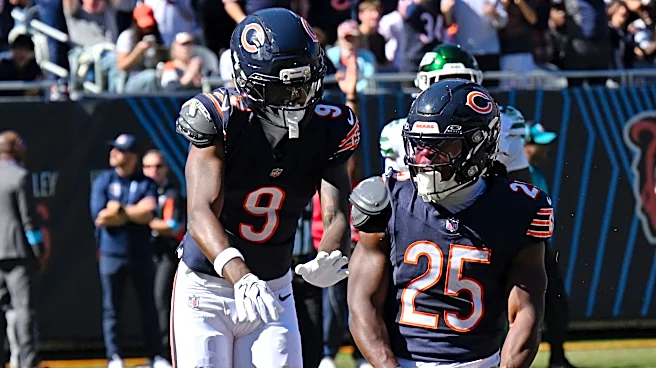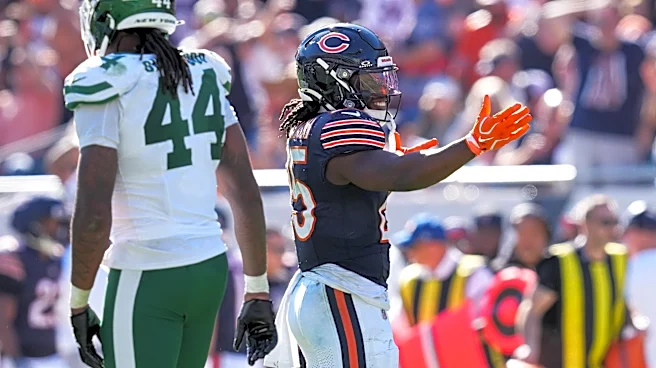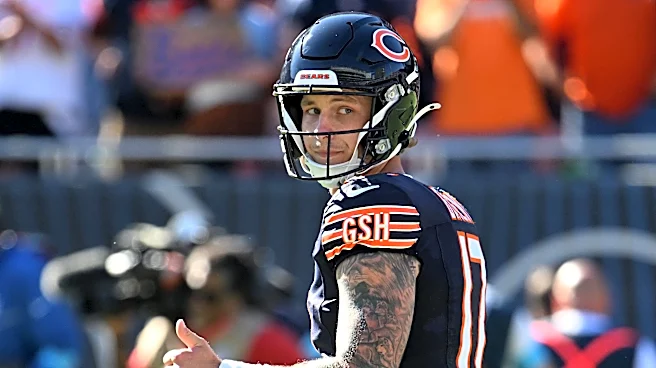


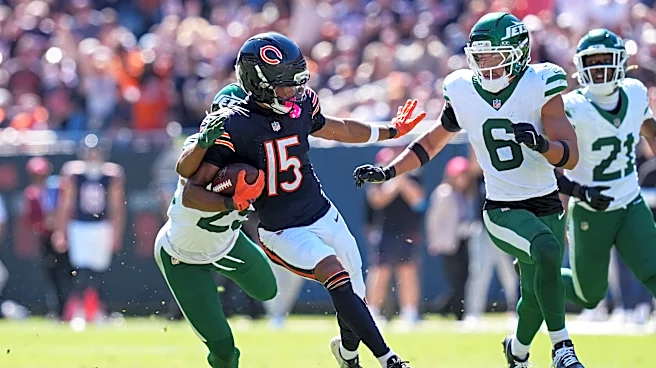
The New York Jets entered Soldier Field hoping to even their record at 2-2, but they never found a way to establish control. The Chicago Bears dominated time of possession, repeatedly extended drives, and left the Jets with almost no opportunity to develop any offensive rhythm in a 23-12 win over the visitors.
The numbers tell just how one-sided the afternoon became. Chicago ran 89 offensive plays to New York's 32, held the football for 44:12 and limited the Jets to just 17:15 of possession. New York's 32 offensive plays were the second-fewest by a team in a game in NFL history, trailing only the expansion Cleveland Browns' 28-play performance against the Pittsburgh Steelers in 1999.
There were still a few positives worth carrying into Week 5,
but they were buried underneath one of the Jets' most difficult performances of the season.
What went right?
- Minkah Fitzpatrick finally ended the interception drought. After more than 20 games and 83 quarters without an interception, the Jets finally got one when Fitzpatrick picked off Tyson Bagent. The timing was especially fitting because Fitzpatrick was returning from the groin injury that had sidelined him since Week 1, and he had acknowledged before the game that ending the drought would be "very nice" and "very sweet." Unfortunately, New York had three other apparent interceptions wiped away by penalties, making Fitzpatrick's play the only one that ultimately counted.
that's goin' the other way
— New York Jets (@nyjets) October 4, 2026
📺: #NYJvsCHI on FOX pic.twitter.com/yDTeDEe7qf
- Demario Davis continues to show why his presence matters. Davis remained one of the Jets' most active defenders, flying toward the football and providing a steadying presence while Chicago controlled so much of the game. His production and energy continue to stand out, particularly for a defense that has asked its veterans to maintain their composure through some exhausting stretches.
second sack in as many weeks for @demario__davis
— New York Jets (@nyjets) October 4, 2026
📺: #NYJvsCHI on FOX pic.twitter.com/7m5hPG3lzC
- Jamien Sherwood created another takeaway. Sherwood forced D'Andre Swift to fumble on a tackle, and Brandon Stephens recovered for New York's second successful takeaway of the afternoon. It was another encouraging sign for a defense that has consistently shown an ability to create disruption, even if it has not always been able to turn those opportunities into enough points.
BALL
— New York Jets (@nyjets) October 4, 2026
📺: #NYJvsCHI on FOX pic.twitter.com/14zkwbWKdX
- Isaiah Williams provided one of the few offensive highlights. Williams scored the first receiving touchdown of his career, giving the Jets a badly needed jolt after the offense had spent much of the afternoon struggling to stay on the field. The play was a reminder that Williams can provide value beyond the return game, where he has already demonstrated big-play ability.
What went wrong for the Jets?
- Round 1 went to Ben Johnson. The former Detroit Lions assistants entered the game knowing each other's philosophies well, and Johnson's offense won the opening exchange decisively. Chicago used pre-snap motion and repeatedly attacked the Jets with in-breaking routes over the middle, while Bagent completed five of six throws for 62 yards on the opening drive. The Bears looked prepared to attack exactly where Glenn's defense did not want to be tested.
- The Jets couldn't stay on the field. New York ran just four plays in the first quarter while Chicago held the ball for 12:49 of the opening 15 minutes. By halftime, the Bears had run 49 plays and outgained the Jets 274-34, with Chicago also holding a 112-29 advantage on the ground. Geno Smith was 3-of-8 for 18 yards at the break, leaving the offense almost no chance to establish any rhythm.
- The pass rush disappeared at the worst possible time. David Bailey recorded zero pressures on 27 pass-rush snaps, Will McDonald had one on 24, and Joseph Ossai finished with none on 19. Braiden McGregor also had no pressure before leaving with a chest injury. Harrison Phillips was the only Jets player to record more than one pressure, making it extremely difficult for the defense to consistently disrupt Chicago's passing game.
- The Jets' interception drought ended, but the penalty problem made the accomplishment strangely complicated. New York recorded three interceptions that were wiped away by penalties. Ending the drought was significant, but the sequence also reinforced how often the Jets have made good plays and then found ways to undermine themselves.
- The offense never got enough opportunities to recover. The Jets finished with only 32 offensive plays, meaning Smith and the rest of the unit spent much of the afternoon watching from the sideline. That does not excuse an offensive performance this poor, but it does explain why New York struggled to build any sustained momentum or rhythm. When one team runs nearly three times as many plays as the other, it becomes extremely difficult to dictate the terms of the game.
- The numbers were historically ugly. Chicago's 89 offensive plays were 57 more than New York's, a disparity that ranks among the largest in NFL history. ESPN's Rich Cimini reports the Bears' 44:12 time of possession was their most in a game since 1994, while the Jets' 17:15 marked their lowest total time of possession since 2005. Those numbers aren't merely bad; they explain almost everything about how this game unfolded.
Some ugly stats from this one:
— Rich Cimini (@RichCimini) October 4, 2026
* Bears are just the fourth team since the 1970 Merger to run 57 or more plays than their opponent in a game.
* Bears' most time of possession in game since 1994 (44:12 vs Lions)
* Jets: fewest time of possession (17:15) in game since 2005 Week…
What's the bottom line?
This wasn't another competitive loss that came down to a handful of late plays. The Bears controlled the game from the opening possession, and the Jets did not establish enough offensive rhythm to change that reality. The two takeaways and Fitzpatrick's long-awaited interception provided some encouragement, but they were overwhelmed by the sheer imbalance in opportunity.
The Jets have shown through the first four weeks that they can compete with talented teams when their defense, offense, and special teams complement one another. Sunday was the opposite. Chicago controlled the football, dictated the matchup, and forced New York to spend most of the afternoon reacting.
What's next for the Jets?

The Jets finally return home in Week 5 after playing three road games in their first four weeks, giving them an opportunity to reset against the Cleveland Browns. New York has plenty to correct before then, but the biggest priority should be finding a way to keep all three phases functioning together rather than asking one unit to overcome the shortcomings of another.
The Bears made the Jets look overwhelmed on Sunday. The response in Week 5 will tell us much more about whether that was an isolated collapse or a sign of deeper problems, because the Jets now have to show they can respond to adversity instead of allowing one ugly afternoon to become a turning point in the wrong direction.
This article originally appeared on Jets Wire: Jets vs. Bears: What went right, what went wrong in Week 4