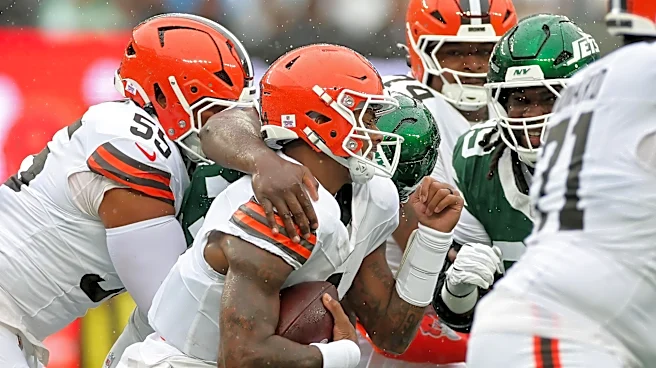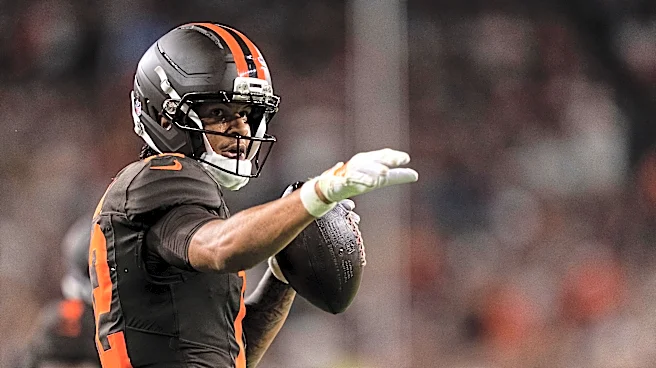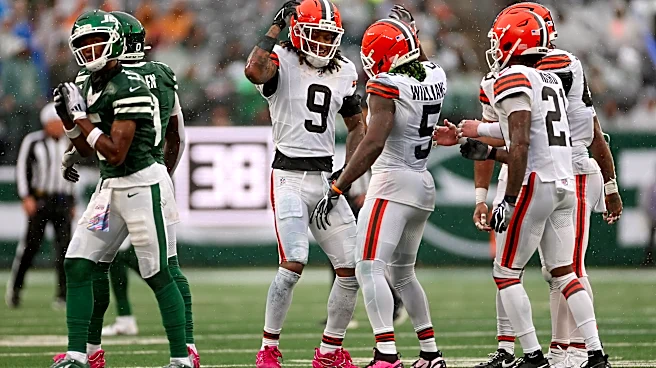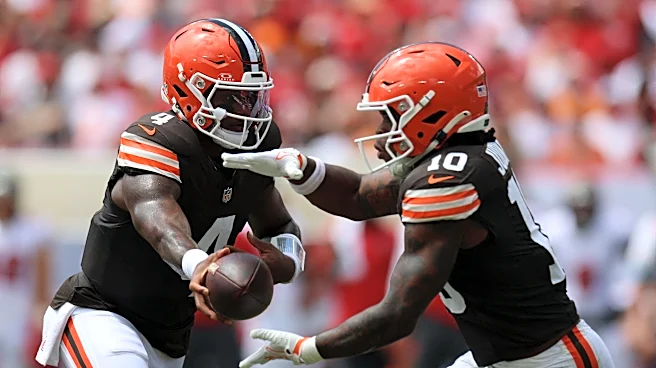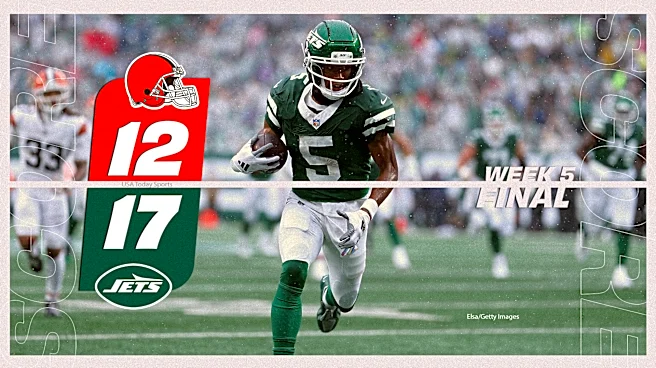



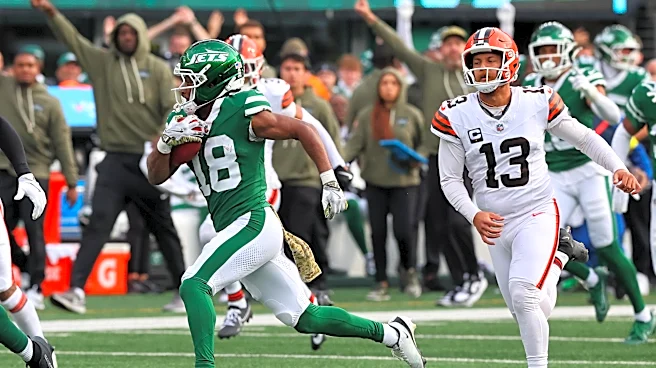
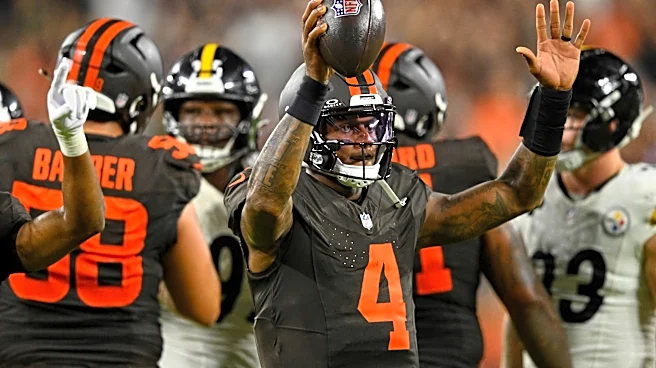
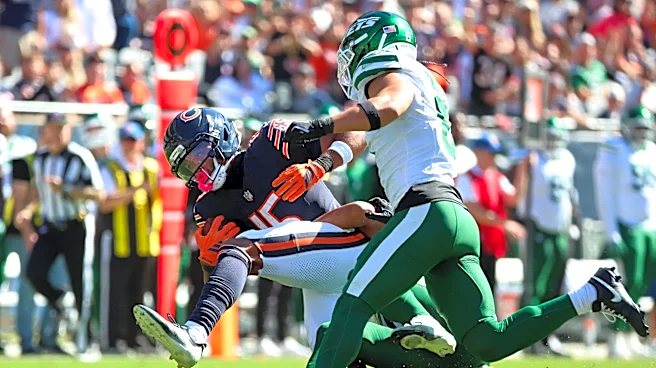
The New York Jets desperately needed a win, and they found an unlikely way to get it. After spending much of the afternoon struggling to sustain offensive drives against the Cleveland Browns, New York leaned on its defense, benefited from a critical special teams mistake, and watched Braelon Allen deliver the decisive touchdown in a hard-fought victory.
The Jets' defense deserves the game ball after recording eight sacks and repeatedly giving the offense opportunities to recover. David Bailey was the headliner, registering three sacks of Deshaun Watson, while Allen's career-best rushing performance provided the kind of offensive production New York has struggled to find consistently.
There is still plenty to clean up, particularly after another
frustrating stretch of offensive football and a penalty count that cannot continue at this rate. However, unlike last week's disastrous showing against the Chicago Bears, the Jets made the necessary plays late to secure a victory. Here's what went right and what went wrong in their win over Cleveland.
What went right?
- David Bailey delivered a historic performance. Bailey recorded three sacks and four additional quarterback hits, establishing himself as a disruptive force against Watson. Bailey joined Hugh Douglas (1995), Joe Klecko (1977, unofficially) and Mark Lomas (1970) as the only Jets rookies to record at least three sacks in a game. New York finished with eight sacks, tying its highest single-game total in the past 40 seasons and matching its performance against the Houston Texans in Week 9 of 2024. Bailey's performance was the centerpiece of a defensive effort that kept the Jets within striking distance.
- Braelon Allen gave the offense a much-needed spark. Allen carried the ball 24 times for 116 yards and a touchdown, setting career highs in both carries and rushing yards. His decisive touchdown run on third down capped a wild sequence in which Geno Smith fumbled, the defense forced Cleveland to punt, and a botched snap gave New York possession at the Browns' 23-yard line. Allen took advantage of the opportunity, finding the end zone untouched on a well-designed play. His performance offered a glimpse of what the Jets' ground game can become when the offensive line and play-calling work together.
- Garrett Wilson surpassed 100 receiving yards. Wilson finished with seven receptions for 104 yards and a touchdown on 11 targets, giving the Jets a reliable offensive centerpiece. He made an immediate impact on the opening drive, catching three passes for 70 yards and a score. Although the offense struggled to maintain that momentum, Wilson continued to create opportunities and finished with his 11th career game surpassing 100 receiving yards. His production remains essential as New York searches for consistency through the air.
- The defense created opportunities when the offense needed them most. Bailey's sacks were only part of the story. Jarvis Brownlee Jr. recorded the first sack of his career, while the defense repeatedly made life difficult for Watson. New York also benefited from a missed extra point after Watson threw a go-ahead touchdown pass to Denzel Boston late in the fourth quarter. That missed kick left the door open for the Jets to respond, and the defense did its part to keep the game within reach.
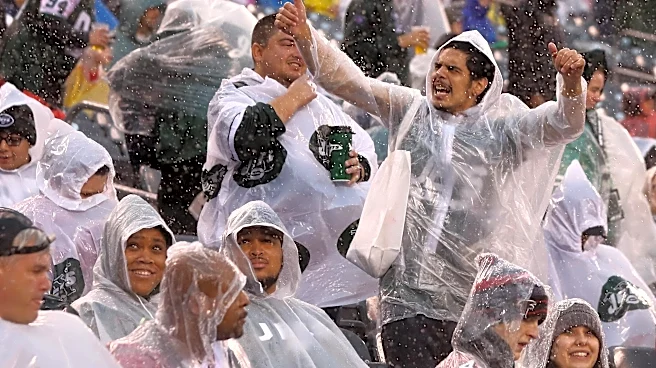
- Jason Sanders delivered under difficult conditions. Sanders connected on a 54-yard field goal in the rain to extend New York's lead to 10-6 with 14:37 remaining. The kick was particularly valuable for an offense struggling to manufacture points, and it demonstrated the importance of having a reliable kicker when possessions are difficult to finish. Tim Patrick also made several clutch catches. His effort deserves mention.
- Mason Taylor's return provided an encouraging sign. After missing time, Taylor returned to action and finished with three receptions for 24 yards. His third-down catch on a third-and-seven situation was particularly valuable because it moved the chains and helped the offense sustain a drive. The Jets need more dependable contributions from their supporting cast, and Taylor's ability to return and make a meaningful play was a positive development.
What went wrong for the Jets?
- The offense once again struggled to sustain momentum. New York opened with an impressive scoring drive, highlighted by Wilson's 70 receiving yards and touchdown, but the offense failed to maintain that pace for much of the afternoon. The Jets improved considerably from their historically poor 32-play showing against Chicago, running 66 offensive plays against Cleveland, yet the production still left plenty to be desired. The victory matters, but the Jets cannot expect their defense to carry this much of the burden every week.
- A costly red-zone fumble wasted a scoring opportunity. Kenyon Sadiq's fumble in the red zone was one of the offense's most damaging mistakes. The turnover cost New York an opportunity to add points, and it was forced by Williams, who continued to make his presence felt against his former team. Sadiq was later ruled out with a concussion, adding an injury concern to an already frustrating sequence. The Jets cannot afford to give away possessions in scoring territory, particularly when touchdowns have been so difficult to come by.
- The penalty problem remains unacceptable. New York committed 10 penalties for 102 yards, continuing a pattern that has repeatedly undermined the team's progress. Penalties can erase explosive plays, extend opposing drives, and turn manageable situations into difficult ones. The Jets escaped with a win this time, but that margin for error will shrink considerably against tougher opponents. Aaron Glenn's team must find a way to play with greater discipline before these mistakes cost it another game.
- The end-of-half struggles continued. The Jets entered this game having gone nine and a half games without scoring in the final four minutes of the first or second half, according to the supplied game notes. That statistic underscores a persistent inability to capitalize on critical moments before halftime or the break. Although New York eventually found a way to win late, its inability to finish drives in these situations remains a concern. Better situational play-calling and execution are necessary if the Jets hope to become more consistent offensively.
What's the bottom line?
The Jets will gladly take the victory, especially after the disappointment of their loss to Chicago. Their defense delivered an outstanding performance, Bailey announced himself with a three-sack afternoon, and Allen gave the offense a much-needed boost with a career-best rushing day.
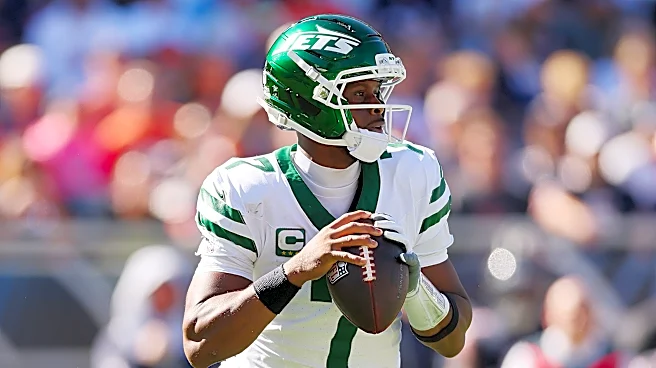
Geno Smith completed 17 of 30 passes for 182 yards, one touchdown and no interceptions, finishing with an 85.7 passer rating. That helped overcome solid efforts on the other side, one being that from former Jet Quincy Wilson. He was everywhere and a constant headache.
New York also showed resilience by capitalizing on Cleveland's special teams mistake and turning a late opportunity into the winning touchdown. However, one victory does not erase the offensive issues that have followed the Jets throughout the season. Smith and the passing game still need to find greater consistency. The red-zone fumble was costly, and 10 penalties for 102 yards remain far too many. The defense can be a strength, but New York needs more balanced football to build on this result.
What's next for the Jets?
The Jets will turn their attention to a road matchup against their AFC East rival, theNew England Patriots, next Sunday. Kickoff is scheduled for 1 p.m. ET. New York will look to carry the defensive intensity and late-game execution from this victory into a divisional matchup that will provide another test of whether the team can turn a hard-earned win into sustained progress.
This article originally appeared on Jets Wire: Instant analysis: What went right, what went wrong in Jets' win vs. Browns