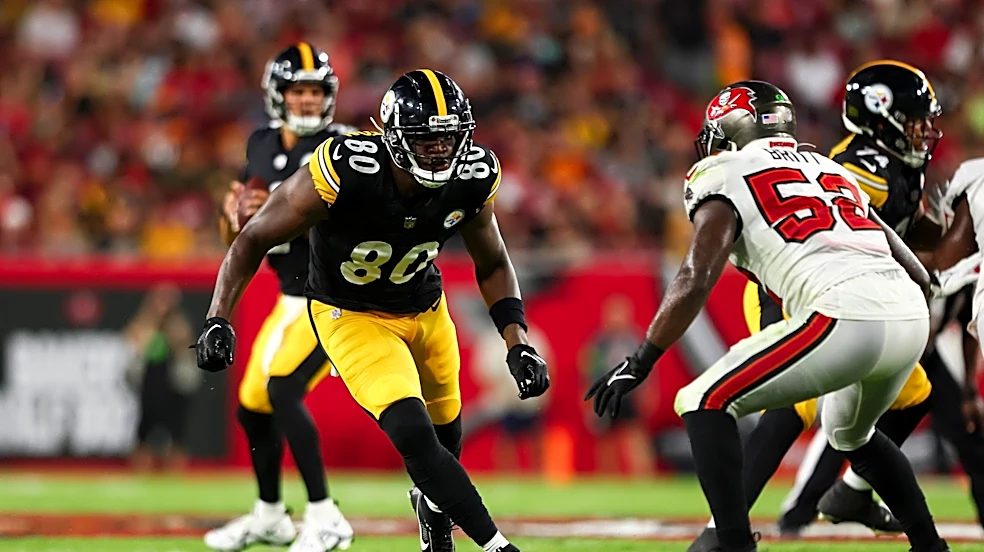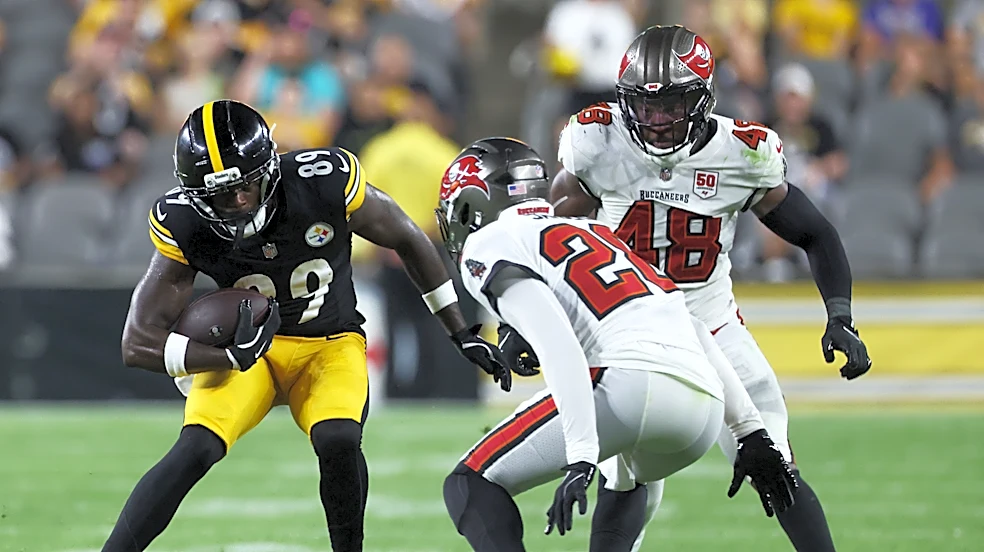









When the Tampa Bay Buccaneers stacked the box and neutralized the Pittsburgh Steelers' power run game, they forced a crucial tactical shift. Holding Jaylen Warren to just 3.6 yards per carry, Tampa Bay’s front line challenged Pittsburgh to win through the air.
Rather than forcing a broken game plan, Aaron Rodgers and the offense adapted, sparking a fourth-quarter comeback that culminated in a 26-19 overtime victory.
Entering the matchup, Pittsburgh's identity relied heavily on a ground-and-pound strategy and intermediate tight end target shares. However, after generating just 115 passing yards through three quarters, Rodgers completely flipped the script in the final frame. The Steelers executed a stretch of 17 straight passing plays, spreading
the field and forcing the Buccaneers' secondary to back off.
As Christopher Carter noted on his “Locked on Steelers” podcast, this sudden aerial pivot gave the team a necessary alternative when their primary formula stalled.
"When they've tried to finesse teams and throw downfield with the passing attack with the wide receivers and prove they can do that, they've lost a lot of their games. But there were 17 straight plays I believe from in the all in the fourth quarter where the Steelers passed the ball, and it also forced the Buccaneers to kind of back off the run for a little bit."
That strategic shift loosened Tampa Bay's run defense late in the contest, creating crucial lanes for Warren and Rico Dowdle in overtime. More importantly, it allowed DK Metcalf and Germie Bernard to shine, as both receivers hauled in 11 receptions each.
By demonstrating that they can pivot seamlessly to an up-tempo passing attack when opponents stack the box, Rodgers and the Steelers proved they are no longer one-dimensional, unlocking a balanced offense capable of adapting to any defensive scheme.
This article originally appeared on Steelers Wire: How Tampa Bay forced Aaron Rodgers to change Pittsburgh's offense