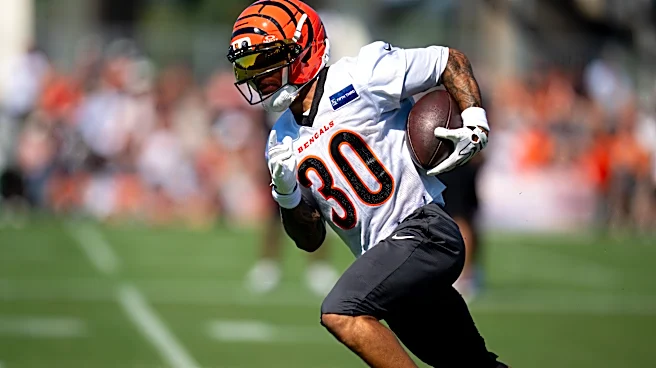




The fantasy market believes Chase Brown is a locked-in, top-10 RB. That might be the case. But there is one big reason to steer clear.
Imagine you're choosing between two near-elite running backs in the second round of your draft. One is Brown (overall-15 / RB9 ADP). The other is Saquon Barkley (overall-14 / RB8 ADP). Even though Barkley is ranked just ahead of Brown, the latter holds comparable appeal. For many managers, it might be a coin flip.
But the difference for managers is stark. Barkley has a terrific young handcuff, Tank Bigsby, whose overall-167 / RB51 ADP makes him a pretty easy pick-up in the 13th or 14th round in 12-team leagues. If you lose Barkley, you'd still have a starting RB with decent top-20 upside. The statistical drop-off
might be noticeable, but not necessarily meaningful.
Brown does not have an ascending handcuff waiting in the wings. Samaje Perine will turn 31 in September. He hasn't had more than 95 carries since 2017. If Brown got hurt, Perine would not be expected to carry a full load.
What about 2025 sixth-rounder Tahj Brooks, who averaged only 2.8 yards on 16 carries, and who might end up losing ground to 2021 sixth-rounder Gary Brightwell? Of course, Brightwell never exceeded 91 carries in a college season, hasn't surpassed 31 carries in the pros, and hasn't touched the ball in 34 months.
When drafting a running back, we should recognize whether we can target his handcuff later in the draft. If no such handcuff exists, then we have less room for error.
For a deeper dive on this issue, listen to this recent podcast episode.
This article originally appeared on Touchdown Wire: One concern about fantasy managers drafting Chase Brown