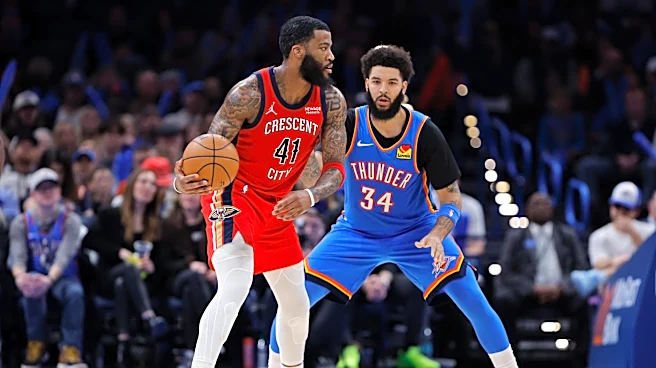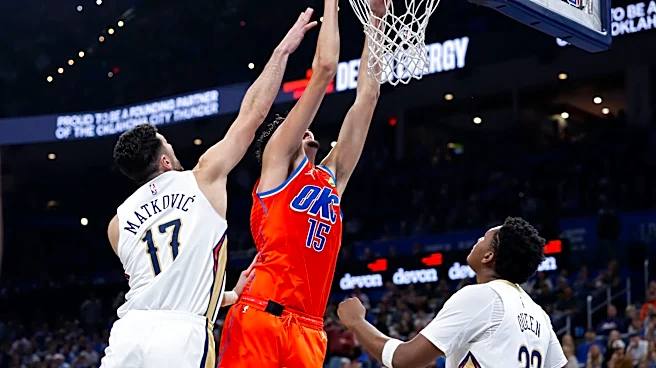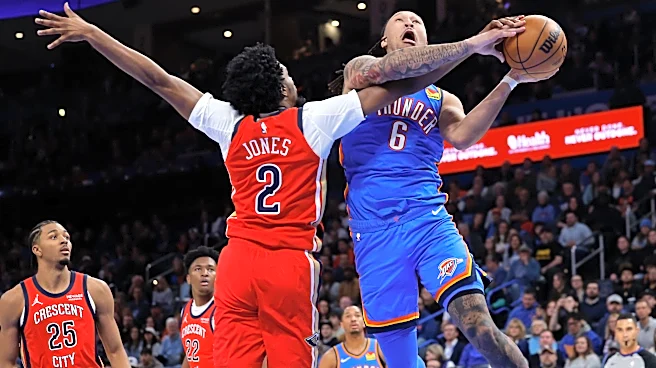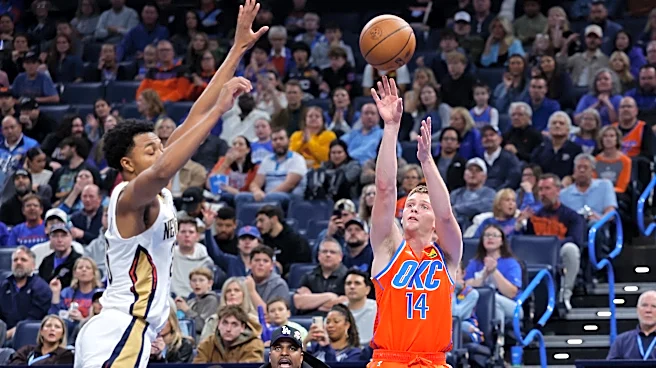



Knocking down back-to-back corner 3-pointers, Herbert Jones showed that even he can take advantage of a relaxed perimeter defense. As the Oklahoma City Thunder struggled to put away the New Orleans Pelicans, a feel-icky win did very little to reassure that things would improve.
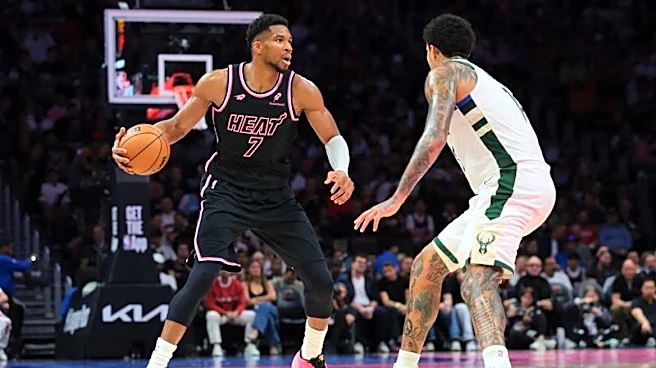
Since the Thunder entered the Post-D.C.C. era, opponents have cooked them from the perimeter on a nightly basis. Even the worst outside shooting teams in the league are having a field day. In fact, they're allowing the most outside makes per game at 15.3. They're tied with the Miami Heat for that league-worst mark.
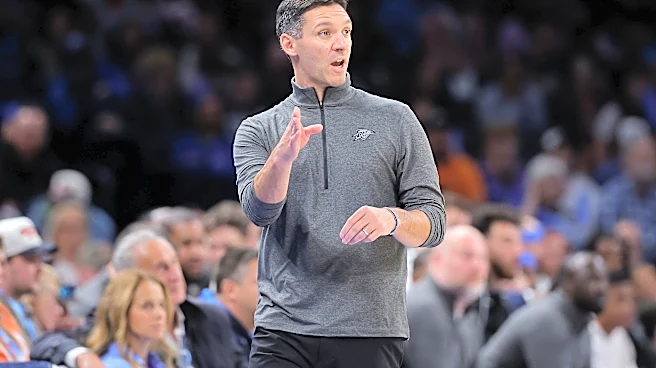
According to Thunder head coach Mark Daigneault, it's all part of their plan. Even if it makes fans rip their hair out in stress. Constantly losing dares to guys
like Jones, Onyeka Okongwu, Brook Lopez and Sidy Cissoko has cost OKC games in recent weeks.
"I think some of it, to be honest with you, is structural when we have two centers on the court together. We're not trying to give up a great shot on any possession — whether it's a layup or a free throw or a three or a clean two or a good pull-up jump shot," Daigneault said. "But there are trade-offs. The double-big lineup is something that has been pretty good for us. We've rebounded well. We've not fouled. We’ve taken away the rim almost entirely and we've put a lot of pressure on the other team to make jump shots."
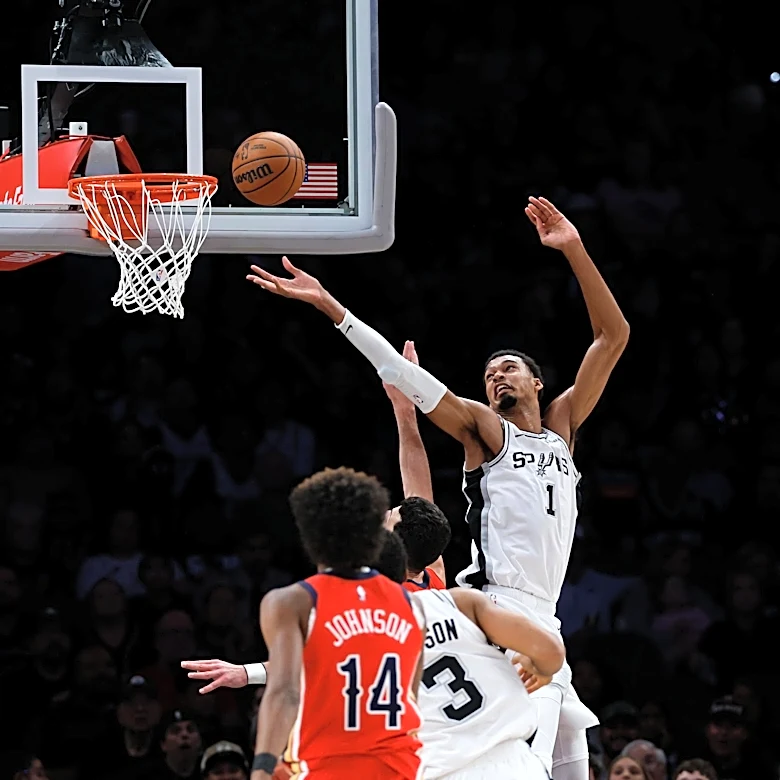
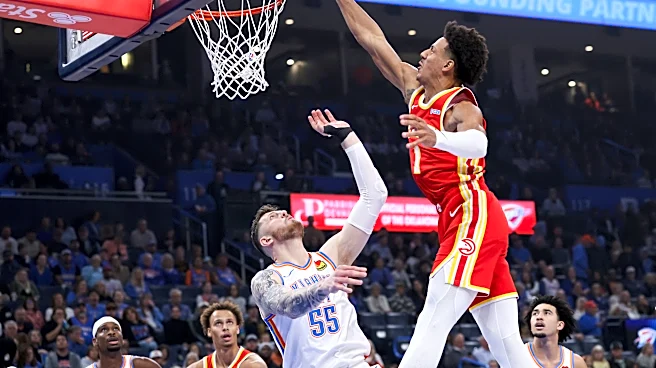
Here are some recent notable examples where OKC's opponent absolutely lit them up from the perimeter — New Orleans shot 17-of-39 (43.6%) from 3; Atlanta 20-of-50 (40%); LA 16-of-41 (39%) from 3; Portland 19-of-49 (38.8%) from 3; Portland 19-of-50 (38%) from 3.
Pair that with OKC's fourth-fewest 11 made 3-pointers per game, and you're looking at losing the math battle about every night. That's a recipe for the Thunder going a mediocre 7-6 since Jalen Williams, Cason Wallace and Chet Holmgren all sustained season-altering injuries on Oct. 25.
The best way to correct that? Sharpening your perimeter defense. Since Daigneault became the Thunder head coach, OKC has always prided itself on that end of the floor. Even in its rebuild year, it ranked in the upper half of most defensive measurements. Either the Thunder need to make more outside jumpers or limit them. Considering the personnel, the latter is the more realistic path.
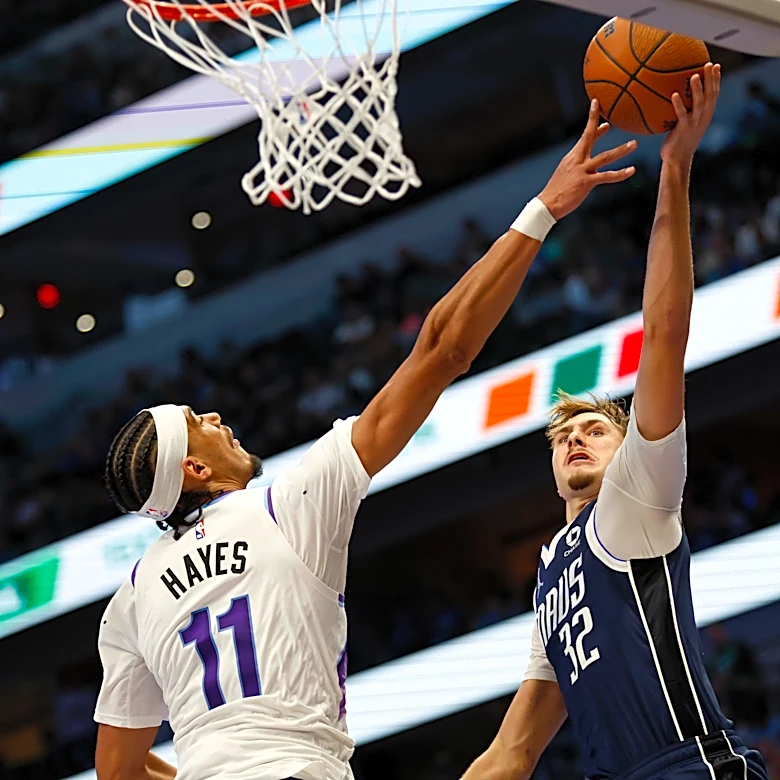
But back to Daigneault's point about the double-big lineup — I don't necessarily believe the correlation there is valid. Sure, the Thunder have a plus-3.6 net rating when both are on the floor, but that number is actually higher when it's just one of the two. Hartenstein's is at plus-4.7; Mara's is at plus-4.1.
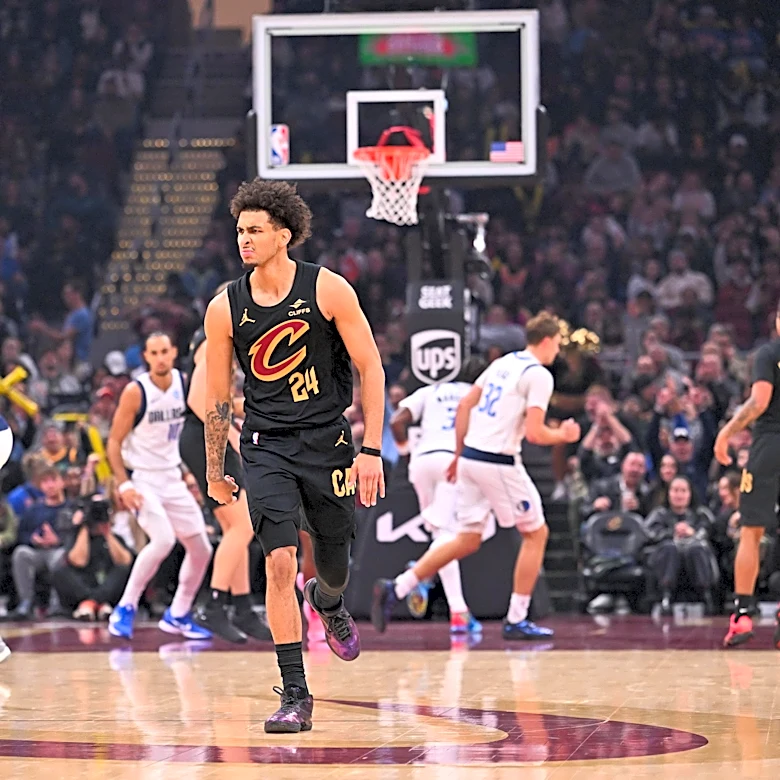
And aside from a couple of exceptions when they were tasked to guard a perimeter-oriented center, I don't even necessarily blame those two for the Thunder getting killed from beyond the arc. The two biggest scapegoats for that? The perimeter starters. Shai Gilgeous-Alexander has understandably taken defensive possessions off as he's turned into a one-man show. And guys like Jared McCain and Bennett Stirtz are defensive liabilities.
From Daigneault's answer, it doesn't sound like the Thunder will uproot their defensive foundation anytime soon. Especially in these two months where they're running a skeleton crew. He believes that the solution is not only impractical amid the NBA marathon, but just isn't worth it since this current duct-taped group won't be your permanent rotation after New Year's arrives.
"We're still working through. It doesn't mean it's perfect, but we're still working through what that looks like. But it's netting out well. We also think it's something that we can scale forward," Daigneault said. "Chet Holmgren is going to come back this season. He's going to be another guy that's a rim-protecting, paint-dwelling guy. So it's a good investment for us to work through and trudge through this a little bit because we're winning those minutes as it is. We think we can carry it forward.”
This article originally appeared on OKC Thunder Wire: Why Mark Daigneault is fine giving up opponent 3-pointers: 'There are trade-offs'