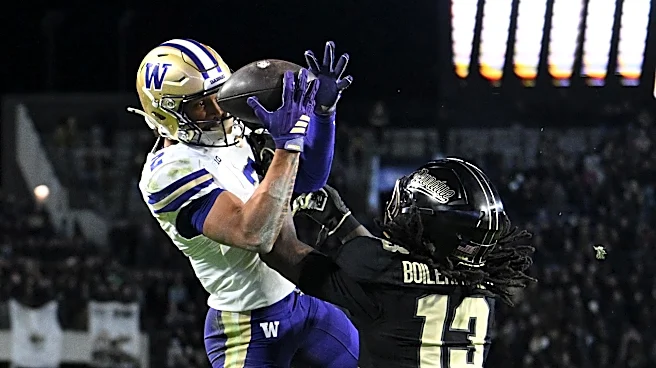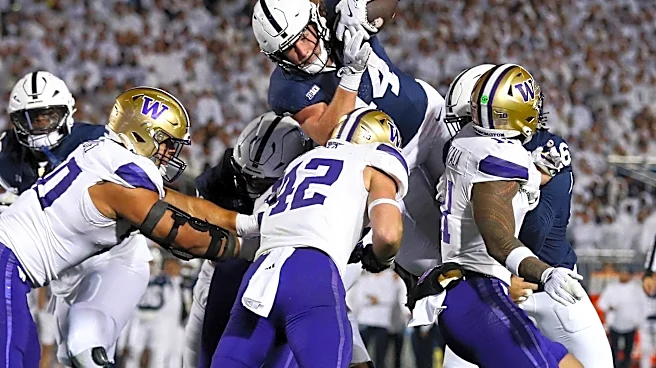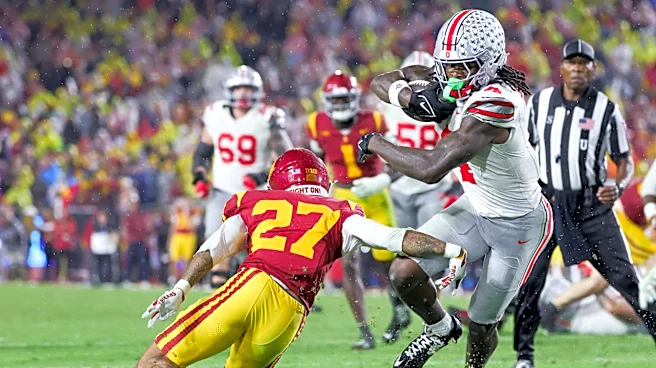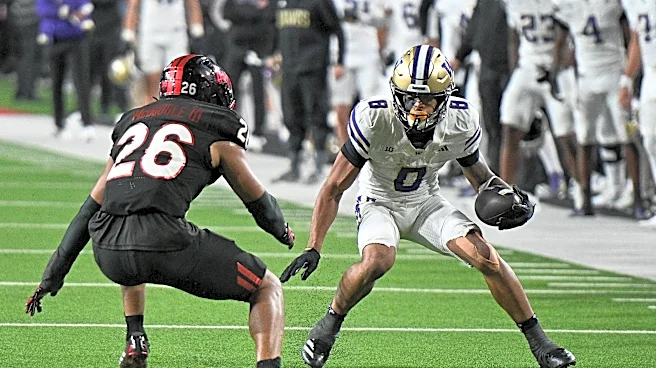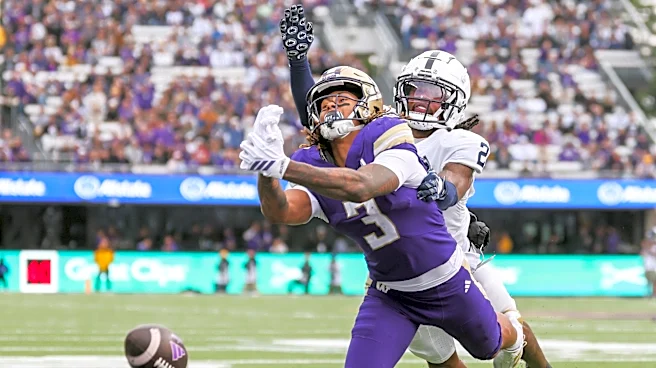

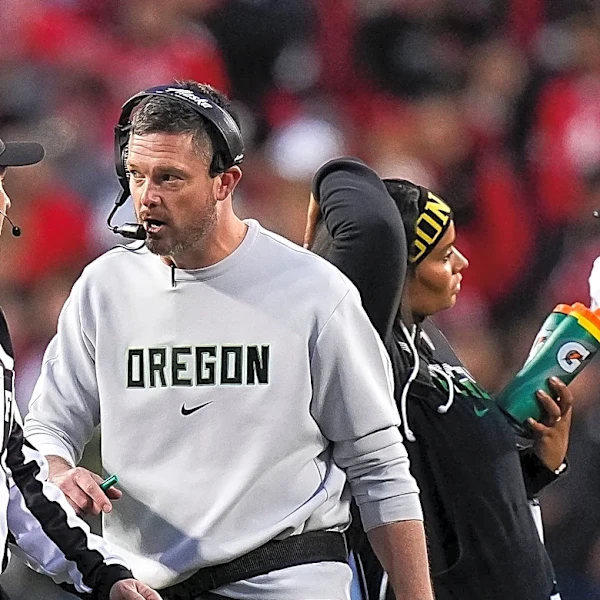

Washington is now 0-3 at home in Big Ten play this season following a loss to Penn State on Saturday. Coming into the season, you'd have to go back to an Apple Cup loss in 2021 to find the Huskies' third-most-recent home loss in conference play, two of which came last season with losses to Ohio State and Oregon.
"It's frustrating. It's very frustrating, but you know, we kind of got to a point where we look at every game as its own game," head coach Jedd Fisch said about the eroding home-field advantage after the game. "I look across the country, looks like a lot of teams lose at home and a lot of teams win on the road, and a lot of teams win at home and lose on the road. I don't know if there's a real formula. You'd love to be able to say every game you play
at home, you win, and then every game you go on the road, you try to win also. But we haven't won. We've lost two really, really heartbreaking games, and now we lost one that we just didn't play as well as we should have. But we have to get back to work. These teams are all good. Husky Stadium has been great to us, and we expect it to continue to be. We're playing a lot of teams that have never played in Husky Stadium before, and we have to find ways to win those games."
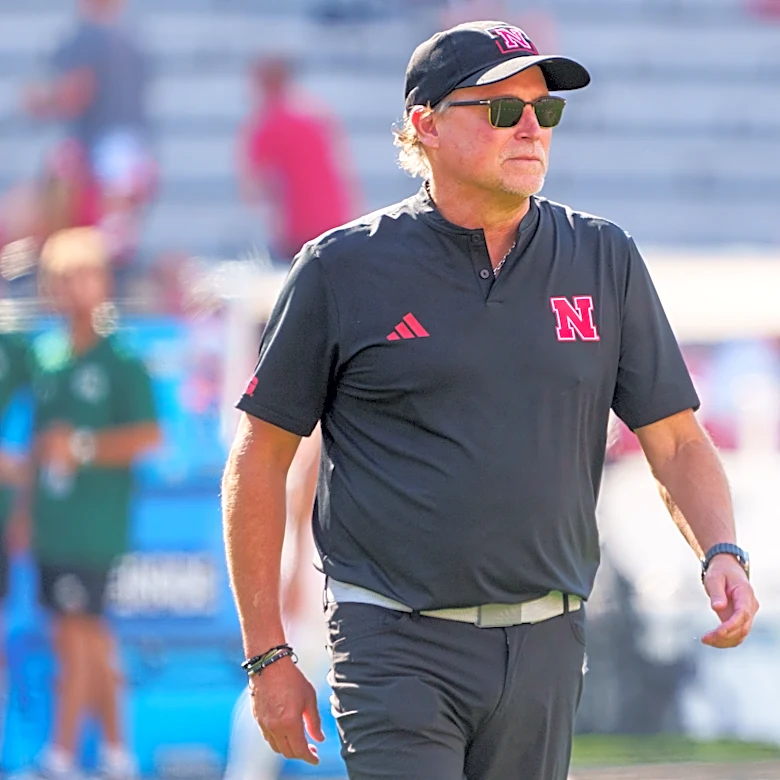
Perhaps the most frustrating thing about it is that Washington has seemingly solved their road woes in their new conference. The Huskies are 2-1 on the road this season (granted, those came against a poor Purdue team and a Nebraska team that led 10-3 until Washington scored two touchdowns in fifteen seconds) after going 2-2 last season and 0-5 in Fisch's first year in 2024. They have a winnable game against Michigan State next week and will face Oregon with a backup quarterback to end the season, so the road record in conference play may very well end up above .500 for the first time in Fisch's tenure - and the Huskies' time in the Big Ten.
In all three losses, Washington has entered the half down by double digits: they carried a 21-10 deficit against Minnesota into halftime, were down 27-3 to Iowa, and headed to the locker room down 28-6 on Saturday. After the game, Fisch did not have much of an answer regarding the Huskies' slow starts in their home stadium.
"I don't know. I really don't have a good answer for you," Fisch said when asked about the slow starts. "We need to come out and be able to handle whatever we're getting, be able to make plays at home and be able to start fast, or at least start moderately fast. And we haven't done that, and we put ourselves in the hole this week again, and this week we came back, and I thought we handled it a little better than we did against Iowa because you had a 3-point deficit with [7:40] left. But you know, we can't put ourselves in this position to not be able to come out with our hair on fire to start a game. To just come out and start games slowly like that...I thought offensively it was a really nice 14-play drive to start the game and would have liked to end it with a touchdown, but we didn't start very good on defense and then we didn't respond very well on offense for a few drives in a row."
The most striking difference has been explosive plays. In conference play, Washington has generated 23 explosive plays - passes of 15+ yards and rushes of 10+ yards - at home but allowed 37. On the road, the Huskies have generated 29 and allowed 21. With a three-game sample size for both sets of data, Fisch's offense has been less explosive inside their home stadium, and defensive coordinator Ryan Walters' unit has allowed significantly, almost 5 plays per game, more momentum-building plays to Washington's opponents. That once again played out on Saturday, as the Huskies allowed 12 explosive plays (5 through the air and 7 on the ground) while gaining only 6 (2 pass plays and 4 run plays).
Washington has also not been able to get lined up in their home stadium in critical situations. The Huskies committed a 12 men on the field penalty that negated a crucial third down stop on the final drive, in what Fisch characterized as communication that did not reach the entire defensive unit as they tried to substitute to account for Penn State changing offensive personnel out of a Washington timeout. A similar personnel miscommunication against Minnesota caused the Huskies to burn a critical 33 seconds before the 2-minute timeout as they attempted to claw their way back from a 10-point deficit in the fourth quarter. Those are issues the road team are supposed to be having, especially in an environment as strong as Husky Stadium is when at its peak.
Perhaps therein lies some of the issues as well: Fisch mentioned after the game that Washington is playing teams that have never played in Husky Stadium before, which has contributed to a more mixed crowd in games like Minnesota, Iowa, or Penn State than is typically the case for Washington as road fans travel to see a stadium they had previously had no reason to go to. Huskies fans have not been wholly receptive to the way the team has handled the Demond Williams Jr. saga from this offseason, and his small step forward rather than a massive leap into Heisman contention, as some expected, has only furthered that consternation.
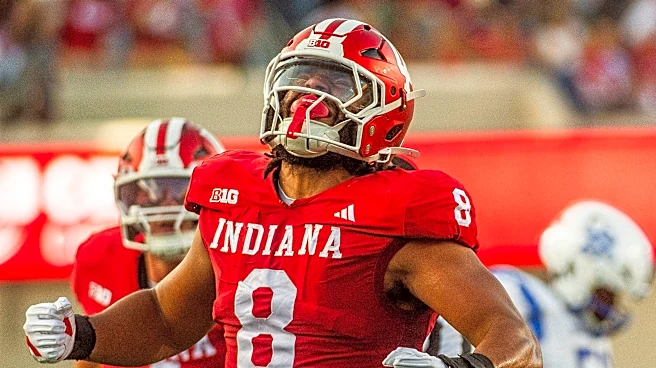
Three years after a season that culminated in a National Championship game appearance, the Huskies have lost what was a stronghold for them in that 2023 season. A final home game against reigning national champions Indiana may draw a crowd, but probably primarily because of the opponent, not because of excitement around Washington.
It has sunk all but the most meager of expectations for this season: the College Football Playoff, a dynamic offense led by a breakout year from Williams, a top-flight defense that could shut down anybody, even the number next to their names that the Huskies enjoyed heading into the year. Now, bowl eligibility, the equivalent of a C- in modern college football, is just about the best Washington can hope for before they try to reshape the roster this offseason.
If last week against Nebraska was about the highs, the flashes of brilliance on an imperfect team, Saturday was about the lows, the warts, the ever-changing flow of the tide. Consistency does not seem to be on the horizon, nor do solutions for the patterns of issues that plague this team. But then again - Washington is looking at every game as its own game, so maybe that puts a seemingly incongruous set of outcomes into more context.
This article originally appeared on Huskies Wire: Washington's home-field advantage slipping as Huskies fall to Penn State