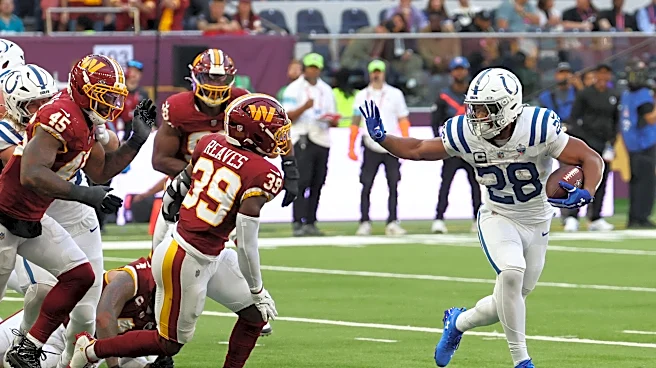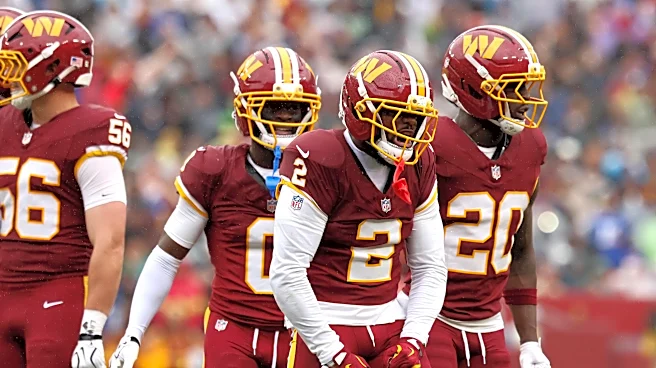

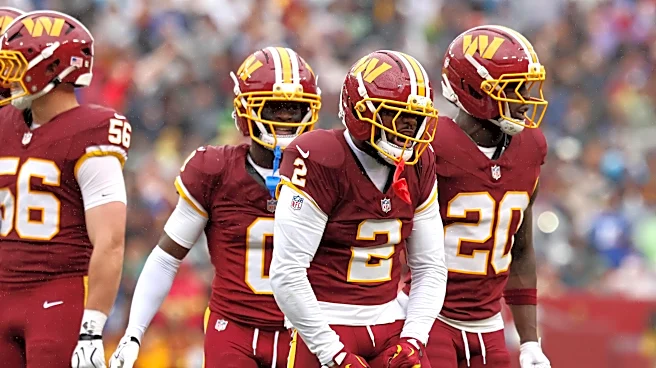
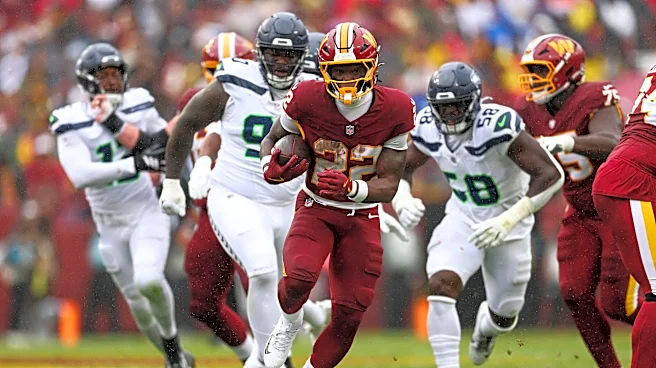
The Washington Commanders dropped to 1-3 on the season after Sunday’s 30-13 loss to the Indianapolis Colts in London. It was another injury- and penalty-filled game, with Washington’s defense allowing 30 or more points.
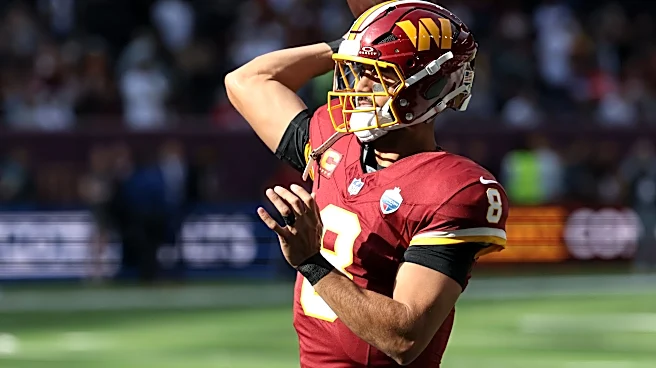
Quarterback Marcus Mariota, starting in place of the injured Jayden Daniels, went down on the final play of Washington’s second drive in the fourth quarter after a sack. It was immediately believed to be a knee injury. At halftime, head coach Dan Quinn said he was “gutted” for Mariota and that he would not return.
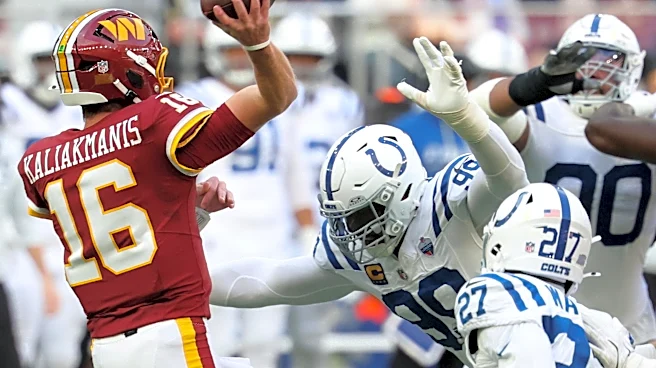
The game was never the same after that. Washington was forced to turn to rookie seventh-round pick Athan Kaliakmanis. As expected, things started roughly, as the Colts blitzed him like crazy. To Kaliakmanis’ credit, he hung
tough and made some plays. Unfortunately, he didn’t have enough support from his coaches or his offensive line.
Let’s dive in. Here are seven takeaways from Sunday’s game.
The other game-changing play
The Mariota injury was a turning point. The Commanders looked like they were about to blow the doors off the Colts. For the first couple of drives, Washington outclassed Indianapolis on both sides of the ball. The defense was flying to the ball, the pass rush was getting home and Colts quarterback Daniel Jones was making bad decisions.
Mariota’s injury wasn’t the only turning point, though. With around five minutes remaining in the first half, Washington’s defense made another huge stop, this time on third-and-14. But wait, there are flags. Officials called cornerback Amik Robertson for unnecessary roughness after a tiny skirmish with the much larger Tyler Warren. The replay was shown, and the game’s announcers, Kurt Warner and Jason Kelce, couldn’t believe it.
Judge for yourself.
ABSOLUTELY TERRIBLE call by the refs here on Amik Robertson after a great 3nd and long stop by Washington😡😡😡
— Tiller56 (Hogs Haven) (@Tiller56) October 4, 2026
Ridiculous to call this BS!!! This is FOOTBALL! pic.twitter.com/dbukYjes0i
The penalty was enforced half the distance to the goal line. Three plays later, the Colts scored. That penalty completely changed momentum and cost Washington four points. Just a horrific call.
Officiating
Speaking of officiating, this wasn’t the only bad call. For the third straight week, the Commanders had a touchdown taken off the board due to an offensive penalty. Whether you agree with the penalties or not, why does this keep happening? Overall, the Commanders were called for 10 penalties for 84 yards. The Colts? One penalty for five yards, and it didn’t happen until the fourth quarter.
The Commanders were flagged twice for offensive pass interference, including one on Stefon Diggs that killed another drive. Horrible call. Wide receiver Dyami Brown was running down the sideline and had a step on his man. But he was clearly held. Not called. Head coach Dan Quinn, normally composed, lost his cool.
There were other calls — non-calls — but you get the point. This is not a Washington-only problem. Just look across the NFL on Sunday, as several teams were flagged for 10 or more penalties. It’s ruining the game. Fans don’t even know what a catch is, and officials want to be the star of the show. They are affecting the outcomes of these games. The NFL can laugh all the way to the bank right now, but there will be a time.
Touchdowns, not field goals
In the first series of the game, Odafe Oweh sacked Jones, forced a fumble, and recovered it. The Commanders were in business. However, on fourth-and-2, instead of going for it, Quinn kicked the field goal. A three-and-out after the turnover. Inexcusable. Even if you had gone for it and failed, it was basically a free possession. Sure, you want to come away with points, but seven points sounds much better than three. This is glaring, considering Quinn’s decision to go for it later around midfield.
After another defensive series, the Commanders settled for another field goal. Two possessions, six points instead of 14. Can you imagine what would’ve happened if at least one of these drives end in touchdowns? Sure, it may not have impacted the final score, but that’s the thing about football: it’s all about momentum. Washington had all of the momentum at that point. While Washington scored on both drives, they felt like empty possessions. Whatever the reason, the Commanders should’ve been more aggressive.
Continuity
In a game where the defense started hot, the offense failed. In last week’s win over Seattle, all three phases clicked. The defense forced turnovers, and the offense turned those into points. Not on Sunday. Too often under this regime, the Commanders can’t get all three phases clicking at the same time. When they do, or anyone does, for that matter, good things follow. Over the past two years, we can point to two games where that’s happened: Against the Chargers in Week 5 last season and last week against the Seahawks. Sure, players going in and out of the lineup impacts the continuity, but that’s no excuse. At some point, it becomes a coaching issue.
Pre-snap penalties
Over the last two games, Washington has been called for seven pre-snap penalties. That’s definitely a coaching issue. I get it, David Blough is new in this role, but the Commanders, specifically Quinn, should spend all week ensuring little things like this get cleaned up. These penalties haven’t only taken touchdowns off the board the last two weeks, but they’ve also killed drives. In one series, Washington got nine yards on first down—then went backward. Pre-snap penalties not only cost you five yards, but they also put you behind the sticks. If the Commanders can’t even line up correctly and consistently, then they’ve got the wrong coaches.
This defense isn’t getting it done
Over four games, Washington’s defense is allowing 30.5 points per game. Considering the resources they’ve spent there, this is unacceptable. Here’s the truth: the defense has played well at times. They still give up too many explosive plays, although that wasn’t an issue on Sunday. They came into Sunday’s game ranked No. 3 in run defense. And while they did a good job holding the Colts to 257 yards overall, they couldn’t stop the run when it mattered most. Through four games, what does this defense hang its hat on? Can it win consistently without blitzing? Washington fans want to watch a defense that doesn’t give up 30 points per game each week. It’s been this way for three years now, even longer, dating back to the previous regime.
Austin Ekeler’s return
Washington could not run the football unless it was Mariota’s one run or when the recently signed Austin Ekeler touched the ball. Ekeler carried the ball four times for 29 yards. He was quick and decisive. You’d never have guessed he was an over-30 running back who tore his Achilles only a year earlier. He’s already the best back on the roster. That’s not meant to disrespect Bill Croskey-Merritt or Rachaad White. Both are very useful backs. Croskey-Merritt’s a home-run hitter, but he lacks patience. Ekeler doesn’t have blazing speed, but he’s so quick and possesses such great vision that he looks much faster than the other backs. Why didn’t he play more? I’ll give Blough a pass here because Ekeler hasn’t played football in over a year. His conditioning may not be fully back yet. It’s an indictment of GM Adam Peters that Ekeler is already his best running back.
This article originally appeared on Commanders Wire: 7 takeaways from Commanders' Week 4 loss to Colts