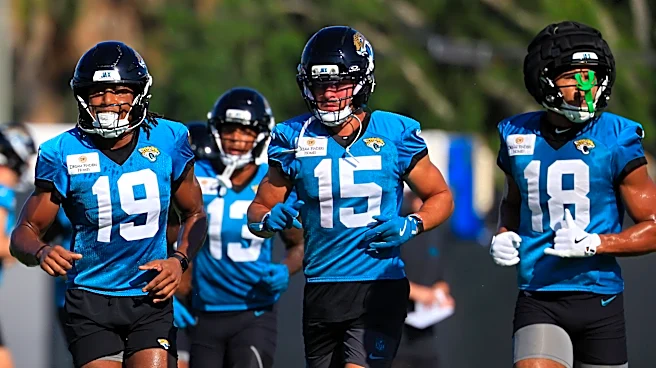




ESPN's Bill Barnwell put together his list of five NFL teams most likely to decline during the 2026 NFL season, and the Jacksonville Jaguars were included.
In Year 1 under Liam Coen, the Jaguars went 13-4, but Barnwell questions whether Jacksonville can replicate that success in Year 2.
For starters, it's noted that the Jaguars were 6-2 in one-score games, a stat that isn't indicative of future success and can be quite volatile.
In addition to that, Barnwell pointed out that the Jaguars were top-five last season in turnover margin and fumble recovery rate, which are difficult-to-sustain metrics.
Barnwell also points to the Jaguars' competition down the stretch last season, when they ended the year on an eight game-winning streak to claim the AFC
South title.
"Over the final nine games, the Jaguars faced the opposing starter for a complete game only twice, with the Titans getting a full start from Cam Ward and the Broncos getting one from Bo Nix," Barnwell wrote. "Six of the other seven games were almost entirely against second-, third- or even fourth-string options"
To continue piling on, Barnwell writes that the Jaguars were one of the healthier teams in football last year, and they will have a lot of road games this season.
Statistically speaking, the Jaguars are probably more likely to win fewer games this season, but that is in part due to the fact that they won a very high amount in 2025.
There are, however, reasons to be optimistic as well, mainly the continuity of being in the same offensive and defensive systems for a second season. Rather than learning and implementing new schemes, the Jaguars have the ability to build off the foundation they established last year.
This summer, we've also seen Trevor Lawrence and Brian Thomas Jr.'s connection grow, the secondary play very well, and Travon Walker has been fully healthy.
Perhaps this article from Barnwell will turn into some new material for Coen to show to the team.
This article originally appeared on Jaguars Wire: ESPN predicts Jaguars among teams 'most likely to decline' in 2026