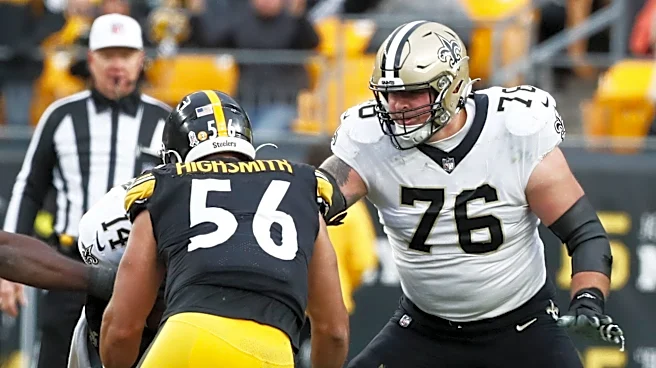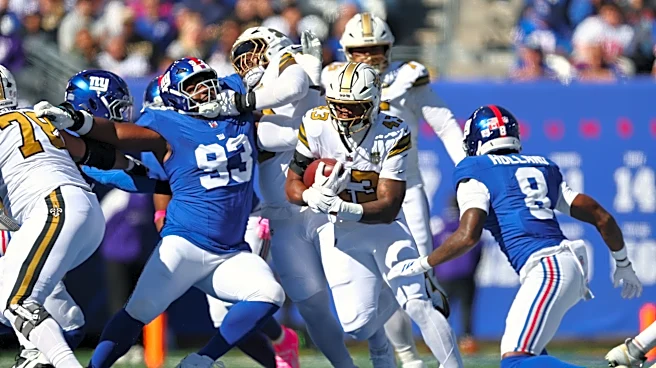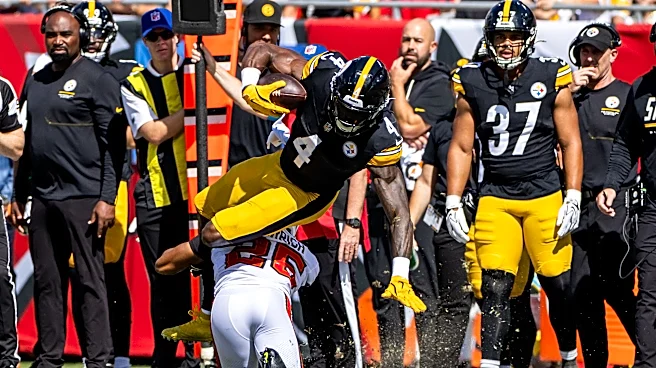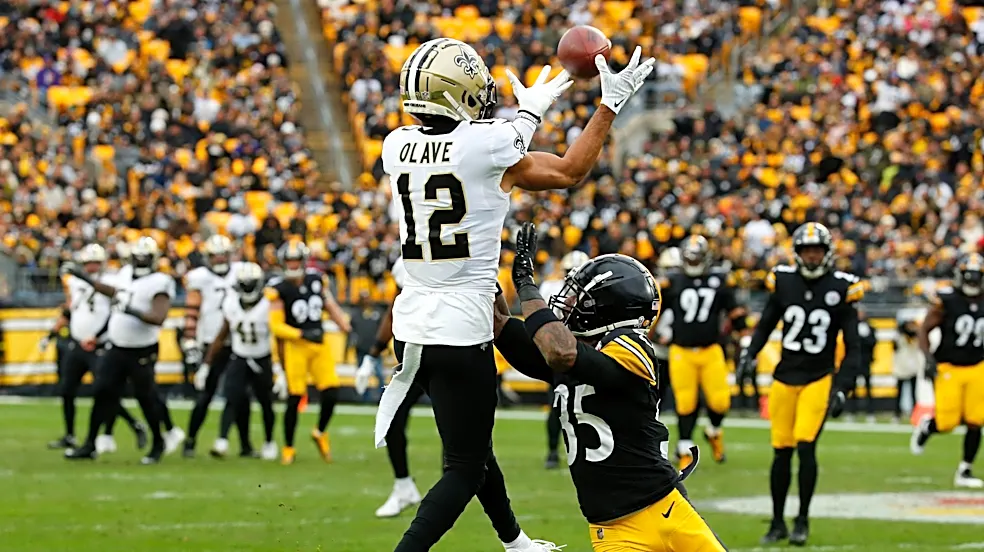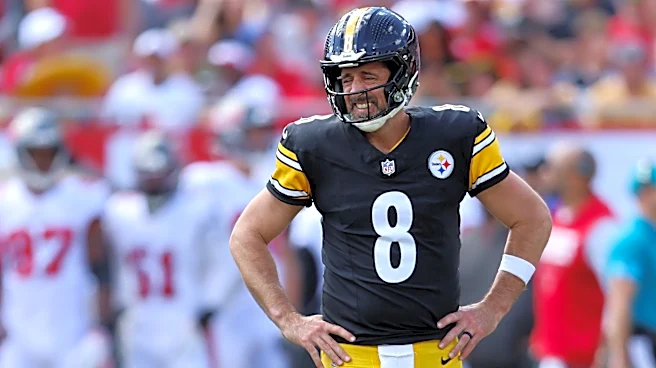

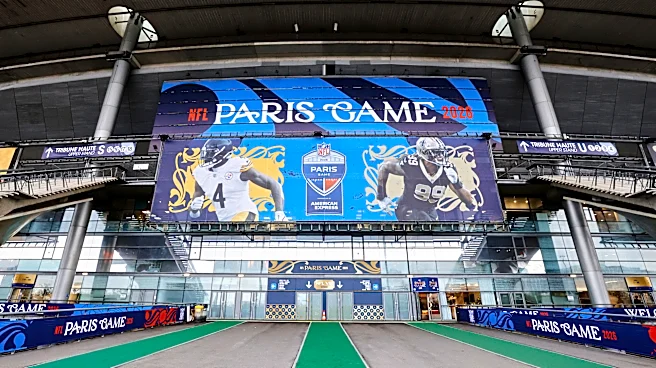
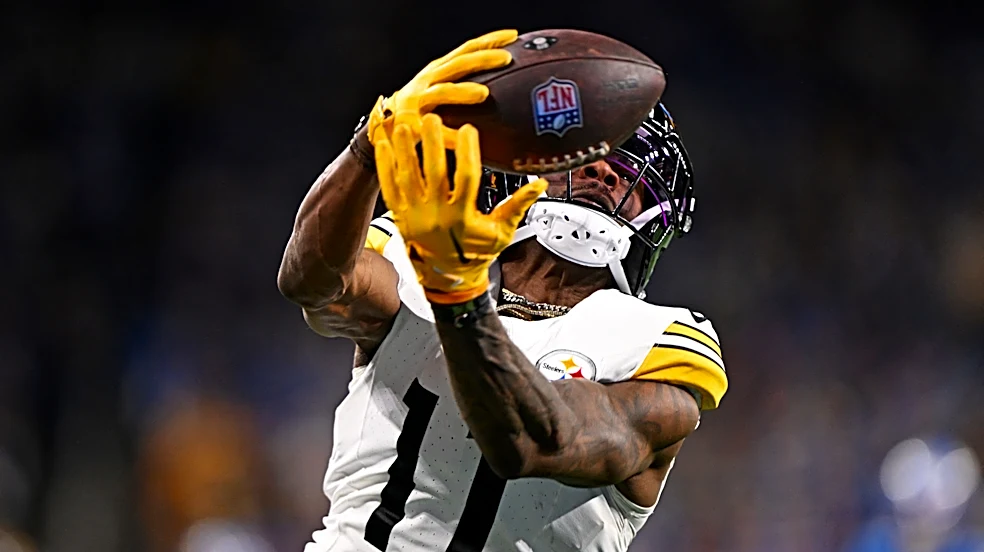

Sunday morning in America sees NFL history when the New Orleans Saints face the Pittsburgh Steelers in Paris, France. It's the first NFL game ever played in France with New Orleans designated as the home team. The Saints come in with a 2-4 record, winning last Sunday at the New York Giants. The Steelers counter with a 4-2 record, winning two straight and three of their last four.
Pittsburgh is in their first year with offensive-minded head coach Mike McCarthy. It's an offense that ranks 21st overall and has been pass-heavy in their second year with Aaron Rodgers at quarterback. On the other side, New Orleans has looked very little like the defense that ranked fourth against the pass and ninth overall last season. This analysis takes a look at how
well the Saints match up against McCarthy, Rodgers, and the Pittsburgh pass catchers.
Pittsburgh Steelers Passing Game
- 221.3 yards per game (18th)
- 61.4% completion percentage
- 12 touchdowns
- 5 interceptions
- 19 sacks
Rodgers is among the most-sacked quarterbacks in the league through six weeks, with his 159 sack yards the most in the NFL. The Steelers are fourth in the league in passing attempts, often abandoning the run in favor of a pass-first approach. Yet, Rodgers rarely takes shots down the field. Part of that is poor pass protection, but Rodgers is also quick to check the ball down or take a sack to avoid interceptions or sometimes even instead of throwing the ball away.
Wide receivers Michael Pittman Jr., a key offseason acquisition, along with Roman Wilson, are on injured reserve. Wideout Ben Skowronek has also been ruled out against the Saints. The Steelers wide receivers have basically been reduced to veteran D.K. Metcalf and two rookies, second round pick Germie Bernard and fourth rounder Kaden Wetjen. Metcalf leads the team with 30 catches and 318 yards, but an average of only 10.6. Bernard is a big-play threat, but has an average of just 9.5 on 24 receptions and 224 yards.
Where Pittsburgh can be potentially lethal is through two tight end sets. Pat Freiermuth and Darnell Washington are big, athletic, and excellent after the catch. Freiermuth has caught 21 balls for 180 yards and a team-best 4 scores, with the gigantic Washington pulling in 15 passes for 156 yards. Running back Jaylen Warren is also a mismatch for defenses as a receiver. Warren has 258 receiving yards, second on the team, on 21 receptions that include a spectacular 80-yard score off a swing pass.
New Orleans Saints Pass Defense
- 239.7 yards per game (25th)
- 66.5% completion percentage
- 10 touchdowns (20th)
- 4 interceptions (12th)
- 15 sacks
- 33 QB hits
Brandon Staley's defense, after ranking fourth against the pass in 2025, has often been guilty of giving a ridiculous cushion to opposing receivers this season. The result has usually been easy pitch-and-catch from quarterback to receiver, not allowed what's been an inconsistent pass rush to create any disruption. Linebacker Kaden Elliss returns from a calf injury after a three-week absence though, giving a boost to both the coverage and interior pass rush.
New Orleans defensive linemen have been the least productive group on this unit so far. Nathan Shepherd, again questionable with an illness, and Vernon Broughton have shown just flashes but have not been nearly productive enough. Rookie second round pick Christen Miller has clear upside, but has struggled to stay in the lineup. Recently, Colby Wooden and Khristian Boyd have made some plays recently, finally giving the Saints a little much-needed disruption up front.
Neither Cameron Jordan or Tyree Wilson have given the team expected production. Wilson looks every bit like the high first-round draft bust he was with the Raiders, giving the Saints very little so far. The legendary Jordan came back for a 16th season, but has only 1 pressure and 1 stop for loss so far with no sacks. If the 37-year-old Jordan can recapture even a little of his Hall of Fame form and the Saints get continued development from Miller, Boyd, and Broughton, then perhaps some much-needed disruption can come from the middle against opposing passers.
Edge rusher Chase Young has been the unquestioned defensive MVP for New Orleans. Young has 5.5 sacks, third in the NFL, along with 9 QB hits and 3 stops for loss. This despite constant double and triple team blocking. Carl Granderson has 3 of his 4 sacks over the last two games, providing a crucial complement to Young on the other edge. Granderson has always been a streaky player, but he and Young are capable of giving the Saints a disruptive outside pass rush. Anfernee Jennings and Chris Rumph II are solid run defenders from the edge, but add little pass rush depth. Unless Jordan has a resurgence, most of the pass rushing production will come from Young and Granderson. Elliss will also provide some disruption, as he's third on the team in QB pressures despite playing in just three games to this point.
Fellow linebackers Danny Stutsman and Pete Werner are physical and decent run defenders in the tackle box, but both struggle in open space, sideline-to-sideline pursuit, and can be liabilities in coverage. Werner leads the Saints with 46 total tackles with Stutsman tied for second at 35 stops. Stutsman has been the more effective blitzer of the two, meaning that Staley could mix up his looks and rush packages with Elliss back in the defensive lineup.
New Orleans has surprisingly played below expectations in the secondary. Part of this is Staley's system, but the defensive backs must also make more game-changing plays. Cornerbacks Kool-Aid McKinstry, Quincy Riley, and Martin Emerson Jr. are a very capable trio. However, Jonas Sanker has struggled in coverage as the replacement for Alontae Taylor. Safeties Julian Blackmon and Justin Reid have range, but also haven't come through with enough big plays. Blackmon and Emerson, with 2 apiece, have the only interceptions for the defense. McKinstry and Emerson have 4 pass breakups each to lead the team with Riley at 3. That's far too low for the talent level in this secondary, indicative of Staley's extremely passive scheme.
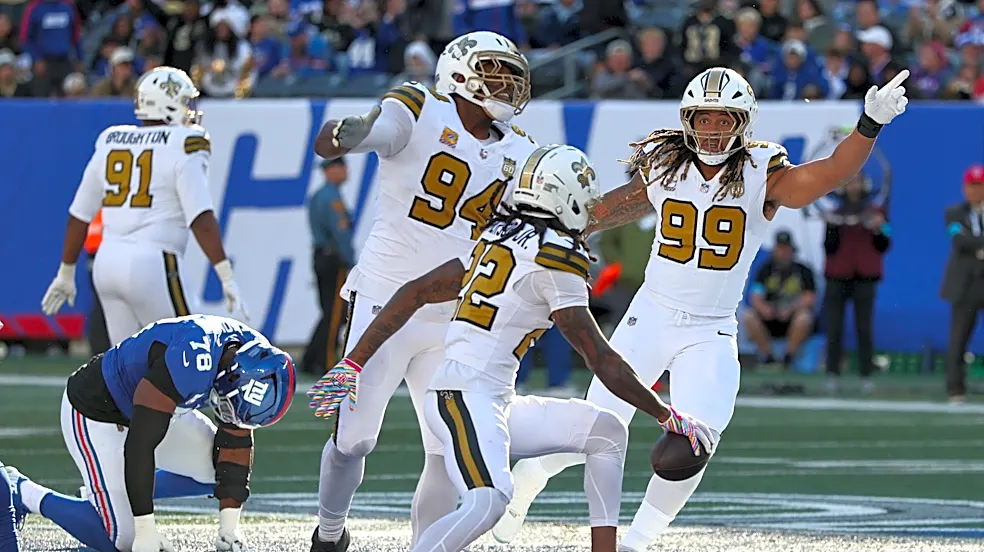
For the first three quarters against New York, we finally saw what this defense is capable of doing. The Saints were noticeably more aggressive in the secondary while Young, Granderson, and even the defensive line created pass rush disruption. Exactly that kind of game is needed against Rodgers and the Steelers. There is no reason to give a big cushion against Pittsburgh receivers, though a Sanker or a corner will likely be needed on either Freiermuth or Washington. Rodgers isn't prone to interceptions, but the Saints should be able to sack and hurry him with Young, Granderson, and an aggressive inside rush. With Pittsburgh's pass-heavy approach most of this season, a major key to this outcome will be Brandon Staley's scheme and the ability of the Saints defenders to keep Rodgers uncomfortable.
This article originally appeared on Saints Wire: Disrupting Aaron Rodgers is Saints' biggest key to Steelers outcome