





Before I begin, I want to apologize to readers and our staff. Whatever you’re hoping for in a recap of Netflix’s Hulk Hogan: Real American, I’m not sure I can deliver it, though I’ll try. I felt confident that, of everyone on our team, I was the most qualified for the job because I had followed his career so closely, though that might make me biased because, admittedly, I loved Hulk Hogan.
That’s not a popular thing to say in 2026, but to steal a line or two from Dido:
I shouldn’t still love you, or
I’ll tell you that. But if I didn’t say it, well, I’d still have felt it. Where’s the sense in that?
And so on Thursday, I went into four-plus hours with the Hulkster, hoping to come out of this with a reason to cheer. I expected to laugh, cry, and even get angry. Indeed, I did all that. But when it was over, I was drained, depressed, disappointed.
No Easy Way Out
In 1991, Hulk Hogan went on The Arsenio Hall Show and lied about using steroids. In the Netflix doc, he said he would have done things differently if given the chance.
Well, he had that chance when racist remarks from a sex tape recorded without his knowledge were released. Instead, he did his best to minimize that, which continued here in the documentary, as Hogan and its filmmakers failed to mention the actual words he used that sunk his legacy.
Besides protecting what was left of his image, I think I understand why Hogan avoided tough issues.
Early in the first episode, Hogan described himself as a shy child who avoided conflict. A “fat kid” from a strict household, he was forced to leave home after dropping out of school, much to his father’s disappointment, who also wasn’t initially thrilled about his son’s career choice.
At his core, Hogan seemingly wanted what we all want: acceptance. Once Terry Bollea found it as Hulk Hogan, he wasn’t going to let it go. Like a child lying to avoid punishment and to soften the disappointment he caused others, he kept choosing the easy way out when things got hard.
Such attempts to minimize damage only intensified public scorn. According to Jimmy Hart, Hogan was genuinely hurt when he was booed out of Los Angeles during Raw’s Netflix debut. To hear Hogan tell it, he wasn’t fazed at all. Instead, he saw it as heat he could use in an angle where he was whipped and bloodied, despite his obvious physical limitations.
Earlier, I mentioned feeling drained, and this is one of those reasons why. I don’t know who was honest and who was working. Were Hogan’s feelings really hurt, or was that something Hart said to garner sympathy for his friend of 40-plus years?
Similarly, was Hogan trying to downplay what truly was an emotional gut punch, or was he such a mark for his own gimmick, something the film touches on, that he actually believed that at 71 and hobbled, he could still draw one more gate as a villain in the vein of “Hollywood” Hogan from 1996?
Unreal to Too Real
We do catch glimpses of the real man, which truly broke my heart.
Linda Bollea, Hogan’s ex-wife, appears prominently throughout. She provided a moment of candor and levity when she admitted she was curious about hooking up with a giant. And yes, that means what you think it means.
Though Linda annoyed my wife at times during the doc, we both came away thinking the same thing: she really loved Terry.
Hearing Hogan talk about their early relationship, we got the sense he loved her, too. And it raises the painful question that hangs over so many failed relationships: where did it go wrong? Despite the fame, money, and adoration, and in part because of it, the marriage collapsed.
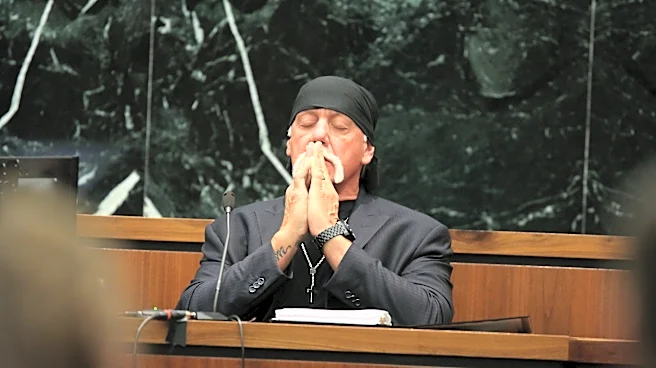
Seeing Hogan slowed by injuries and age was incredibly difficult. We often get caught up in the myth of a wrestler’s celebrity that we forget the toll — emotional and physical — underneath it. In court scenes from their divorce proceedings, Hogan somehow looked older than he did talking to Netflix. He admitted to heavy drinking and said he was taking large doses of fentanyl along with “fistfuls of pills that would kill a horse.”
Eric Bischoff, Hogan’s friend and former WCW executive, said he helped secure Hogan a deal with TNA, which Hogan admitted was a financial lifeline after the divorce left him broke. That line brought to mind a story from wrestler Steve Richards, who claimed on his podcast that while working with Hogan in TNA, Hogan once said he needed $2 million a year just to live.
But what might hit viewers the hardest was his talking about his older brother, Alan.
Hogan admitted they weren’t close. He said Alan fell into a rough life early, joining a biker gang and getting involved with drugs. They reconnected after Alan left rehab, and Hogan tried to help. After a match, he offered to bring Alan on the road. Alan declined and asked for money instead.
Hogan gave him the money. That same night, Alan died of an overdose. When producers pressed him on it, Hogan, visibly shaken, shut it down quickly.
“You have to stop, you’re digging way too much for me,” Hogan said before the show moved on.
I got the sense Hogan still carries a heavy burden of guilt. It’s a feeling many people can relate to after losing someone close. It also highlights a recurring theme in the documentary: vulnerability and difficult conversations are not things Hogan handles easily.
Here, though, he earns a pass.
The Final Bell
Despite how I felt at the end of the four-part series, I’m certain viewers will enjoy seeing Hogan at home with his kids, along with other private home videos shot over the course of his life. Fans will likely smile as they relive his career highlights, featuring stars like Ted DiBiase, Kevin Nash, and Bret Hart, who is still very bitter about the events of WrestleMania IX.
Fans will also likely get a hoot out of Hogan describing the moment he realized wrestling wasn’t real, and how it eased his mind knowing he didn’t have to be a tough guy — he just had to play one.
There are also appearances by President Donald Trump, who was friends with Hogan, and Jesse Ventura, who had a highly publicized feud with Hogan, though their past issues with weren’t discussed.
A brief scene also said something about WWE Chief Content Officer Paul Levesque. Talking about Hogan’s final appearance on Raw’s Netflix debut, Levesque said, “Did I think he was going to get booed out of the building? Probably.”
Yet he sent Hogan out anyway. It was a curious call from Levesque, who in the documentary also thought it was a mistake for then-WWE boss Vince McMahon to push an aging Hogan in 2002, a move that ultimately saw Hogan unseat Levesque as WWE Champion.
Speaking on the crowd’s reaction that night was Cody Rhodes, who poetically and diplomatically best summed up public sentiment toward Hogan before his death, a perception I’m not sure this documentary will do much to change.
“Too much of the artist has been exposed for them to perhaps cheer,” said Rhodes.