




This six-part Colts What If series looks back at some of the biggest turning points in franchise history, from the Peyton Manning draft decision to playoff heartbreak, quarterback pivots and coaching chaos, while revisiting what happened, what could have changed, and how different the Colts might look if one major moment had gone the other way.
For Part 5, we go back to Super Bowl XLIV and one of the most famous special teams plays in NFL history.
The Colts led the New Orleans Saints 10-6 at halftime.
They had Peyton Manning, a four-point lead, and a chance to open the second half in control of the game. Indianapolis entered that night as the favorite, and through two quarters, the game had largely followed that script. The Saints had moved the ball, but the Colts were ahead, composed and still had the best quarterback in football on their side.
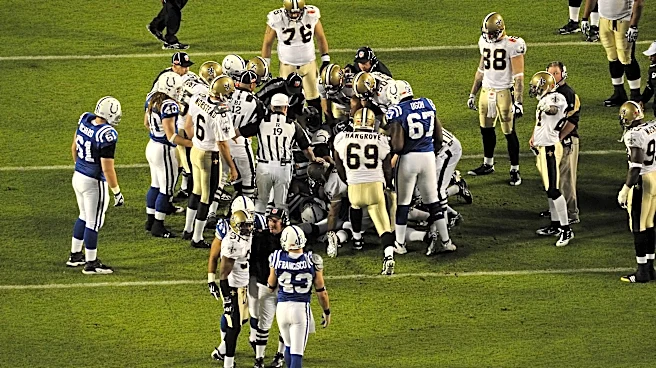
Then Sean Payton called the surprise onside kick.
The ball bounced toward Hank Baskett, he failed to secure it, and New Orleans recovered. A few plays later, the Saints scored a touchdown and took a 13-10 lead. The entire feel of the game changed in one sequence.
That is why this play still hurts. It was not just a strange moment and it was not just a special teams mistake. It was one of the most consequential plays in Super Bowl history because of how much it changed the math, the momentum and the legacy of everyone involved.
The Colts were in control at halftime
The Colts entered Super Bowl XLIV as roughly five-point favorites. The Colts were 14-2, had started the season 14-0 before resting starters late, and had Manning playing at another MVP level.
At halftime, they led by four.
If the Colts were five-point favorites before the game and were up 10-6 at halftime, their live projection was probably stronger than the pregame number. They were ahead, they had already played a half, and they had possession uncertainty about to begin the third quarter. In that spot, Indianapolis was likely closer to a seven-point live favorite, which would put its win probability somewhere around 75 percent.
That is the part people sometimes forget. The Saints were not dead, but they were in trouble. They needed something to change the game. They needed to steal a possession, shift the pressure, and knock the Colts out of rhythm.
And they got exactly that.
If Baskett recovers it, the Colts become heavy favorites
If Hank Baskett recovers the onside kick, the Colts likely get the ball near midfield or slightly inside Saints territory while already leading 10-6. With Manning, that is a dream situation.
Even before running a play, that recovery moves the live line another point toward Indianapolis by at least a point. Instead of the Colts being around seven-point favorites, they probably become closer to eight-point favorites, which would put their win probability around 78 percent.
That is already a massive edge in a Super Bowl.
Then comes the bigger swing…
If Manning turns that field position into a touchdown, the Colts go up 17-6. At that point, New Orleans is down 11 points, the surprise onside kick has failed, Manning has punished it immediately, and the Saints are playing from behind against a quarterback who controlled games as well as anyone in NFL history.
In that scenario, Indianapolis probably has around an 85 percent chance to win.
That does not mean the game is over. Drew Brees was too good, Sean Payton was too aggressive, and the Saints had too much offensive efficiency to completely write off. Still, an 11-point second-half deficit against Manning in the Super Bowl is a brutal position.
That is why the recovery mattered so much. It was not simply about possession. It was about the chance to turn a four-point halftime lead into total control.
Instead, the Saints flipped the game
Once New Orleans recovered, the whole game changed.
The Saints got the ball. They got field position. They got the emotional payoff of a massive gamble. Instead of Manning beginning the half with a lead and a short field, Brees got the chance to put New Orleans in front.
That is exactly what happened.
The Saints turned the recovery into a touchdown and took a 13-10 lead. In a matter of minutes, the Colts went from a team likely sitting around 75-to-78 percent to win to a team in a much closer fight. After New Orleans scored, the game was probably much closer to 50/50.
That is roughly a 20-25 percentage swing in win probability, which for one play is incredibly enormous.
Most plays do not move a Super Bowl that much. A third-down conversion matters. A sack matters. A good return matters. Even a turnover can sometimes be absorbed depending on field position and score. This play was different because of the timing and the context.
It opened the second half. It stole a possession. It gave the trailing team immediate field position. It produced a touchdown. It took the favorite out of control and put the underdog directly into the game.
That is about as valuable as one special teams play can be. It is probably the most valuable special teams play in the history of the NFL.
The second half looks completely different
This is the hardest part of any Super Bowl what-if. Once one major play changes, everything after it changes too.
If Baskett recovers, the Colts’ next drive happens with different field position, a different score, and a different emotional state. If the Colts score, the Saints’ next possession is played under a different level of pressure. If Indianapolis only kicks a field goal, New Orleans still trails and does not get the same surge from Payton’s gamble working.
The later Manning pick-six may never happen in the same way. That does not mean Manning would not make a mistake later, and it does not mean the Colts automatically play a perfect second half. It just means the exact game script that led to Tracy Porter jumping the route probably changes.
That is the real impact of the onside kick. It did not just hand New Orleans one possession. It changed the entire structure of the half. The Saints became the aggressive team that had stolen control. The Colts became the team reacting to the sudden shift. That matters in a Super Bowl, where every possession feels heavier and every mistake gets magnified.
Indianapolis still had chances after the onside kick. The Colts did not lose only because of that play. Manning had the ball late with a chance to tie the game before the pick-six. The defense still needed stops. The offense still needed to finish drives.
Still, no play changed the direction of the game more than that recovery.
A second ring changes Manning’s Colts legacy
This is where the what-if becomes bigger than the game.
If Baskett recovers the kick and the Colts go on to win, Peyton Manning has two Super Bowl rings in Indianapolis. If the rest of his career plays out mostly the same, including his title with Denver, Manning retires as a three-time Super Bowl champion.
Manning already has one of the greatest quarterback résumés ever. The MVPs, the numbers, the regular-season dominance, the offensive control, the pre-snap mastery, the way he changed quarterbacking at the line of scrimmage. Adding a ring really separates him from everyone and gives him a real argument over Brady.
The biggest argument against him has always been postseason success compared to Tom Brady. A second Colts ring does not erase Brady’s advantage, especially with how absurd Brady’s final résumé became, but it makes Manning’s case much stronger. Three Super Bowls, including two in Indianapolis, would change the way his career is framed.
It also kills the lazy version of the criticism.
The “Manning only won one with those Colts teams” argument disappears. Instead, the conversation becomes about a quarterback who won twice in Indianapolis, went to another Super Bowl with Denver, won there too, and remained one of the defining players in league history across two franchises.
The Colts’ 2000s legacy changes too
The team legacy might change almost as much as Manning’s.
The Colts of the 2000s were one of the defining teams of the decade, but they are often remembered with a qualifier. They won a ton of games, had one of the greatest quarterbacks ever, dominated the regular season, and were always relevant in the AFC. Yet the conversation often comes back to the same thing: only one Super Bowl.
If Indianapolis wins Super Bowl XLIV, the Colts have titles in 2006 and 2009. They have multiple championships in a four-year window. They have Manning, Marvin Harrison, Reggie Wayne, Dallas Clark, Jeff Saturday, Dwight Freeney, Robert Mathis, Bob Sanders, Antoine Bethea and so many others attached to a two-title era instead of a one-title era.
At that point, the Colts have a serious argument as the best team of the 2000s.
The Patriots still have the three early-decade Super Bowls, so it is not as simple as saying Indianapolis clearly passes New England. The Patriots’ dynasty was already established, and Brady-Belichick still own the decade historically. Still, with a second title, the Colts are no longer just the great regular-season team that finished once. They become a true multi-title powerhouse with a legitimate place in that debate.
A second championship changes how the Manning-era Colts are remembered by everyone outside Indianapolis. It makes the era feel more complete. It makes the sustained excellence look more properly rewarded. It changes the way people talk about Bill Polian’s roster construction, Tony Dungy’s foundation, Jim Caldwell’s first season, and the entire run of Colts football from 1999 through 2010.
One recovery does not create all of that by itself, but it may have kept the door open for it.
The Saints deserve credit too
There is another part of this that should not be ignored.
Sean Payton’s call was brilliant because of the risk involved. If the Saints fail to recover, they may hand Manning the ball near midfield while already trailing. That could have buried New Orleans. The call was bold because the downside was massive.
That is also why the Colts side hurts so much.
The Saints took the risk, and the Colts had a chance to punish it. The ball was there to be recovered. Indianapolis did not need a miracle. It needed a clean special teams play. Instead, the ball got loose, the Saints won the pile, and the entire game tilted.
New Orleans still had to finish. Brees played a great game. The Saints offense executed. Their defense made the biggest play of the night with Porter’s interception. They earned the championship.
For the Colts, though, the onside kick remains the hinge point. It was the moment where the game stopped feeling like Indianapolis was controlling it and started feeling like New Orleans had seized something bigger than a possession.
The final verdict
If Hank Baskett recovers the onside kick, the Colts probably win Super Bowl XLIV.
Not definitely, but probably.
They were already leading by four. They were likely around 75 percent to win at halftime. A clean recovery near midfield likely pushes that closer to 78 percent. A touchdown on the following drive could have put them up 17-6 and moved their chances closer to 85 percent.
Instead, the Saints recovered, scored, and turned the game into something close to a coin flip. That is a huge swing for one play, especially in the Super Bowl.
The legacy impact is even bigger. Manning likely gets his second ring in Indianapolis. The Colts become a two-title team in the 2000s. The criticism of that era changes. The GOAT debate around Manning becomes stronger. The franchise’s best era looks less like a great run with one finish and more like one of the defining championship runs of the decade.
The Colts did not lose Super Bowl XLIV only because of the onside kick.
No play did more to take a game they were controlling and turn it into a fight they eventually lost.