




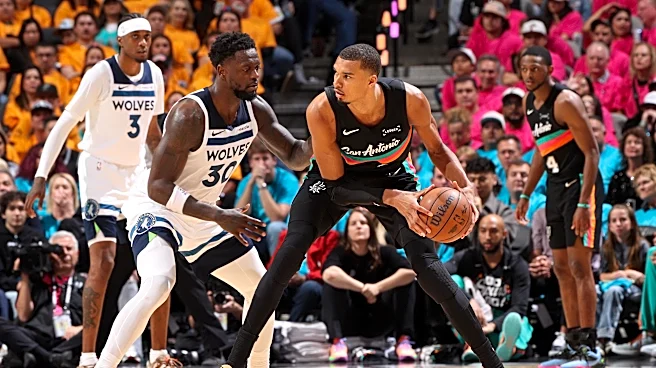
My discussion with Thilo Widder from Canis Hoopus continues as the series shifts from San Antonio to Minneapolis all tied up at 1-1. Before Game 1, we discussed how the Spurs would need to be prepared the Timberwolves’ size advantage. Then, after a last second loss in which they got little offensive help from their their stars, we discussed what further adjustments needed to be made. Now, after a blowout Spurs win in Game 2, we review what the Spurs did to create such an amazing turnaround and now
what adjustments the Wolves must do to get themselves back on track.
Thilo Widder
Okay, maybe I shouldn’t have called the last frat “slightly braggadocious” but alas, when else am I going to be able to use that word?
That was certainly a game. Not a good one, but it was certainly one. The Wolves guards imploded under the weight of a Stephon Castle without foul trouble while Jaden McDaniels unfortunately found himself on the wrong side of Scott Foster.
The Wolves continue to be one of the least consistent teams in the league, but a 16-7 (Spurs) run was enough of a run to build a 25-point lead that just got worse and worse. That run was the least of the numerous problems Minnesota had, as their guards shot 10/36 on the game.
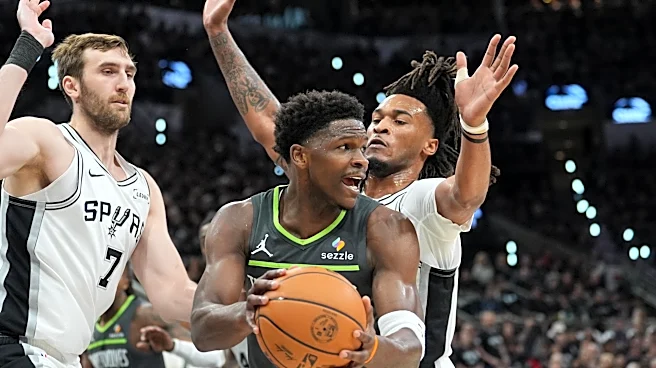
Ayo Dosumnu, who I highlighted as a swing player, had only a block and a steal in 10 minutes of playtime before getting injured again. Bones Hyland continues to play very badly. Anthony Edwards is still so clearly hobbled.
If that was a representation of the rest of the series, that would suck (for me as a fan at least, I’m sure you’d disagree). Fortunately for us as content creators and fans of good basketball, it probably won’t be.
On that note though, I’m curious what the biggest changes you saw and if they are sustainable. Obviously, DeAaron Fox and Victor Wembenyama played better, but that was always to be expected. What turned this from a neck and neck Game 1 to a blowout of that scale in Game 2?
J.R. Wilco
One of the reasons we watch sports is to see something that we don’t expect. And nothing fulfills that purpose less than a blowout. I had an absolute blast watching Game 1, and even though the evening ended poorly for me, I have good memories of that tightly contested game that felt like each play mattered.
In the regular season, when the other team goes on a run, you tell yourself that there’s plenty of time in the game and your team can definitely make it back. But in a game like we saw on Monday, even a seven point lead seems daunting. Both teams dialed into that extent is one of the joys of being a fan. Nothing else quite touches it.
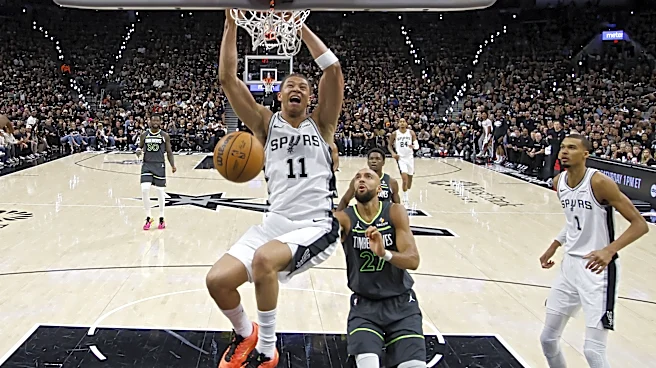
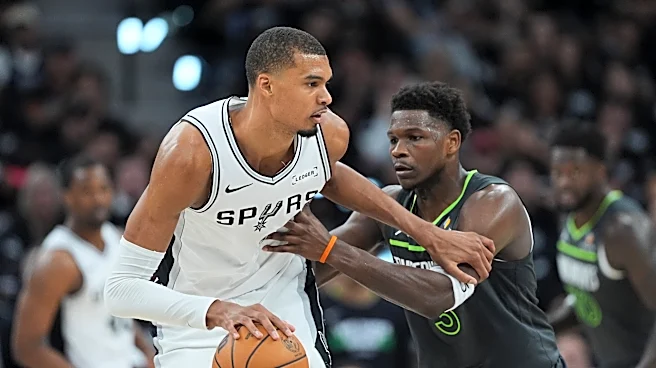
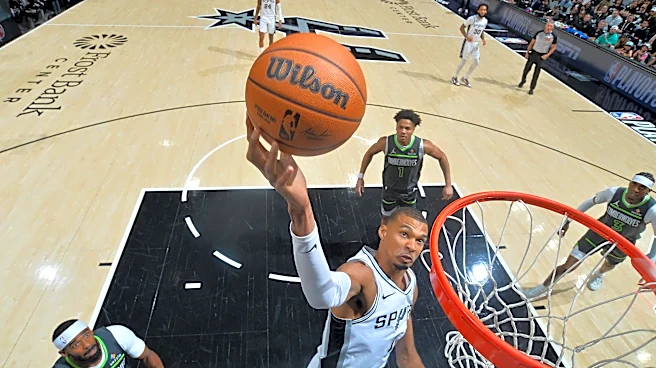
Of course, another joy of being a fan is watching your team absolutely pummel a squad that they’ve recently lost to, and so I’m not gonna lie: Wednesday night was fun too. Just a different kind of fun. Fox was slithering through the lane. Wembanyama was flying all over the court — I mean that literally and not just vertically, because I saw a still shot of the rebound dunk he threw in for his first points, and Victor isn’t even on the screen when Julian Champagnie starts his shooting motion. And the screen covered all the way to mid court! Julian and Devin Vassell pulled off one of the most rare plays in basketball, the alley-oop three-pointer. I’m still geeking out about it.
I’m also geeking out about the chess match Johnson and Fitch are engaged in. Here are the things that I think are responsible for the way the Spurs ran the table.
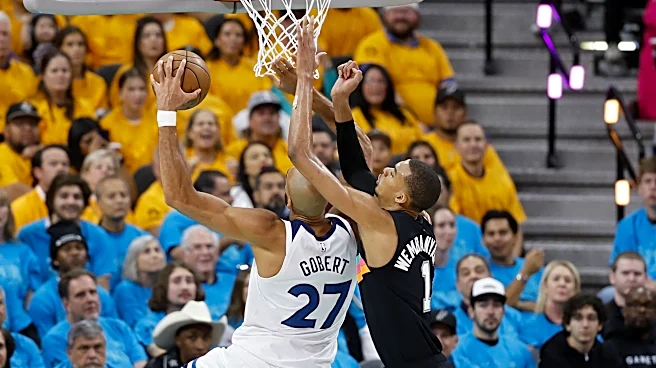
They turned Edwards and Julius Randle into passers by doubling and trapping, much like OKC did in last year’s WCF. When the Wolves doubled back on all of the talk about how Wemby would have to keep blocking every shot they took, he recognized that they weren’t coming at him and stayed down so he could just challenge and rebound instead of trying to go after every attempt. That kept Minnesota’s possessions mostly one and done. Third, San Antonio committed to running at every opportunity, especially after scores. They just had so many buckets early in the shot clock and Minny looked unprepared for those quick strikes.
Those are the things Finch needs to respond to. What do you see happening in Game 3?
Thilo
God, hard to say. The Wolves of yesteryear (or yesteryesteryear, I forget) were absolutely incapable of stopping the fast break, or any team with pace in general. I don’t doubt that this is a return to that form.
The Wolves are built first and foremost on turning defense into offense, not in the typical sense but by wearing out their opponents with their defense until Minnesota faces no pushback on the other end.
It is, by and large, a war of attrition.
However, for that to work, you cannot allow any easy points. 29 fast break points is far too much. Hell, 15 is probably too much for the “beat them with hammers” approach to work.
I think part of that problem will fix itself with Ayo and Ant getting healthier – more bodies back typically means less opportunities on the break – but I think the solution is in committing to one of two extremes
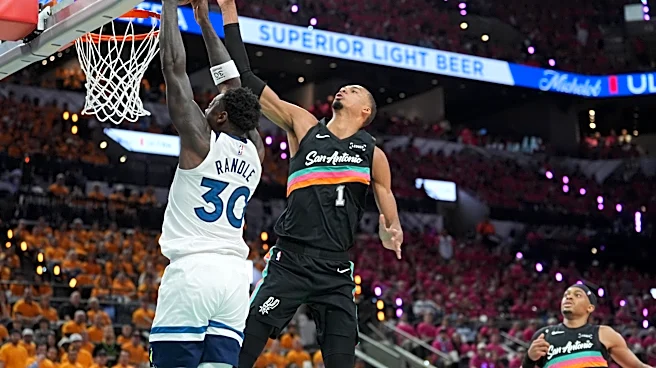
The Wolves of the past, the ones that would bleed points in transition, were violently pursuant of offensive rebounds. Karl-Anthony Towns would crash the glass. Rudy Gobert would crash the glass. Jaden McDaniels would crash the glass. There were even possessions where Minnesota would leave Michael Conley Jr. as the only man back in pursuit of those ever alluring extra possessions.
Now, would I suggest doing that against the eight foot demigod and his trusty sidekick, possibly the fastest player in the league? No, probably not. That would be dumb and obscenely risky and I simply would not have the heart to bring that up in fear of being yelled at like an old school scout on the set of Moneyball.
But it is an option.
The other, more likely option is far less fun. Instead of going all in on extra possessions, you do the opposite. You abandon the offensive glass as much as you can. A five-on-four break is infinitely easier to defend than a two-on-one or three-on-one alternative. Rudy Gobert becomes your only offensive rebounder. Julius Randle commits to getting back after his mid-range shots.
This sucks though. And more importantly, it doesn’t fix the turnover problem. Quite simply, this is also a part of who the Wolves are. They’re not 22 per game bad, but they tend to play fast and loose with the ball far too often.
Ultimately, I think Chris Finch will try incredibly hard to make this series be played in the half court entirely. That could mean a lot of conservative calls. Rebounding is the start of that, but I think Mike Conley probably gets more run, simply because he’s not as prone to bad choices as TJ Shannon or Bones Hyland.
To follow that up, I think Bones has lost his spot in the playoff rotation of this series. While the Thunder of last year absolutely broke Julius Randle with ball pressure and pass-forcing, the Spurs are breaking Bones by simply letting him overdribble.
That may not be a full answer, but it’s certainly a start: play slower, be more boring, keep going to the rim, and, Jaden: stop fouling.
To that point, it feels like the underspoken most important data point of this series will be who can foul out the opposing team’s perimeter stopper first. McDaniels and Castle are so hugely important in these next three to five games that it feels like losing either loses the game.
How did the Spurs play without Castle during the regular season? Is there a backup plan if he’s sitting like he was in Game 1? How do the Wolves attack him without burning through their usable possessions?
(God, Donte would be eating the Spurs drop coverage alive right now. Truly a crushing loss. Fly high, Big Ragu.)
J.R.
There was a point when one of the main fears I had about the T-wolves was how they could keep DiVincenzo from going off for an entire series. Talk about a man who can’t be left alone at the arc! I’ve been an admirer of Donte’s for a while now. All the best to him, and a quick recovery. Now to your questions.
San Antonio was 11-3 without Castle this year, but that was the regular season and we know that the playoffs are a different animal. But one of the accidental benefits of the Spurs’ bottoming out wasn’t just the timing, it was the repetition. Trading for Fox and then lucking into the second pick last draft means that we have a three-headed guard lineup, which is an incredible crutch to lean on when any of them have to take a breather, need a night off … or happen to foul out.
We love our Castle, no doubt, but I know a number of Spurs fans who swear that Harper will be even better than Steph. Yeah, the fact that backup plan is a rookie point guard would usually terrify me, but Harper isn’t your typical rookie, and while he’s not yet the defender that Castle is, Dylan shoots a higher percentage, is impossibly smooth around the basket, and takes better care of the ball. As much as Steph’s defense is missed when he’s not on the floor, the team plays quite well without him.
If the rest of this series turns into a battle of defensive aces struggling against foul trouble, that’ll be a shame. We already have too much talk about the timing and the frequency of the whistles in the rest of the matchups for that mess to invade ours too. But it’s 2026 after all, what else should we expect if not some top-tier controversy? Hopefully, we’re spared that, and Friday night’s game is another competitive and enjoyable contest.