


The Celtics have had their share of heartache over the years. At draft time, our thoughts always go back to drafting Len Bias and the sadness not even 48 hours later when the news came that he had died from a cocaine overdose. He never got to suit up for the Celtics, so there is always that big “what if” to consider, but no memories of him as a Celtic.
An even bigger heartache for Celtics fans was the loss of Reggie Lewis — we watched him play and Celtics fans loved him. He was the quiet Celtic with
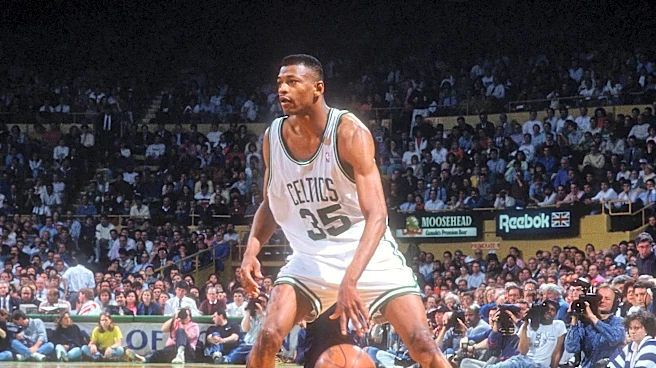
an infectious smile. He was reserved and somewhat shy, but his actions, both on and off the basketball court, spoke much louder than any words could ever do. He was the captain of the Boston Celtics and their leading scorer. He was a devoted husband, father and a friend to all who knew him well. He was the hope of a new Celtics generation. Reggie Lewis was only 27 years old when he died of a heart attack thirty-three years ago on Tuesday, July 27, 1993. Perhaps it was because of the death of Reggie that Jeff Green and Chris Wilcox were diagnosed with a heart problem and were able to deal with it and return to the league. And since I have been diagnosed with heart failure and have been going through a lot of questions and dealing with affairs of the heart, this tragedy hits home a lot more now than it ever has. Having a heart condition is a constant reminder of one’s mortality. Reggie was drafted by the Celtics with the next to the last pick in the first round of the 1987 NBA Draft. Like most Celtics rookies back then, his first year was a learning one and Reggie mostly watched and learned from the future Hall of Fame players ahead of him. He observed and learned and pushed himself in Year One and then, in Year Two, he appeared in 81 of the 82 regular season games and finished his sophomore season averaging 18.5 points per game. More importantly, he stepped in and comforted Celtics fans’ fears and worries, after Larry Bird missed almost the entire season due to surgery. Celtics fans witnessed true flashes of brilliance in Reggie’s game during the 1991-92 season, as he averaged a career-best 20.8 points per game while playing in all 82 games. He averaged over 20 points again the following season. He posted a spectacular career-high 28.0 points per game in the 1992 playoffs and was the lone Celtic to be named the NBA Eastern Conference All-Star Team. After Larry Bird retired in 1992, Reggie was named the team’s captain. On April 29, 1993, the Celtics began a first-round playoff series with the Charlotte Hornets. The setting for that series was the old Boston Garden. The Boston Garden at the time was the only arena in professional sports that did not have air conditioning. Opposing teams would suggest that the Celtics intentionally turned up the temperature as a way to create an edge over the unsuspecting and unconditioned players who might be visiting.
Several opponents throughout the years had fallen victim to dehydration and related nausea. The most notable example was Game 4 of the 1984 playoffs when Kareem Abdul Jabbar was seen wearing an oxygen mask to help with the extreme heat. The Garden created perhaps the greatest home court advantage in all of sports. This night, the Garden was hot and humid as usual. The Celtics were on their way to a blowout victory and it was still early in the first quarter. Their captain could not miss a shot and had already scored ten points within the first three minutes.

After going hard to the basket and grabbing a rebound through several defenders, Lewis began to head back down the court. Suddenly, his body slumped forward towards the court. Although the fall was sudden, it did not initially appear to be concerning because Lewis returned to his feet within a few seconds and checked himself out of the game. For many spectators, the heat in the building was probably blamed as the reason for the fall.
Complaining of dizziness and a black out, Lewis sat out the remainder of the first half while team doctor, Dr. Arnold Scheller, attempted to diagnose the cause of the black out. At halftime, Lewis mentioned that he had some grapefruit juice just before the game that tasted too bitter. With the high degree of humidity in the Garden coupled with the possibility of bad juice, Scheller, an orthopedic specialist, recommended that Lewis be allowed to continue to play in the second half. In that half, teammates mentioned that Lewis’ legs were wobbly and he came back out of the game almost immediately.
After the game, Lewis was sent to New England Baptist Hospital where he underwent a battery of tests that were supervised by a “dream team” of 12 of the most respected cardiologists in the Boston area. After thorough testing, the team of doctors diagnosed Lewis to be suffering from ventricular tachycardia, the most dangerous form of arrhythmia. They concluded that Lewis was lucky that his first symptom was not sudden cardiac death but merely a fainting episode.
Reggie was frustrated because the diagnosis meant an end to his basketball career, but he also became angry with the doctors because they kept pursuing possible cocaine use as an explanation. Perhaps the death of Len Bias, which was caused by cocaine use, influenced their thoughts. Lewis checked himself out of the care at New England Baptist Hospital in the middle of the night and sought out Brigham and Women’s Hospital chief of cardiology, Dr. Gilbert Mudge.
Dr. Mudge had been following the story and even prior to Reggie’s contacting him, Dr. Mudge claimed to have been suspicious of the diagnosis due to what he believed to be inconsistencies and discrepancies in Lewis’ test results. After performing his own battery of tests, Mudge called a press conference in early May of 1993 and stated that Lewis was not suffering from cardiomyopathy but merely from a curable neurocardiogenic fainting disorder. Mudge prescribed beta blockers as treatment and pronounced Reggie physically fit to return to playing professional basketball the following fall.
On July 27, 1993, Lewis entered the Brandeis arena with a friend to prepare for a full court pickup game that night. After about an hour on the court without even working up a sweat, Lewis crumpled near the 3-point line. Nearly two hours after he collapsed at 5:07 p.m. the hospital announced that Reggie Lewis was dead at the age of 27.
In the wake of his death, the heart wrenching news came out that earlier in the day, Reggie’s wife Donna had just found out that she was pregnant with their second child. She never got to give Reggie the news.
Then, over subsequent months and years, it became very ugly. There were unconfirmed reports that cocaine had been at least partly responsible for the tragedy, and a debate arose among doctors whether the death could have been prevented. The reports of cocaine were totally unfounded and left a negative mark on a man who by all accounts was above reproach. “The real tragedy is that right now we should be saying, ‘Reggie has a pacemaker and can’t play basketball anymore,’ ” Kevin McHale said after Lewis’ death. “Instead, we have to mourn him.”
That quote from Kevin McHale has always stuck in my mind and no more so than when I had to have a pacemaker implanted. I’m happy to say that I am still here to watch and write about the team that I have loved for over 50 years. But it makes me even sadder that Reggie Lewis isn’t here to love his wife and children and be a part of that team. I believe that Reggie would have been a lifelong Celtic and that he would have loved working with the new players coming in after his career ended. He was just that kind of person.
After his death, still reeling from the personal loss of their captain as well as the loss of Len Bias just years before, the Celtics tried to pick up the pieces and go on. They petitioned the league for relief from his salary but were denied. The Celtics retired #35 in Reggie’s honor on March 22, 1995. He became only the second player for the Celtics to have his jersey retired without having won an NBA title in Boston. Ed Macauley was the other.
Reggie’s accomplishments on the court are well documented. At the time of his death, he was the only player in the history of the Celtics to have registered 100 rebounds, 100 assists, 100 steals and 100 blocked shots in a single season which he did in the 1991/92 season with 394 rebounds, 185 assists, 125 steals and 105 blocks. Reggie once blocked four shots from Michael Jordan in one game.

Reggie Lewis left fans around the nation with memories of his basketball accomplishments, but also memorable was what he did off the court. His contributions to the community were just as consistent as his mid-range jump shots. Reggie began an annual giveaway where he purchased hundreds of turkeys and gave them to underprivileged families in the area, without any media or fanfare surrounding it. He was always seen with a smile and was a genuine caring person. Reggie’s widow, Donna Harris-Lewis, continued her husband’s legacy of kindness through the Reggie Lewis Foundation, which continued to sponsor the turkey giveaway that Reggie began.
Reggie’s greatest influence on people occurred off of the basketball court. Reggie had strong morals, humility and compassion. After his death, The Reggie Lewis Track and Field Center was opened in Roxbury, Massachusetts. The center was funded partially by Lewis and routinely hosts major track and field competitions as well as home basketball games for Roxbury Community College.
I highly recommend the book Reggie Lewis: Quiet Grace by Craig Windham. This book has a positive, inspiring message, especially for young people (and not just basketball fans). Reggie was not overly-talented, but he made the most of the gifts he had. It’s a wonderful account of his life, from his boyhood in Baltimore to his stardom with the Boston Celtics. It also includes an interesting photo album section. “Quiet Grace” lays to rest the rumors surrounding Reggie’s tragic death.
It was 33 years ago that Reggie died. Today, we remember Reggie and can only think of what might have been. As with Len Bias, there will never be a clear method of telling just how good Reggie Lewis would have been or where the Celtics might have gone with their leadership. We were blessed with an all too brief time with him and are left with our memories.
Rest in peace, Reggie. We love you and miss you still.