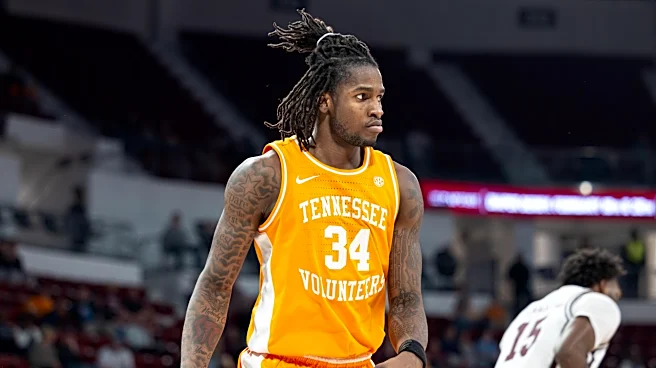





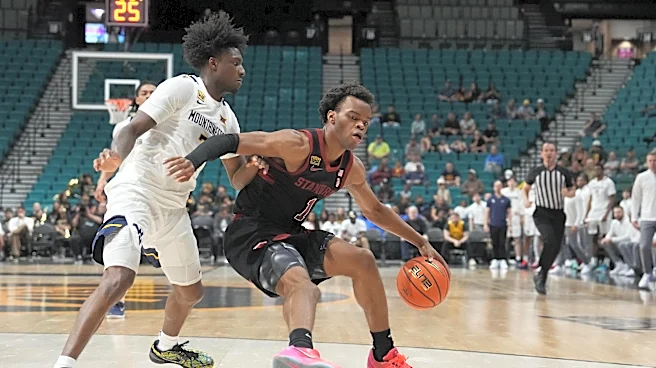
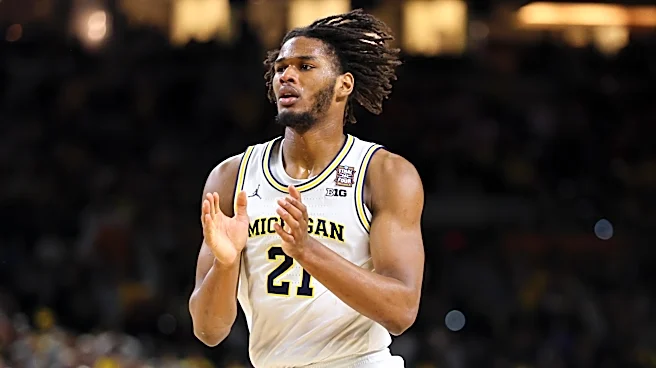


Depending on how the board falls, Tennessee center Felix Okpara could be available when New York is on the clock late in the 2026 NBA Draft. Should the Knicks consider him with their 55th selection?
The Basics
- School: Tennessee (transferred from Ohio State)
- Position: Center
- Height: 6’10”
- Weight: 237 lbs
- Age: 22 (April 20, 2004)
- 2025-26 Stats: 8.0 PPG, 6.3 RPG, 1.5 BPG, 0.4 SPG, 59.7% FG, 63.5% FT
- Projected Draft Range: Late second round to undrafted
The Numbers
Okpara spent four seasons carving out a clear identity as a defensive center. He began his career at Ohio State, transferred to Tennessee for his junior season, and became one of the Volunteers’ most reliable interior defenders during their run to the Elite Eight, earning a place in last season’s SEC All-Defense
team.
His box-score production wasn’t pleasing to the spreadsheet, but his role explains everything about it. Okpara averaged 10.7 points, 6.3 rebounds and 1.5 blocks as a senior while shooting 61.1% inside the arc. Across four college seasons, he averaged 6.4 points, 5.7 rebounds and 1.7 blocks, always working as a rim protector, screener, lob threat and defensive backbone.
Skills That Pay the Bills
- Rim Protection: Okpara’s best NBA skill is his ability to contest shots. He has the length, timing and verticality to bother drivers and force tough finishes around the basket.
- Pick-and-Roll Defense: He is not purely a drop-coverage big. Okpara can hedge, step out, slide his feet and survive in space. His mobility gives coaches more coverage options than the standard deep-drop center.
- Screening and Rolling: Okpara sets hard screens, uses his frame well and dives quickly to the rim. He finished 69 dunks as a senior, and his timing as a roller gives him value as a low-usage play finisher.
- Physical Tools: At roughly 6’11” with a 7’2” wingspan and a 9’4” standing reach, Okpara has real NBA center measurements. He also has a strong frame, broad shoulders and enough vertical pop to play above the rim.
Concerns
- Limited Offense: Okpara is not a scorer, shooter or creator. He has flashed some post touch, but his NBA offense will mostly come from lobs, putbacks, rim runs and dump-offs. Rings a Mitch-shaped bell?
- Passing Limitations: His career 56 assists to 129 turnovers is a concern. He can keep the ball moving in simple situations, but he is not a short-roll playmaker or high-post hub right now.
- Pump-Fake Discipline: Okpara can leave his feet too early. That matters against NBA guards and bigs who will bait him into fouls or force him out of position.
- Defensive Composure: He has the tools to defend multiple coverages, but his decision-making is not always consistent. He can get too perimeter-oriented, lose rebounding position or react instead of reading.
- Free Throw Shooting: His touch remains questionable. He shot 63.5% from the line as a senior and has never shown enough shooting growth to project real spacing value.
The Knicks Fit
Okpara’s fit with the Knicks depends almost entirely on what happens with Mitchell Robinson’s free agency.
If Robinson stays and signs a mid-to-long-term deal, Okpara becomes harder to justify with real draft capital, even with the late-second pick. New York would already have Karl-Anthony Towns as the starting center and Robinson as the defensive anchor off the bench for at least the next three or four years while the contending window remains open. That leaves little room for another non-shooting rim-running big man unless the Knicks simply want some developmental dude in the pipeline.
However, if Robinson leaves, Okpara becomes more interesting. He would not replace Robinson’s rebounding and instincts, let alone his playoff experience, but he would give New York a cheap, young center who understands the job description: protect the rim, screen hard, finish lobs and avoid getting into trouble or committing dumb mistakes.
Okpara’s appeal is that his role is extremely defined. Mike Brown could use him as a situational drop or hedge big, pair him with strong perimeter defenders, and let him focus on defense-first minutes while developing with Westchester, then move him up if/when needed.
The problem is obvious, and it’s that Okpara’s offensive limitations are severe, if not making him unplayable at the level the Knicks would require him to perform. He would not space the floor like Henri Veesaar, pass like Joshua Jefferson, or bring the same physical rebounding profile as Tarris Reed Jr. or Morez Johnson Jr., although obviously all of those prospects are ranked higher and expected to leave the board no later than within the first 30 picks.
NBA Comparison
- Best-Case Comparison: Daniel Gafford (Vertical rim runner, shot blocker, hard screener, and low-usage finisher)
- Median Outcome: Jericho Sims (Athletic backup center who screens, rolls, rebounds, and finishes plays)
- Low-End Outcome: Bruno Fernando (Physical reserve big with tools, but limited feel and disastrous offensive output)
The Verdict
Draft him at 55th: Okpara is not a first-round option for the Knicks, and No. 31 would be too rich. New York might know Robinson’s decision before the draft and be desperate for a backup with a traditional defensive center profile, but even then, it’s just too much. At the end of the second round, if that’s the feeling and the Knicks are in love with Okpara, then better grab him than risk losing him to another team with the last five picks or once he becomes a UDFA. Okpara does not bring enough shooting, passing, or offensive versatility to justify any kind of heavy investment.
Read all our draft profiles here.
Go Knicks!