



I don’t wanna say goodbye like this, I’m watching as your face begins to fade.
The last six months of waiting with its engine on, our ugly rebounds waiting in their caves.
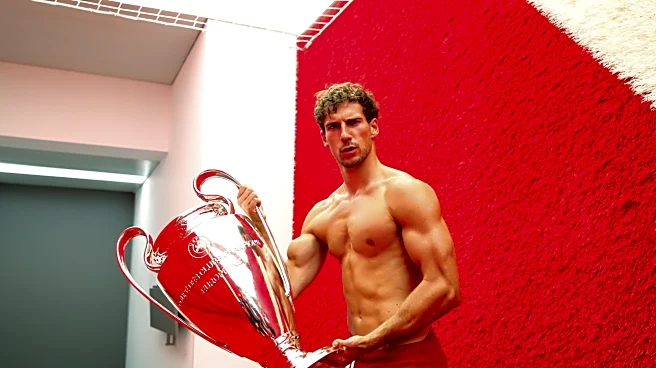
On the first of July, 2018, FC Bayern Munich announced that they had completed the acquisition of Leon Goretzka on a free transfer after the expiry of his contract at FC Schalke 04.
On the first of July, 2026, after 312 games for the club over eight years, Leon Goretzka departed after the expiry of his contract at FC Bayern Munich.
Despite having played over three hundred games for a club of the calibre of Bayern Munich and being one of the locker room favourites, Goretzka leaves behind a legacy with the fans that is…complicated, to say the least. Yes, Goretzka when played in the right circumstances was one of the best around, even being the key cog in the Bayern machine at times which seems impossible to believe with the current discourse and popular opinion of him, but it was when he was played in imperfect circumstances that problems rose.
Let’s dissect the tenure of a player who might go down as the most polarising in the history of the club.
So meet me on the bridge, we’ll hand over our hostages.
We’ll shed our skin, and fade into acquaintances.
And if it never comes, just keep dancing to the drum: The Kovač principles

There’s disruption in the service, do not adjust your set.
The radio keeps playing the song inside your head.
Goretzka arrived in Munich in the summer of 2018 with all the hype in Germany behind him, as he was earmarked as one of the finest out of the burgeoning ‘class of 1995’ of Germany which also produced the likes of Leroy Sané, Serge Gnabry, Niklas Süle and of course, Joshua Kimmich.
In his first season in Munich, it seemed like he was the real deal, delivering consistent performances throughout the season, but never REALLY impressing. It seemed he was content to be a role-player in midfield to allow Thiago Álcantara more creative freedom from the pivot position, and you know what, that might be exactly what Bayern needed at that point, much like how Javi Martínez was able to free up Bastian Schweinsteiger to detach from his responsibilities and play a less structurally dependent game.
However, ironically, Martínez was still the preferred option for the Champions League. This was likely due to Niko Kovač’s less intense and specific build-up structures requiring a player of Martínez’s experience to be able to create coherent structures through both his sense of positioning and his communication and leadership, something that would be too much to ask of a 23-year-old Goretzka having just joined the team. However, it is important to note that throughout the season, Goretzka was plagued with knocks and, while these issues showed up briefly in the 2019/20 season, they gave way for the most part to allow Goretzka to become an important part of the team as they pushed in all competitions after winning a domestic double during the previous season.
And then, in November of 2019, Niko Kovač was dismissed, and Hansi Flick took over.
They say you could hear the engine from the mainland: The Flick revolution

But those engines got sold when the speed freaks settled down in the south.
I guess masculinity’s a pursuit left to the embers of youth.
Now it would be unfair of me to say that Goretzka had a perfect start, but he showed immense promise from the off, and it only got better after Hansi Flick became head coach of Bayern. While he spent the first half of the season sporadically starting as Flick and Kovač had both settled on a pivot of Kimmich and Thiago, an injury to Benjamin Pavard forced Kimmich to return to right-back, and Goretzka became the starting pivot alongside Thiago. Unlike under Kovač however, he returned to a role more akin to the one he played at Schalke, playing as a box-to-box midfielder rather than a strict pivot which was an ideal change when you factor in the fact that during the suspension of football due to the COVID-19 pandemic, Goretzka put on a LOT of muscle mass. Yes, he was markedly less agile than before, but his presence in the middle greatly improved and allowed him to function as an important out-of-possession piece, aiding Flick’s intense high-pressing style of play with his ability to create zones of control in the middle which made breaking through the first line of pressing engagement extremely difficult as Goretzka was usually patrolling corridors for line-breaking passes, if not stepping up to close down the man on the ball himself.
However, the intensity of Flick’s system combined with Goretzka’s massive bulk-up would tax his body in ways we wouldn’t truly realise until years later. This was the best version of Goretzka we got, and everything after would come only in bits and pieces, bringing the fans small joys but ultimately nothing consistent.
This is a pre-disaster, you’re poring over photographs: The Nagelsmann paradox

I think I know what comes after, but I’m too afraid to ask.
We’ll quit smoking after this cigarette, we’ll quit smoking, but I don’t want to yet.
Under Julian Nagelsmann, Leon Goretzka became a bit of an enigma. While Flick’s second season showcased Goretzka’s strange tactical fragility, Nagelsmann flipped everything on its head. Goretzka possesses a wide range of abilities, but his more well-rounded nature and lack of a real cutting edge trait or ability made it difficult to put him into a team with a clear role. It bore fruit when Flick utilised him as some form of clean-up crew during the sextuple season in 2019/20, essentially just picking up the pieces and filling in the gaps left by players with more specialised roles (Thiago, Kimmich, Thomas Müller), and Flick tried to use him in a similar role during the 2020/21 season alongside Kimmich in the pivot after Thiago’s departure, but it just didn’t work the same as Kimmich’s style of play is very release-centric rather than Thiago’s tendency to sometimes just hold onto or carry the ball into crowded areas. This change in dynamic made it difficult for Goretzka to really make an impact. It didn’t help that, looking at their builds and technical abilities, it is painfully obvious that Goretzka is made to be a deeper player and Kimmich is the one that sits slightly higher up, directly engaging in the press and the final third, but Kimmich’s insistence on being a central tempo-setter threw this dynamic out the window.
The 2021/22 season saw Goretzka have yet another seemingly nothing-season, not really making an impact and finding himself injured halfway through the season, a set of injuries he never really recovered from and got into a solid rhythm with. In his absence, Nagelsmann tried many things, from traditional replacements like Marcel Sabitzer, Marc Roca and Corentin Tolisso, to even moving a young Jamal Musiala into the pivot to play alongside Kimmich. Some of it worked, some of it didn’t, but none of it was as good as Goretzka on a consistent basis. Some serious workshopping was required.
As a result, Nagelsmann began experimenting, and eventually landed on a system that worked.
And this is when Goretzka’s true ceiling was exposed, as he is a ‘structure player’, yes, but not in the way previously imagined. Rather than being the structural scaffolding propping up players with more eccentric abilities, Goretzka was utilised as the centrepiece of the team’s structure, with the rest of the team morphing around him in ways that best utilised his wide range of abilities to dominate the game. If you want a full structural breakdown of how Goretzka had a short renaissance under Nagelsmann during the 2022/23 season, you can read about it in one of the earliest long-form tactics piece I ever wrote on this site.
In short, Goretzka turned into an offensive powerhouse. Nagelsmann utilised new signing Noussair Mazraoui in a double-pivot by having him invert from right-back to join Kimmich, and so Goretzka was allowed the freedom to push high up and break lines in the final third, functioning almost as a second attacking midfielder, a prototype for the dual-10 system that Nagelsmann would run later in the season with Leroy Sané and Jamal Musiala, which itself was a prototype for the midfield box that Pep Guardiola would use yet later that season to win a famous treble with Manchester City, utilising John Stones as a pivot from centre-back and allowing Kevin De Bruyne to push higher up.
However, it’s worth noting that Goretzka’s form was short-lived and very mercurial. Yes, there were weeks when he was undoubtedly Bayern’s most important and influential player, but other weeks he seemed invisible. It seemed paradoxical that a system could shift so much that a player could go from centre-piece to vestigial from game to game, and eventually the volatility seemed to get to Goretzka’s head too, as his performances began to steadily decline towards the end of Nagelsmann’s tenure.
Now I sing my dull amens, the adult life’s to make amends: The Tuchel depression

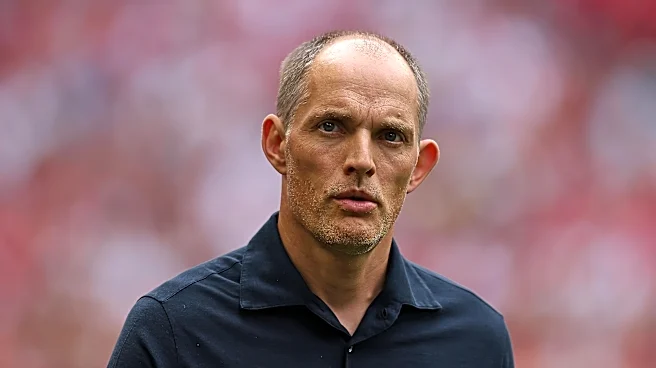
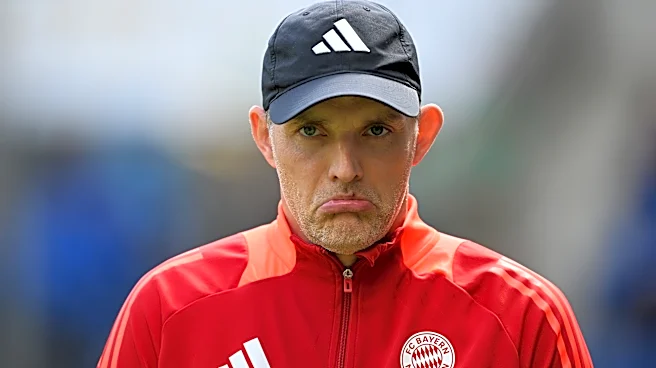
After Nagelsmann’s sacking at the tail end of the 2022/23 season, Thomas Tuchel was hired to… let’s say a controversial reception at the time. Tuchel didn’t bring many fundamental upheavals tactically in the 22/23 season itself, although he did of course have his changes, most notably going back to a far more basic 4-2-3-1 shape and set of roles, with Goretzka having less specialised game-by-game tasks and structural prerequisites. During the 2023/24 season, Goretzka was returned to his most basic form: he’s a guy who plays in the double-pivot next to Kimmich, and sometimes does things, I guess.
He was, in fairness, more important structurally than people gave him credit for, as his wall-passes and positioning were crucial in how Bayern manipulated low and mid-blocks by having an extra man, but it was an unglamorous job and Goretzka was doing far less than he realistically should be as a professional footballer playing in the pivot for FC Bayern Munich. It’s not his fault the role given to him was so diminished, but his complacency in performing it must be noted.
And then, as soon as Tuchel’s departure at the end of the season was confirmed in the spring of 2024, he began to get funky with the tactics, and Goretzka gave us perhaps the best fortnight of his career. Once again, for an in-depth breakdown of this fortnight and what Goretzka did on a microscopic level, you can read this piece of mine.
If you want the cliff-notes version, Goretzka turned into an auxiliary centre-back in possession, dropping to the left side of the centre-backs to allow the left-back (Alphonso Davies/Noussair Mazraoui/Raphaël Guerreiro/god knows who else played left-back that season) to push up down the wide left channel and push the left-winger inside. Tuchel utilised the space Goretzka would get on his right to create situations for him to constantly throw these absolute haymakers over the top of the block, which he was now sitting outside of rather than manipulating from the centre.
Yes, you’re hearing that right, the best performances of Goretzka’s career came as a centre-back. He may not have been one in name, but in function and position, he was a centre-back in a back three.
But of course, like all things involving Goretzka and Tuchel, it was all too good to last, and by the time March ended, it seemed like Tuchel had forgotten all about the way he’d briefly turned Goretzka into the best thing going in German football.
And the worst part? It seemed like Goretzka had forgotten too.
So cruel to say, but I hope you lose your way: The Goretzka penitentiary

And if you’re lost, I will be waiting, and if you’re lost, I will be waiting.
Waiting on Godmanchester Chinese Bridge.
In the eight years Goretzka has spent at Bayern Munich, many have tried, and all have failed to take Goretzka’s starting spot from him. Bayern’s insistence on Goretzka despite waning performances and a clear lack of decisiveness is not down to a lack of trying for improvements.
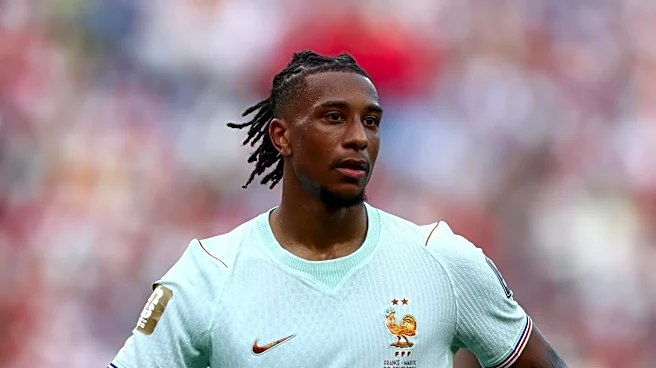
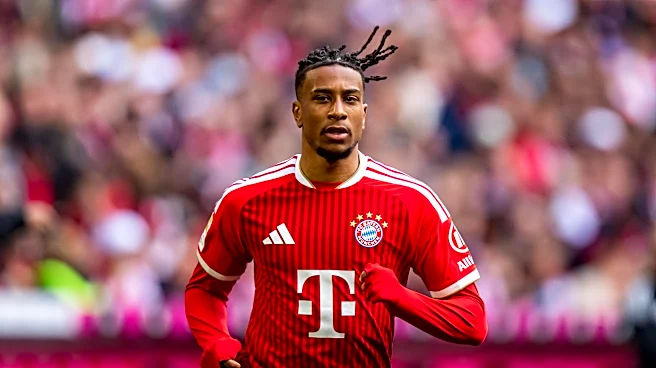
In 2019, Bayern signed Michaël Cuisance for €8m as a pivot player and a potential successor to Goretzka. Cuisance flamed out within a season or two after struggling to ever really break into the first team, and would leave the club soon after.
In 2020, Bayern loaned in Tiago Dantas from Portugal as a candidate to take over from Goretzka in the future, and Dantas would return to Portugal after his loan spell, never to be mentioned again. That same summer, Bayern spent €9m on Marc Roca from RCD Espanyol, undoubtedly a Goretzka backup with his similar build and playstyle. Roca would spend two years riding the bench in Munich before leaving for Leeds.
In 2021, Bayern would spend €15m to bring RB Leipzig’s captain Marcel Sabitzer to Munich, and while at first it seemed like the plan was for Bayern to shift to a midfield three with the phasing-out of Thomas Müller from the starting XI, it seemed that was never actually on the cards as Sabitzer spent most of the season on the bench, and unimpressive the few times he was let loose. Goretzka only lost his spot when he suffered upper leg injuries that kept him sidelined for a few months, but as soon as he was fit again, he was playing again. Sabitzer would spend half of his second season on loan at Manchester United before being moved on to Borussia Dortmund.
In 2022, Bayern spent €18.5m to bring in Ryan Gravenberch from Ajax, a player who was touted as having one of the highest ceilings of all midfielders in Europe, and being considered a steal at under €20m for a player who could quickly double or triple his value. Gravenberch spent one season at Bayern, which he spent… you guessed it, riding the bench while Goretzka played. He was sold a year later for a hefty profit after expressing dissatisfaction about his playing time.
In 2023, Bayern would bring in Konrad Laimer and Raphaël Guerreiro, both on frees from rival Bundesliga clubs. Guerreiro was a player known as a wing-back but had just had the best season of his career playing in midfield, and Laimer was a midfielder by trade. Three years later, Guerreiro has left Bayern after a few seasons of alternating between filling in whatever position the coach required him to and ‘wait, he still plays for us?’, and Laimer has been converted to a right-back, moving away from the pivot.
In 2024, Bayern spent a mammoth €51m on João Palhinha, obviously brought in as a direct Goretzka replacement, with the message that Goretzka can leave. Palhinha spent most of his first season at Bayern, rather predictably, riding the bench. Bayern loaned him out during the 2025/26 season, and he is now on the chopping block, having multiple suitors from Portugal.
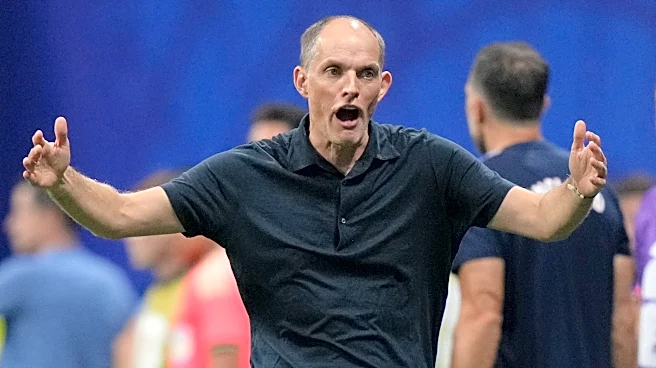
No matter how many options were placed in front of coaches, they all ended up defaulting to Kimmich and Goretzka, and that’s for a reason. There was a real safety in that pair that no other pivot really brought… until Tuchel introduced Pavlović to the first team, but only properly after Pavlović and Kimmich figured each other out.
After years of drink and dance, and wild well-publicised romances: The Kompany iron lung

Oh, you should have killed me when you had the chance.
You really should have killed me when you had the chance.
Vincent Kompany’s Bayern Munich have played an intense and offensively focused style of football that has drawn criticism for the lack of defensive consistency against counter-attacking teams, but has no doubt had major success. It’s all about risk and reward, and Bayern takes the highest risk to reap the highest rewards.
A large part of this success is down to Bayern’s ability to control games, forcing teams like Paris Saint-Germain who are generally the most possession-dominant in Europe to spend games looking for fast breaks and little else, and that control comes from the team’s double-pivot, which with the pairing of Kimmich and Pavlović possesses more ball-retention and tempo-controlling ability than any other pair in the world. However, Kompany did not always opt for this, as during his first season, Goretzka was still notably the most prominent partner for Kimmich for large portions of the season, although granted, this is also affected by Pavlović suffering multiple injuries and illnesses throughout the year that sidelined him for considerable portions.
It may seem counter-intuitive to continue to play Goretzka, especially in the Kompany system which demands so much dynamism and rotation of both ball and player that having a static point like Goretzka would make the team play slower… and it did. Goretzka and Kimmich simply did not work together, but when Kompany opted to swap out control for chaos, the Goretzka-Palhinha pivot was actually surprisingly effective, most notably against VfB Stuttgart (a game in which Goretzka scored, by the way). However, long-term, this was the right decision, as it allowed Pavlović to take a year to properly acclimate to the pace and pressure of high-level European football without the stress of playing fifty games in a row, a target he got a lot closer to last season. And speaking of last season…
By the summer of 2025, it has been over four years since we saw a consistent full season from Goretzka, and fan sentiment was at an all-time low. It was usually at times like this that Goretzka would spring to life for a brief period of time, exploding in some completely unpredictable and unconventional way thanks to a structural change necessitated by an injury to an important player… but it never happened. This entire season it really did feel like we were bracing for impact on a world class month from Goretzka that snowballs into an undeserved contract extension, but it just never happened. Instead, Goretzka quietly played his deep midfield role when called upon, even filling in at centre-back briefly (which I think was his best role in the Kompany system, strangely enough), before quietly fizzling out towards the end of the season as his contract expired.
And you’ll live to see your name, published in my scathing memoirs: The Goretzka tenure

When you’re lying in your deathbed, I hope I appear in your head.
Baby, I’ll be dead by then, I burned out at twenty-seven.
After all that, the only really important question is: “Was Leon Goretzka good?”
In short: No. But that would be a disservice to the good he did do. Was it a role worth spending one of the highest salaries at the club for? No. A figure to build the structure of the team around? No. A player worth making tactical concessions to get the best out of? No.
Was he one of the most important figures in the locker room? Yes. Was his willingness to only do the dirty work and not get wrapped up in trying to be the difference-maker admirable? Yes. Did this tendency also make him seem invisible or vestigial at times? Yes.
Ultimately, no player is ever plainly divided into ‘good’ and ‘bad’. No player’s legacy can solely be defined by their successes, but it cannot solely be defined by their failures either. Did Goretzka fail to live up to the expectations that were placed upon him as a young player in Gelsenkirchen? Maybe. Did he become a financial burden in proportion to his contributions on the pitch towards the end of his time at Bayern? Maybe.
You know what he also did? He won the UEFA Champions League in a famous sextuple for Bayern Munich as the one fixture in midfield across the two distinct tactical iterations Bayern employed throughout the season. He single-handedly won the club points during the 2022/23 season that clinched the league title on goal difference. He threw himself to the dogs against some of the most technically gifted players in the world in battles he was bound to lose at some point, but held the drawbridge high for as long as possible before it was time for others to make the final intervention.
It’s paradoxical but Goretzka’s style of play showed hints of apathy at his situation and at the game, seemingly content to have a walk in the park while the ball moves around him. But if something happened, Goretzka was always among the first and most intense to react with his emotions. Look at that goal against Stuttgart from the season before again, and tell me it didn’t mean everything to him.
This club did mean a lot to him, and sometimes, that’s all a player ever needs to show. Not once-in-a-generation technical ability, not prodigious leadership, not bulletproof consistency.
Leon Goretzka was worth our time, but his legacy will forever be tarnished by the fact we have to ask that question. Maybe if we had the meat first and pudding second instead of the other way around, it would’ve been very different.
Join the conversation!
Sign up for a user account and get:
- New, improved notifications system!
- Fewer ads
- Create community posts
- Comment on articles, community posts
- Rec comments, community posts