




The MLBPA issued their proposals for the new CBA a few days ago and the MLB did so yesterday. The link below to Fangraphs will give you a good list of the details:
The MLBPA’s offer is a list of initiatives designed primarily to lift starting salaries and get players to Free Agency earlier, reflecting both the makeup of their members and the industries shift towards aggressively controlling and cycling pre-arb players. They have asked for an increase of the CBT, new changes to the arb process and Super
Two status that awards more money each year to players, an increased league minimum, and changes to the revenue sharing system.
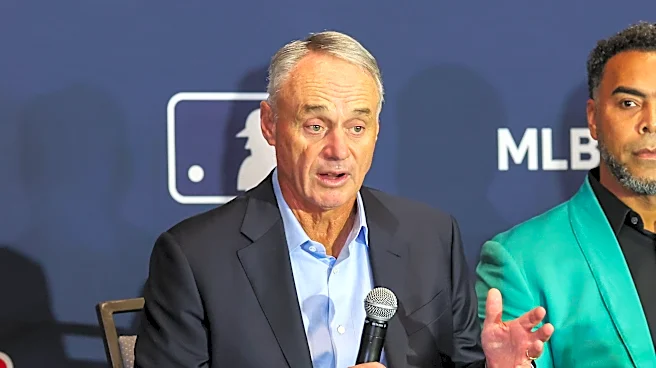
The MLB’s offer is, as expected, a hard salary cap and floor, with an initial $171.2 million minimum and a $245.3 million maximum. Rob Manfred has been pushing this as a 50/50 split of revenues with players, but as Fangraphs Ben Clemens points out, the total payroll number under this system would essentially freeze 2027 payrolls at 2026 plus less than $5M more. It’s hard to assume that the price of a mediocre reliever suddenly brings the players to the 50/50 plateau unless the teams are manipulating what is reported as revenue.
That is the big reason why there’s such a deep divide between the teams and the MLBPA. Only two teams have to issue public annual reports that detail costs and revenues – the Atlanta Braves and the Toronto Blue Jays. The other 28 teams usually publish some kind of public sales report, but they are not legally required to be transparent. Which means, for example, Fenway Sports Group can report whatever kind of revenues it wants, manipulating the profits and losses in all kinds of ways to reach the number they want. Like former Toronto Blue Jays President Paul Beeston himself once said “I can turn a $4 million profit into a $2 million loss and get every national accounting firm to agree with me,”. The MLBPA is deeply distrustful of the numbers that are reported by most teams as being fair and accurate, and using them as the basis for a salary cap and floor is, in their minds, like trying to build a castle on sand.
For the MLB, there’s been all kinds of reporting that the hard cap and floor are essential for the valuations of their franchises to continue to climb. The cap would have two advantages in this sense. First, it creates cost certainty, which is extremely important for the appreciation of the teams as assets, since the growth of their costs could be more easily controlled below the growth of their revenue. Second, quite a few ownership groups are carrying and servicing a significant amount of debt, and the cost certainty associated with a cap would allow them to better attract or raise capital as well as increase the existing value of their share of the team when considering selling shares or even controlling interest. The slow and steady movement of private equity and venture capital into ownership groups, like the recent sale of the San Diego Padres for $3.9B, is believed to be driving this cap proposal even at the risk of a lockout despite several years of increased success for the MLB.
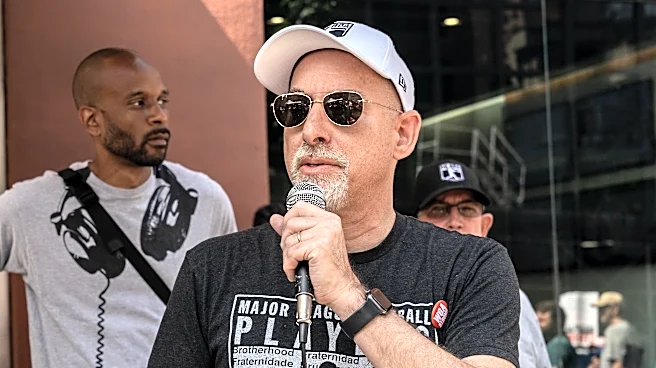
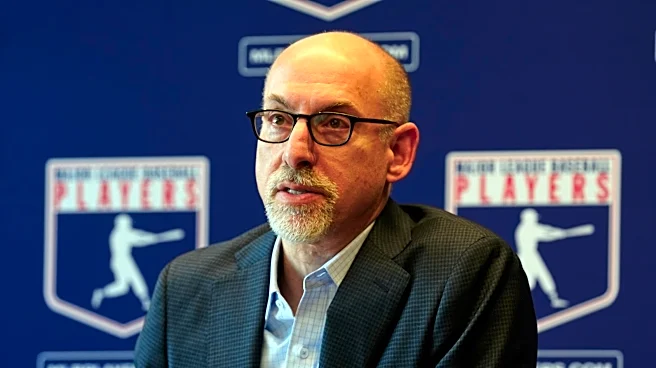
MLBPA Executive Director Bruce Meyer referenced this in his comments: “Billionaire owners are not seeking to cap their profits or asset values, only player salaries. This isn’t out of generosity or a desire to protect the game’s well-being. It’s a play to control costs, increase profits and maximize franchise values – all at the expense of players past, present and future.”
Now, it is important to note that these are each groups initial proposals, which is where both are looking for a hundred percent of what they want as an initial negotiating position. What is telling is that the MLB knows that a hard cap, even with a floor, is a non-starter for the MLBPA and all but guarantees a work stoppage in 2027, but their proposal is almost entirely focused around the cap and revenue sharing mechanisms needed to implement it. There doesn’t seem to be much room to work with when the agenda will centre around a proposal that one side’s opening position is a hard no with no negotiation possible. These releases are most likely just the opening salvos as they position to get the media and public onboard with their position and could soften significantly, but there’s also a lot of potential red flags as well that could mean a shortened or even cancelled 2027 season.
For now, the main arguments will be made for sports media and fans, trying to line the up to put public pressure on the owners or the players to make concessions to avoid missing games. Traditionally, the owners have usually enjoyed the support of the public, as making a player defending hundreds of millions for playing a game is less sympathetic than a civic minded business man trying to build a competitor in a challenging market. But anti-billionaire sentiment amoungst the public is already high and likely to rise, not drop, in the coming months, and with legacy sports media at its lowest ebb in decades, the MLBPA might find themselves on the right side of public opinion this time.
What do you put the odds of the 2027 Opening Day happening in March next season?