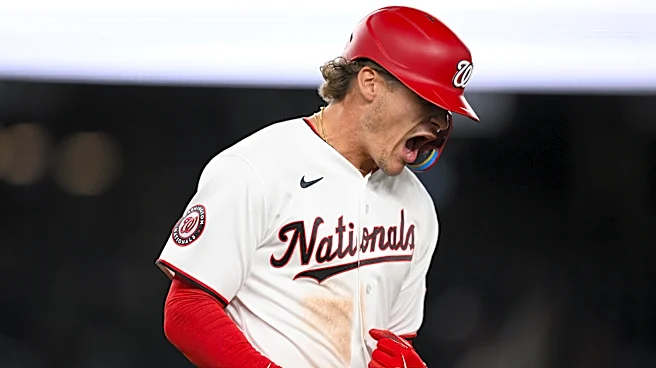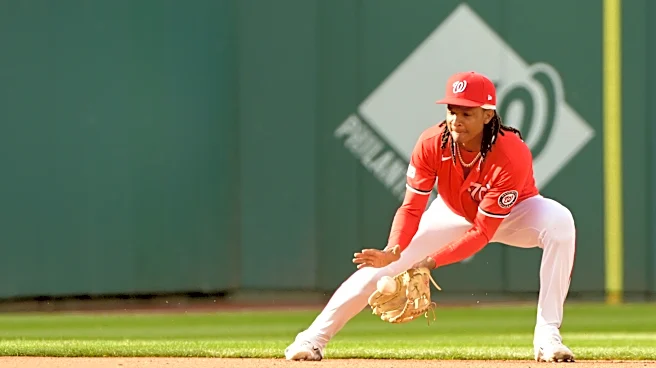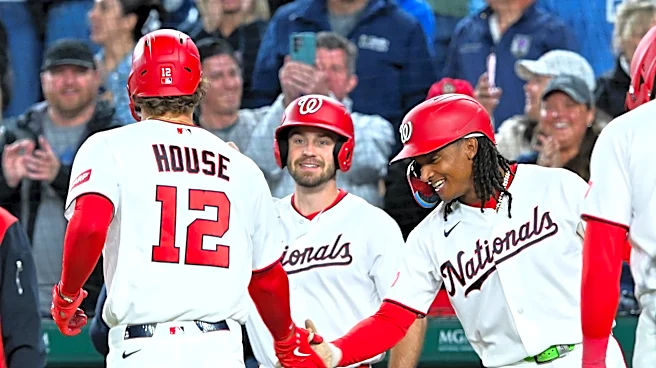






For years under hitting coach Darnell Coles, it always felt like Nationals hitters were lacking a defined approach at the plate. Young hitters like James Wood, CJ Abrams, and Brady House demonstrated the raw power to be successful big league hitters, but would often flail at pitches outside the zone and miss the pitches they should’ve been doing damage on. They finished the 2025 season with a 22.6% strikeout rate and a 7.4% walk rate, placing them 28th out of 30 ball clubs in BB/K ratio at 0.33
A
major point of emphasis for the Nats new hitting coach, Matt Borgschulte, was to instill a plan at the plate in his hitters. Players couldn’t just go up to the plate looking for a strike that they can hit hard somewhere, but instead needed to be key holing for their pitch when ahead in the count, looking to do extra-base-hit damage.
We’re only 10 games into the 2026 season, but the improvements are already beginning to show, as the Nationals are working more walks and striking out less than ever. The team walk rate has improved from 7.4% to 9.7%, and the strikeout rate has dipped from 22.6% to 20.9%, resulting in a team BB/K ratio of 0.46, good for 11th best in all of baseball. The improvement isn’t coming from just one or two Nats hitters, but the whole unit, as in 2025, only 2 Nats hitters had a BB/K ratio over 0.50, and in 2026, that number is 6.
The 2 Nationals who have seen their plate discipline improve the most are CJ Abrams and Brady House. Abrams has cut his strikeout rate by about 3% and raised his walk rate by about 6%, resulting in his BB/K jumping from a shaky 0.30 to a strong 0.71. His whiff and chase rate are actually slightly up from 2025, so we’ll see where his numbers stabilize after a larger sample size, but what matters currently is that the process looks much improved from before.
As for House, he is still striking out at a high clip, up from 28.5% in 2025 to 30% in 2026, but in turn, he has over tripled his walk rate from 2.9% to 10%. He’s improved both his whiff and chase rates from near the bottom of the league to just somewhat below average, and as a result, his BB/K ratio has gone from 0.10 in 2025, 2nd worst in all of baseball among hitters with at least 250 plate appearances, to 0.33, just under the league average.
One of the keys to improving the discipline of Nats bats has been the addition of Trajekt pitching machines to their facilities, allowing hitters to simulate the arm angle and pitch shapes of the pitchers they’re set to face. Though the Nats’ bats haven’t been using them for long, the results are already beginning to show, even at the lower levels, as prospects such as Seaver King and Luke Dickerson are walking more than ever through their short stretch of games in the minor leagues. I’m excited to watch how these numbers change over the course of the season, and how hitters in the Nats organization adjust when pitchers change their game plans to attack their new patient approaches.