





Celtics fans have been dropped into the wilderness.
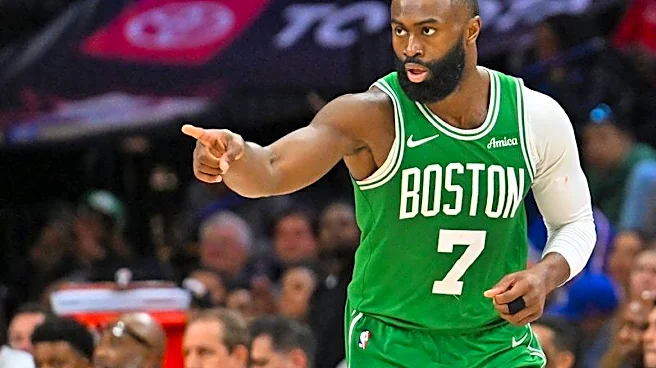
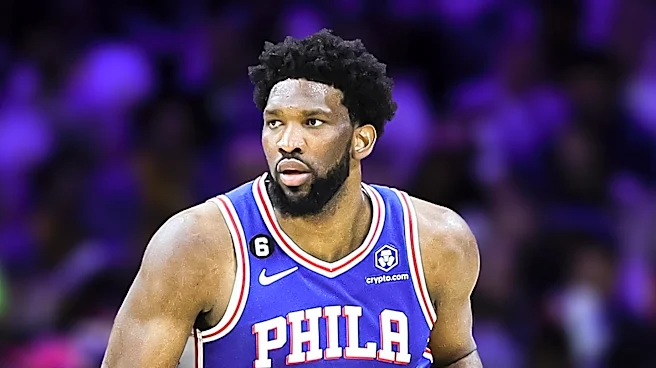
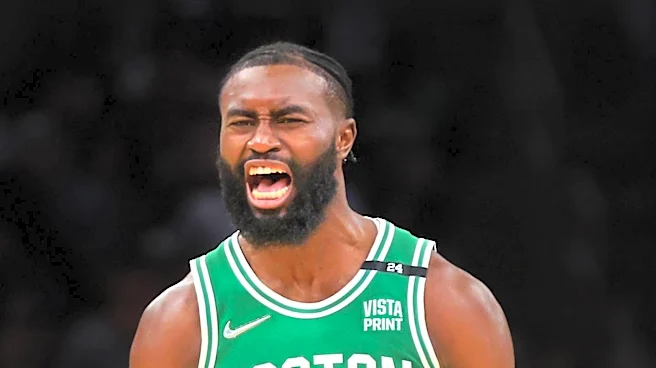
One minute, Jaylen Brown was one of the defining Celtics of the last decade. The next, he was headed to Philadelphia, Paul George was coming back, two first-round picks were handed over like Advil, and everyone was being asked to find comfort in a word that sounds like it was created inside a front office think tank.
Optionality.
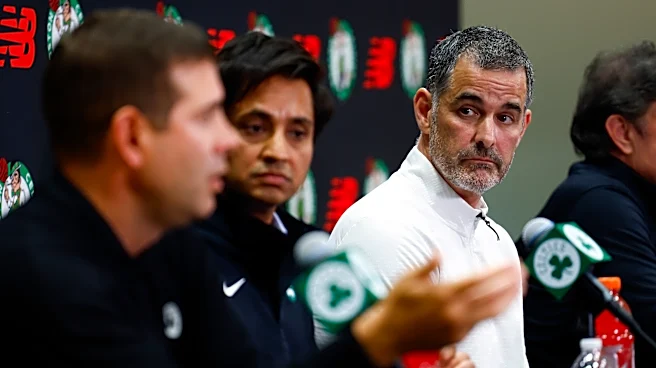
That is where the Celtics live now. Brad Stevens explained the logic Monday. The Celtics wanted more flexibility, more depth,
and more ways to build the next version of the team. The new CBA made life harder. Two supermax players eating up that much cap space made the path narrower. Paul George’s contract is shorter. The picks could matter.
For now, Celtics fans are stuck in the fog between the trade and whatever comes next. In situations like these, experts recommend staying put, keeping warm, and resisting the urge to identify every snapping twig as the sound of another move coming.
So grab your emergency whistle, your emotional support No. 7 jersey and a printed copy of the second apron rules you definitely understand.
This is the Celtics fan’s survival guide to optionality.
Stay calm. Panic burns energy.
The first rule of surviving optionality is simple: do not burn all your energy before the team takes the court.
I know, easier said than done. The Celtics have dropped us into the middle of July with a backpack full of pick protections, Paul George fit questions, depth expectations, and one granola bar labeled “Trust me. Love, Brad.” Naturally, the first instinct is to start running in circles until you either find civilization or pass out next to a tree stump muttering, “70% of the cap.”
Resist that urge.
The Summer League Celtics have not even played yet, while the real Celtics are still months from taking the floor. Paul George has not missed a regular-season game in green. The 2028 pick has not revealed itself as treasure, kindling, or a weird rock Brad convinced everyone to carry because it might become useful later.
There will be time to panic. That is what October is for.
For now, conserve your energy. Sip water. Build a small fire. Do not start eating random berries from your backyard when you see the Sixers posting Jaylen Brown highlights on Twitter.
That way lies danger.
Every mention of “flexibility” may still make you want to hop on a moose’s back and whisper, “Take me away from all of this.” Fair. But when you’re lost in the woods, you don’t sprint into the fog because you saw what might be a road. You stop, breathe, and take inventory.
The Celtics chose uncertainty.
That means we must learn how to survive inside it.
Two is one, one is none.
In the wilderness, redundancy keeps you alive. One flashlight breaks, you better have another. One fire starter gets soaked, you better have matches. One person says Luke Kornet is irreplaceable, you better have a Neemias Queta ready to pull out of your backpack.
That appears to be the Celtics’ new operating theory.
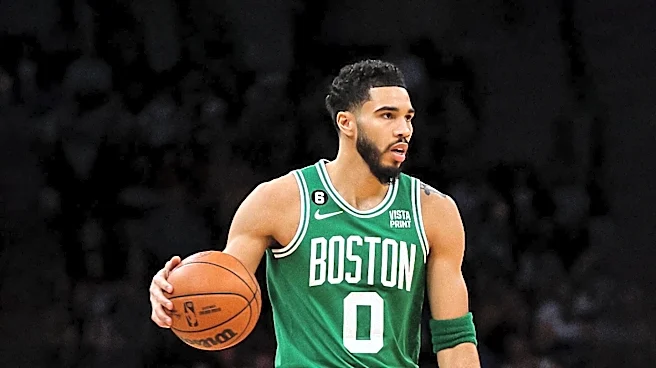
For years, the survival plan was simple: when in doubt, trust the Jays. Tatum and Brown were the tent, compass, first-aid kit, bear spray, and the guy who insisted he knew how to hang food from a tree. Everything else was built around them.
That starter pack worked for a long time. After all, Banner 18 is not imaginary. It still hangs there, despite the last week making everyone feel like they dreamt it.
But Stevens looked at the new NBA landscape and decided the Celtics were carrying too much weight in one part of the pack. Too much salary. Too much usage. Too few ways to maneuver if the trail ahead got blocked.
So Boston traded one huge answer for a pile of smaller ones.
Paul George. Future firsts. Second-round sweeteners. Shorter money. More flexibility. More pressure on Pritchard, White, Hauser, Scheierman, Gonzalez, Walsh, Queta, Harper Jr., Robinson, and whoever else gets handed a flashlight and is told, “Get us the hell out of here.”
That is the bet.
Brad Stevens didn’t try to tell us that one player will replace what Jaylen gave them. He told us that with enough smaller pieces, used the right way, the Celtics can replace the version of the team that had started to feel stale and boxed in.
That might be smart, or it could be a front office TED Talk with sneakers on.
Either way, this is the shelter they built.
Everybody get inside before it rains.
Leaves of three, let the overreactions be.
Every survival guide comes with a warning about poisonous plants.
Here’s yours: some post-Jaylen thoughts may look edible. Do not be fooled.
The first is the Payton Pritchard-Jalen Brunson comparisons, which already feels like something Celtics fans are going to find growing behind a log and immediately put in their mouths.
Resist the temptation!
Pritchard can (and should) become more important without becoming Brunson. He can start, create more, bomb threes in transition, irritate opposing guards, talk like every defender in the league called him small at recess, and still not become the best player on a championship team.
Another poisonous plant to avoid: “Paul George had a bad game, so the trade failed.”
This one will be everywhere by late-October. George will miss one pull-up three in the second quarter against Orlando, and someone will be halfway through typing, “We traded Jaylen for this?” before the rebound gets secured.
Leave it alone.
George is being asked to make the toughest first impression of any new Celtic in years. Every missed jumper, quiet quarter, and maintenance day will get dragged back to the trade that brought him here. He is not arriving at a normal campsite. He is walking into camp while everyone is still staring at Jaylen’s empty sleeping bag.
One more poisonous plant to be wary of: “Actually, I never liked Jaylen anyway.”
Stop it.
Even if you’re not ready to admit it, Jaylen is one of the best players to ever put on a Celtics uniform. You watched him posterize people, win Finals MVP, and grow from a raw 19-year-old into one of the most important Celtics of his era.
All of that happened.
You can understand the logic of the trade without pretending the Jays were some failed experiment. For almost a decade, they shared the floor, absorbed every lazy wedge people tried to drive between them, and kept showing up for each other and for Boston.
Leaves of three, let it be.
Pritchard-Brunson comps, instant George referendums, fake Jaylen amnesia.
Let them be.
Go slow to go fast.
When you’re lost, speed feels productive. Most of the time, it just gets you more lost.
Moving too quick is how you twist an ankle, drop your flashlight, walk past the trail marker, and end up trying to sleep under a damp Celtics poncho while Sixers fans in a nearby tree debate Jaylen’s on/off numbers.
The Celtics have pointed to a trail that fans cannot see yet and asked everyone not to burn the map before anyone knows where it leads.
That is both annoying and the entire concept of optionality.
Optionality is not a player. You can’t throw a lob to optionality or blame it when the bench unit gives up a 14-2 run. It’s a door the Celtics believe they needed to open and step through.
Maybe the trail leads somewhere good. Perhaps there’s a clearing ahead where Brad Stevens is standing with three second-round picks and a handful of acorns, wearing a look that says, “It’s not tasty, but it’ll keep us alive.”
The trail has not revealed itself yet, so go slow.
You do not have to love the trade today. We won’t know for a long time if Brad is a genius, a fraud, a hostage of the CBA, or just a human who sometimes makes mistakes.
Let George play. Let Pritchard’s role breathe. Let Tatum get back to being Tatum. Let the young guys be lovable spark plugs instead of instant proof that the front office knows what it’s doing.
The Celtics made the bet. Fans shouldn’t judge the survival shelter before anyone has slept in it.
Better to have it and not need it than need it and not have it.
Here is the part where everyone groans and throws their marshmallow fireballs in my direction.
Assets matter. I know. Horrible. Disgusting. Not why anyone fell in love with basketball.
Nobody grew up dreaming of the day their favorite team would have usable future assets. No kid in a No. 7 jersey has turned to their dad in the past week and said, “It’s okay, Papa. Paul George’s shorter contract creates cleaner optionality in a second-apron environment.”
If your kid has said that, congratulations. You are raising Mike Zarren Jr.
But tools do matter, not because they make anyone feel better right now, but because they give the Celtics things to use when the next problem arrives.
A future first-round pick is not a hug, nor does it stare into the Garden crowd after a clutch corner three. It certainly does not make Jaylen in a Sixers jersey any less nauseating.
But it is a flare gun.
A shorter contract? There’s your pocket knife.
A tradable salary? One of those little crank radios everyone buys before a storm without knowing how to use it.
You may not want to build your fandom around emergency supplies. Nobody does. But if the Celtics are stuck later, they will be glad they packed something besides vibes and a framed photo of the 2024 parade.
The Celtics may be right to value the tools. Fans may be right to hate the cost.
It’s snug, but both things can fit in the same backpack.
Do not mistake Summer League for rescue.
Normally, Summer League is for convincing yourself the 13th man has “real rotation equity,” and determining a second-round pick’s ceiling based on seven Vegas possessions.
This year, Summer League feels like someone spotted smoke in the distance. At last, help is within reach! Celtics fans need a distraction in a major way. They need new names, new box scores, new clips, new reasons to stop watching Jaylen Brown meet up with his new 6-year-old best friend.
Distractions can be healthy. But do not make the kids rescue you.
Hugo Gonzalez is not going to erase your grief. Chris Cenac Jr. is not a trained wilderness medic. Jordan Walsh should not have to check into a Vegas gym carrying the emotional weight of everyone who recently Googled “2028 pick protections explained in simplest terms.”
Let Summer League be what it is: a weird little basketball campsite in the desert where everyone talks themselves into at least one player they will later pretend they were always right about.
Enjoy it, but do not build a permanent shelter there.
Just keep walking.
Optionality is not closure. Brad Stevens gave us his best Doctor Strange impression, presenting 14,000,605 possible future outcomes, each one as uncertain and murky as the next.
That is the hardest part. Optionality could become a trade. It might become a better-fitting roster. It might become a cleaner cap sheet, a deeper team, or a path the Celtics could not have taken with Jaylen still on the books.
It might also morph into the word Celtics fans mutter years from now while staring into the abyss and remembering that Boston traded Jaylen Brown to Philadelphia for Paul George and picks.

Nobody knows yet.
For now, everyone is still in the woods. The map is illegible. The compass is spinning. The trail markers were removed by a wily bunch of raccoons.
So keep breathing. Watch your step. Do not eat that berry. Avoid trying to explain the 2028 pick to your family unless you packed enough water. And be mindful of the trail marker that now reads, “Under construction.”
A clear head will eventually find itself.