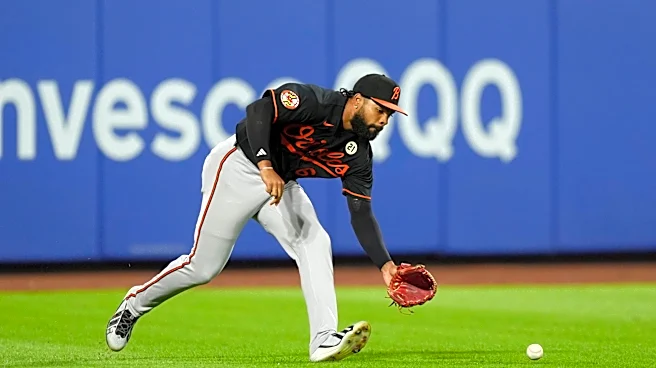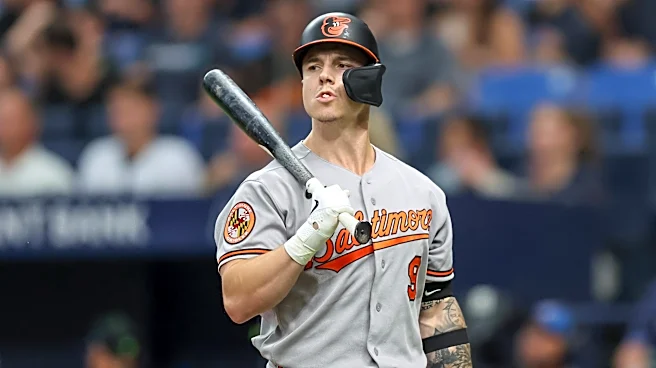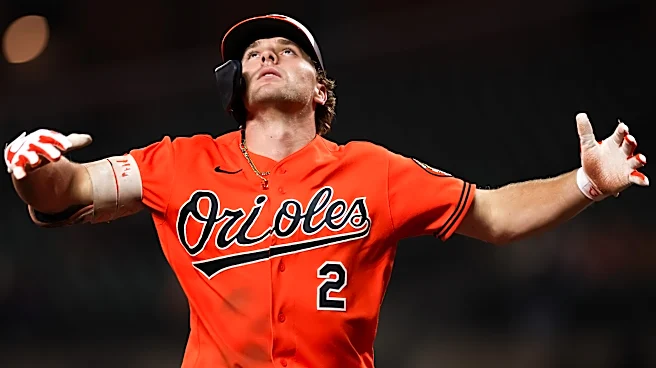

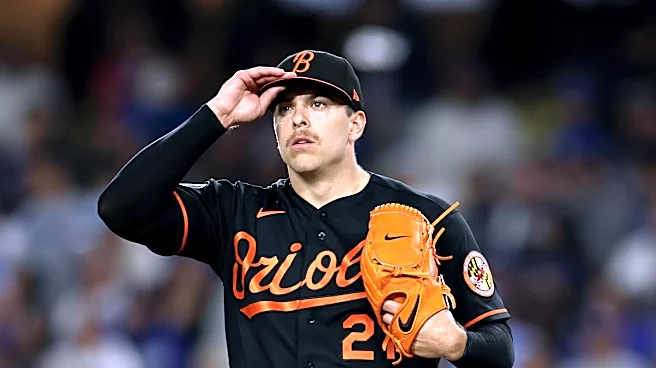
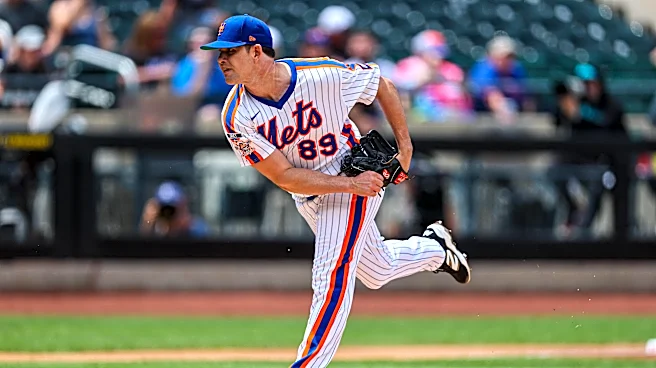

Let’s talk about 2026 Gunnar Henderson. I put off writing Gunnar’s season recap for a little while because I need space from disappointment. So while there was still playoff baseball to enjoy, and we didn’t have to directly confront the possibility of no baseball in 2027, I let the Gunnar Henderson retrospective simmer. But now, it’s time to look back on perhaps the most disappointing individual Oriole season of 2026.
I want to be very clear from the beginning: Gunnar Henderson was not objectively
terrible in 2026. Far from it, in fact. He still managed a 3.2 bWAR, good enough for the 69th-best batter in baseball and on par with players like Shohei Ohtani and Bryce Harper. He was always available to manager Craig Albernaz, as he led the American League with 623 ABs. He managed to hit 24 home runs and collect 57 total extra-base hits. He led Baltimore in doubles (27) and finished second behind Pete Alonso in hits, runs scored and home runs.
However, Gunnar undoubtedly took a significant step back in 2026. It was the second consecutive year we saw regression from the former AL Rookie of the Year, as he went from MVP candidate in 2024 to merely above average in 2025. Above-average would have been a welcome sight this season, as Henderson’s on-field performance spent most of the year going from frustrating to infuriating.
As has been the case in the past, he got off to a slow start. Across March and April, he slashed .214/.283/.481 while putting up more 0-for’s (11) than multi-hit games (7). The early power numbers were promising, as Gunnar swatted nine homers over the first month of the season and looked well on his way to another 30+ home run year. That was a welcome sign after the star SS only managed 17 long balls in 2025. However, he often looked overly aggressive at the plate, resulting in a 32.6% strikeout rate in his first 31 games.
The below-average April was not a reason to sound the alarms, as Henderson’s career average in March/April (.234) is lower than any other month of the season. Even the strikeout numbers were only slightly above his career first-month-of-the-season norms. However, the calendar turning from April to May did not solve his offensive woes. His average improved slightly from .214 to .225, but his slugging numbers cratered—dropping more than 100 points from April to May. He seemed to get the memo about needing to dial back the aggression at the plate (as his strikeout rate dropped by almost 10%), but the lack of aggression sapped him of his production as well.
From the beginning of June up until the All-Star break, Henderson continued to shuffle through the season with few moments of excitement. Compared to May numbers, the triple slash of .233/.327/.363 between June 1st and July 12th showed signs of improvement, as Gunnar began to walk more while keeping his strikeout numbers in check. His power continued to be woefully lacking, however. After the first month of the season, he was on pace for 25+ HRs and 45+ XBH’s in the season’s first half. Instead, he headed into the All-Star break with 17 HR and 35 XBH’s.
Perhaps the most memorable moment of Gunnar’s season came a couple of weeks after the All-Star break. With the Orioles sitting at 53-56, 2.5 games out of the last AL Wild Card spot, Baltimore welcomed the Phillies to town for a three-game set starting July 31st. In Game 1, Henderson stepped up with two on and two outs and the game tied 4-4 in the 7th. Phillies’ lefty Tim Mayza, tried to sneak a 2-1 sinker by the Orioles’ SS, who promptly blasted the ball into the right-center gap for a bases-clearing, game-winning triple.
As he slid into third, he bowed his head into the dirt, let out a scream of joy and punched the ground a couple of times for good measure. In the moment, many hoped the display of raw emotion was Gunnar letting go of the frustration from his first half and turning the corner toward a better second-half showing.
In some ways, Gunnar rewarded those optimists. August was his best month of the season, as his .245 average and .845 OPS in the season’s fifth month were year-long highs. He ended August with his best game of the season, going 4-for-4 with 2 home runs, a triple and 5 RBIs in a win over the Athletics. The second long-ball was a Weaver that put the Orioles up for good and sealed a three-game sweep of the A’s.
However, as the Orioles’ faint playoff hopes faded down the stretch, so did Henderson. His average remained in the .240s, but his power again disappeared. After hitting 4 HRs and collecting 10 XBH’s in August, those numbers were cut in half in September, as his slugging percentage dipped from .447 in August to .390 in September. And so, when the season finally came to an end via a rainout of Game 162, no Orioles starter was more ready to put 2026 behind them than Gunnar Henderson.
What Henderson will give the Orioles in 2027 remains a big mystery. Through his first two full seasons in the big leagues, the now 25-year-old was an offensive force, averaging 30+ HRs, 15+ SB and 30+ 2Bs per 162 games, while putting up a near-elite .850 OPS. Over the last two years, he’s been a good but not great player, as his power output has taken a significant step back while he has struggled to maintain a level of consistency.
Gunnar still remains one of the most athletically gifted players in all of baseball, who has the tools to compete for All-Star teams, Silver Sluggers and MVPs. But the question remains of whether Henderson can put all those tools together again, or if his reality is closer to the slightly above-average SS we’ve seen the last two years.
With Pete Alonso now entrenched as the Orioles’ best player and clubhouse leader, Henderson becomes the X-factor. Have a great 2027, and the O’s are pushing for a playoff spot and maybe more. Fail to improve upon his output from 2026, and Baltimore is likely stuck in the hamster wheel of mediocrity.