
Welcome to 2026! Maybe the last year of Major League Baseball as we know it! I mean, probably not. But the odds are slightly higher this year than most years due to the upcoming Collective Bargaining Agreement negotiations that are due to take place in advance of the end of the current CBA before the start of the 2027 season. Those negotiations are expected to be particularly acrimonious after the last set saw the start of the MLB season delayed by a week in 2022. Still, I’d put it in the 1-2% range,
MLB might be damaged but there is too much money to be made for it to die out, just yet.
That said, MLB has some work to do if they want to keep the sport healthy. Or, better yet, make it healthier. Let’s talk about it.
Figure out the TV/streaming situation
For years, MLB has suffered under the weight of its own blackout restrictions. At first, it might seem reasonable that it would be more difficult to watch a sports team from your local area as a method of encouraging people to watch the team live. But we’re well past the era where that ever made sense. And the definition of “local area” has always been completely out of whack. In North Carolina, I can’t watch games that are played in Atlanta using my MLB.TV subscription because I am deemed to be in their local area, even though they don’t broadcast locally or on cable in my area and I am 4-5 hours away from their stadium by car. There are fans in Iowa with similar complaints trying to watch Royals games. It’s ridiculous.
Recently, there has been an added issue where one group has owned many teams’ local broadcast rights but has struggled to pay their fees on time. Diamond Sports Group, owners of the FanDuel Sports Network, went through bankruptcy proceedings from 2023-2025 and eventually rebranded and Main Street Sports. Now, FanDuel Sports Network itself has threatened to declare bankruptcy as early as February of this year. All the while teams have had to pick up and broadcast the games themselves, with the help of MLB and MLB.tv.
MLB games need to be broadcast on TV to keep the sport in the public consciousness. No one is going to care about the World Series if they’re not able to watch the regular season games. Fewer people are going to want to play baseball and work towards a pro career if they can’t see the stars playing on a regular basis.
MLB is faced with lots of difficulties, but those difficulties could lead to opportunities. If they can regain control of their local broadcasting rights and arrange things such that everyone can watch every team from anywhere, it could go a long way toward increasing the popularity of the sport to something closer to what the NBA enjoys, even if they’re unlikely to catch the NFL ever again. And that’s important both for short-term profits as well as long-term health and profitability.
I don’t know what the exact solution should be for this, but I know they need to figure it out and they need to figure it out soon. Preferably the final solution would be an affordable way for baseball fans to watch any team, anywhere, at any time.
Get a reasonable salary floor
This is a drum I’ve been banging for a while now. You can even see where I wrote about it last off-season here. I can’t find it now, but there was a graphic going around during the 2025 postseason that showed what percentage of their gross income teams spent on the payrolls and many teams were spending a significantly smaller percentage of their income on talent than others. Sure, the Dodgers and Blue Jays got to the World Series with two of the most expensive rosters in MLB, but they also spent a high percentage of their income on their rosters. Teams that spend higher percentages of their income did better than teams that didn’t, even when they had a lower income.
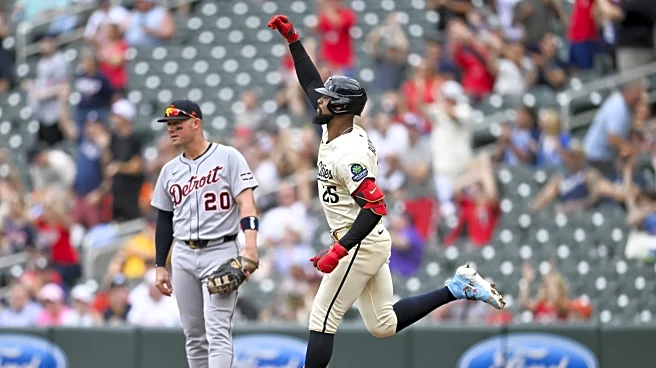
All signs point to MLB trying to shove a salary cap down the MLBPA’s throat. I’m not convinced that’s a good idea, but I’d be willing to accept it if MLB accompanied it with a salary floor that forces teams who currently coast by, continually losing and not spending money, to actually make a dang effort. Pittsburgh, Minnesota, and Athletics fans shouldn’t be as miserable as they are.
At this point, MLB has had pretty hefty revenue sharing for years. They’ve added things to help teams with smaller market sizes to compete. The only thing that’s going to truly get some teams to be competitive is a requirement that some team owners stop pocketing quite so many profits.
Drastically reduce shifting
MLB has had a rash of rule changes in recent years. One of the most controversial was a reduction in allowable infield shifts. However, it seems obvious now that MLB simply didn’t go far enough. Jayson Stark, an MLB writer at The Athletic, recently wrote about how outfield shifting has drastically reduced the number of doubles and triples in MLB over recent years. This has helped contribute to a decline in overall offense, even as home run numbers continue to increase.
Stark’s proposed solutions to bring back those extra-base hits may seem extreme, but I’m sure many people thought that lowering the mound following the 1968 season was extreme. Because it was! But it was also necessary for the health of the game. Soren Johnson, A game designer for the popular Civilization series of video games once wrote, “Given the opportunity, players will optimize the fun out of a game.” He was talking about video game players who will choose paths that profit them the most, even when those paths make the experience of playing the game less fun. However, it applies just as much to the players, coaches, and front office staff members of MLB games, too. Maybe more so, since many of them aren’t there for fun in the first place.
The Moneyball and advanced statistic revolution has completely changed the way baseball is played as compared to even 20 years ago, much less 30 or more years ago. MLB has taken steps to reduce this impact by requiring relievers to pitch to at least three batters barring injury, adding a pitch clock, and other such amendments to the rules of the game. People have argued against the infield shift saying that hitters should simply stop trying to pull the ball so much, but there simply is no stuffing the ketchup back into the ripped-open packet. Everyone knows now that even with all the shifting, it’s more efficient to always swing hard and to pull the ball. Teams have countered this by optimizing their defensive alignments to take advantage of it and it’s reduced MLB to the closest it’s ever been to a game of the Three True Outcomes (strikeout, walk, or home run.) It’s optimal gameplay, but it isn’t fun. Which is bad for an entertainment medium.
Any game designer who has worked on multiple titles in a series or on a live-service game will absolutely tell you that this is a cat-and-mouse game. You reduce the efficiency of one method and players will find another. But this is a cat-and-mouse game that MLB needs to continue to play for its own good. There’s no way I can think of to make pulling the ball less efficient for hitters.
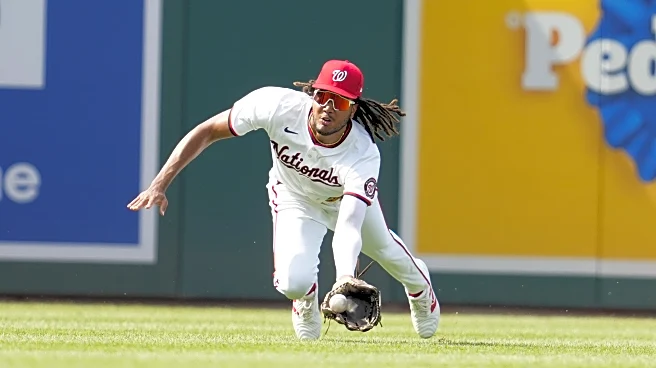
So, instead, they need to reduce the shifting in the outfield. Balls in play should be the most exciting, but when players are positioned to keep everything but singles from dropping, it doesn’t end up working. They may need to also require baseball stadiums to push their walls further back to even more increase the doubles and triples at the expense of home runs. Let the players show off their fielding athleticism and make speed more important again. If I had my way, they’d also further restrict infield shifts. One of the most aesthetically-pleasing hits in baseball is the groundball single up the middle, but too many of those have been gobbled up by shifted infielders in the last decade or so.
The fewer outcomes that can occur in an at-bat, the less fun things are going to be. And MLB is going to keep getting less fun to watch until they address the issue. Obviously, MLB can’t fix this in time for this season but it’s something they need to be figuring out for whenever baseball returns following this season.
So those are my three resolutions for MLB in 2026. What resolutions would you have MLB make?