


This 2026-27 women’s college basketball season hasn’t wasted much time giving us something to talk about.
So, here are three storylines worth watching as the season gets going.
In the comments, share you thoughts on these three narratives, in addition to letting us know what you’re watching, and why.
1. Non-conference schedules will test the cream of the crop

There’s only so much you can take away from watching a national championship contender overwhelm an opponent that can’t match its size, speed or depth. Fortunately, this season’s non-conference schedule
offers plenty of opportunities to move beyond those evaluations.
South Carolina alone faces USC on Nov. 15, UConn on Nov. 24 and Duke on Dec. 3, followed by December matchups against UCLA and Notre Dame in Las Vegas.
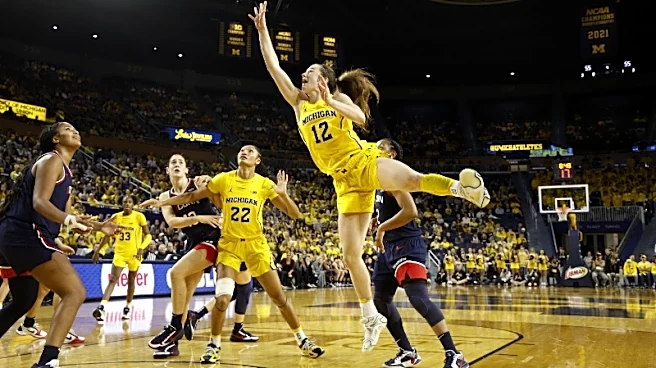
UConn’s schedule includes upcomiung trips to Ohio State and Louisville before its meetings with South Carolina and Duke. After losing to Michigan last week and responding with a dominant win over Iowa, there’s a lot of questions about this Huskies roster. Do they have enough talent to win it all? Usually we have to wait until March to get the answer to this question, but not this year.
These aren’t just résumé-building opportunities. They’re games that should expose weaknesses while there’s still time to address them. The questions surrounding each team will matter in March, and luckily we won’t have to wait until the NCAA Tournament to start getting answers.
The overlapping opponents also make this schedule especially valuable. South Carolina, LSU, UConn, Texas, and UCLA all playing Duke gives us another reference point beyond their head-to-head matchup.
No single result should define a contender in November, but several difficult games can reveal patterns.
For fans, it’s must see television. For coaches, it’s an early diagnostic test. And for anyone trying to separate championship potential from preseason reputation, it’s exactly what we need.
2. How far can JuJu Watkins and USC go?

The early returns on Watkins’ comeback have been about as encouraging as USC could have hoped.
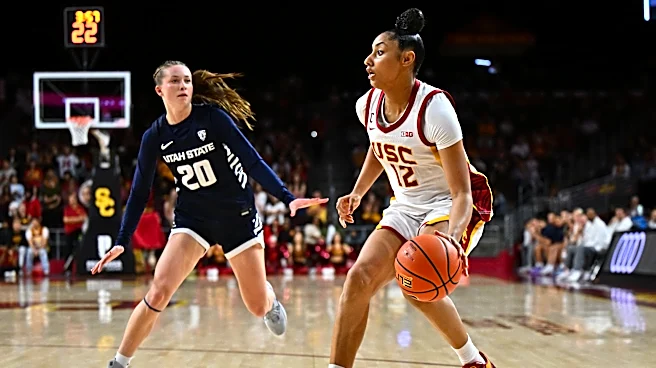
Through her first three games, Watkins still looks just as advertised. Against Utah State, she scored 32 points, while also collecting a career-high 16 rebounds, six assists and five steals. That’s not just productive basketball after a lengthy absence. That’s the kind of all-around performance that confirms why she’s the projected No. 1 pick in the 2027 WNBA Draft and why this USC team has championship expectations.
But the most intriguing part of USC’s start is that Watkins doesn’t have to be the entire story.
Freshman Saniyah Hall already looks comfortable sharing the spotlight. The top recruit in the 2026 class scored 22 points on 7-for-8 shooting in her debut against UNLV, including three makes in four attempts from beyond the arc. She followed that with 20 points against Utah State, earning Big Ten Freshman of the Week honors.
The efficiency, driving and strength stands out as much as the scoring. It’s a tiny sample, but Hall hasn’t needed an overwhelming volume of shots to make an immediate offensive impact and show why she’s one of the best players in the nation.
Then there’s Jazzy Davidson, who opened the season with 23 points on 10-for-11 shooting against UNLV. USC suddenly has multiple perimeter players capable of punishing defenses for loading up on Watkins.
The question is how that talent translates against elite competition. Who initiates the offense? How do the touches balance out against the best teams? Can USC rebound despite the lack of frontcourt depth?
The South Carolina matchup on Sunday should provide the first major measuring stick. USC has the talent to win it all. Now comes the process of proving it.
3. Can anyone in the SEC beat South Carolina?

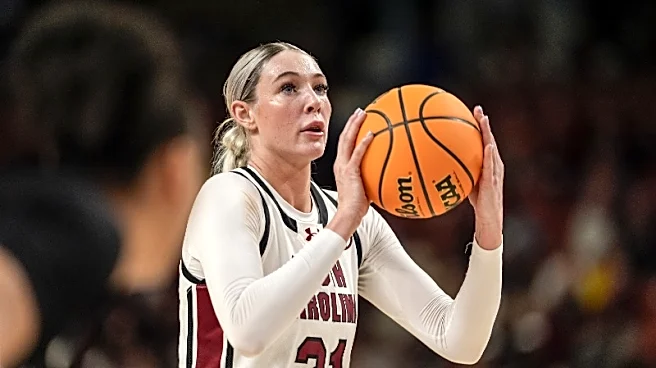
South Carolina has already offered two different demonstrations of why the program remains THE standard.
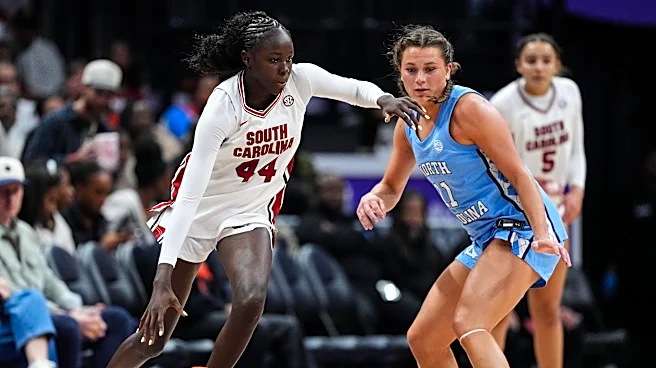
The Gamecocks overwhelmed Maryland early, building a 61-33 halftime lead before the Terrapins rallied to make the final score 101-93. Then they dismantled another top 25 team in North Carolina, 84-39. The Maryland finish deserves acknowledgment, but South Carolina’s ability to establish control against ranked opponents has been impressive.
Still, the question I keep coming back to is ballhandling. Against the best defenses, who consistently gets South Carolina organized? Who handles pressure, initiates late-clock offense and makes the right decision when transition opportunities disappear?
It was reported before the season started that it would be Tessa Johnson, but through two games so far, it’s been done by committee. This is something SEC challengers will look to explore, even if they can’t match the Gamecocks’ talent, they could make them uncomfortable.
LSU certainly is worth taking seriously as a challenger because of their guards. They play with ball pressure and MiLaysia Fulwiley will be looking to force turnovers. Mikaylah Williams gives Kim Mulkey experienced perimeter scoring, while sophomore ZaKiyah Johnson is looking to emerge into her own. The Tigers have dangerous offensive pieces, making this the most cohesive team they’ve had since 2024. The question is whether their rebounding and defense hold up against taller, more physical teams
Vanderbilt belongs in this conversation, too. Mikayla Blakes and Aubrey Galvan will lead an elite offense, but how much better will the defense be this year? So far the returns are promising, but the real tests will be in January for them.
Can either win the SEC? The possibility is real, but for now, South Carolina remains the team that everyone else must prove they can beat.