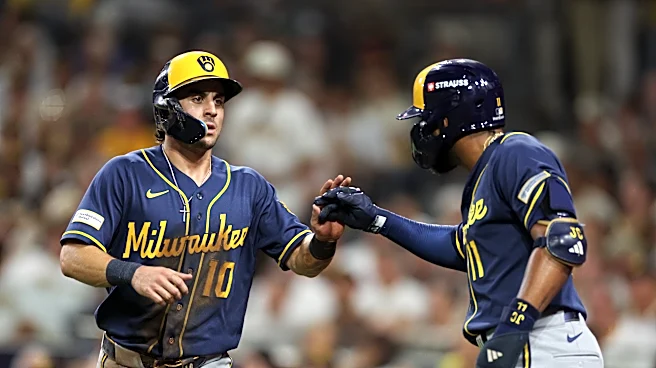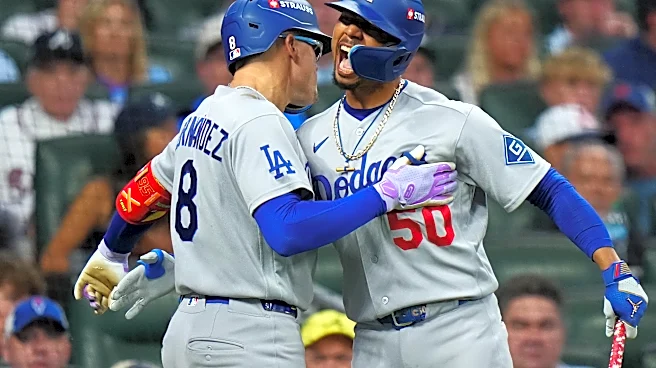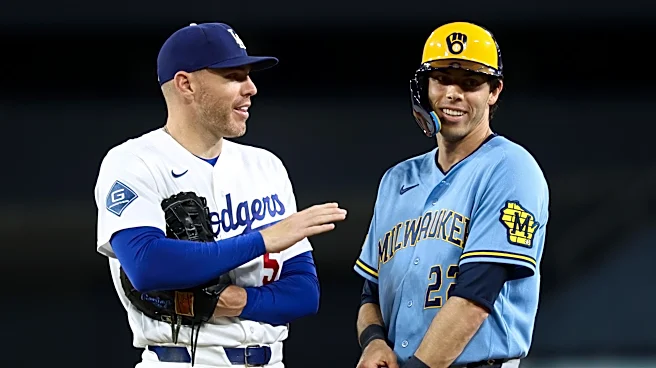


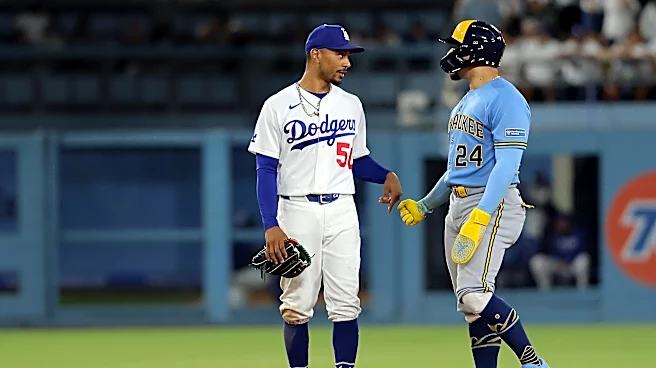
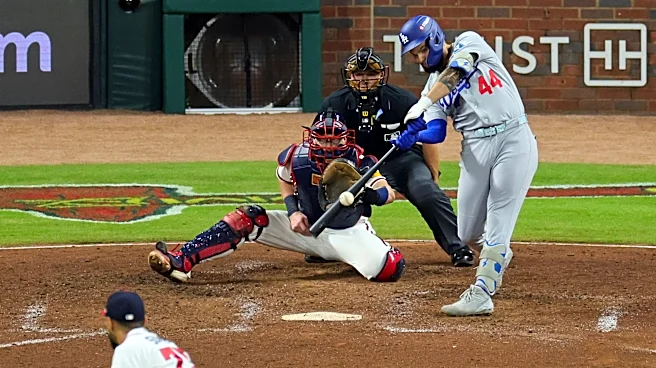
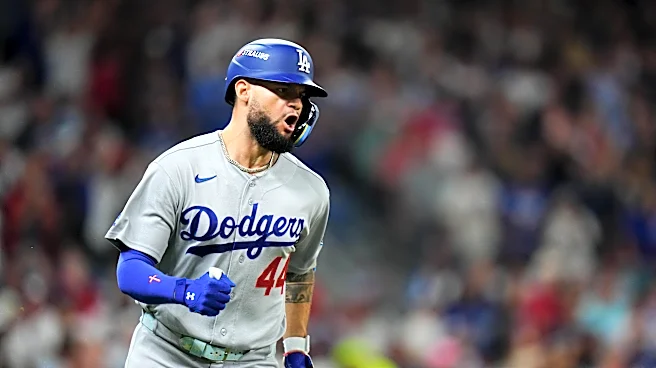
It felt inevitable even in the early stages of the season that the two best teams in MLB would be on a collision course for a seismic encounter in the NLCS. The Brewers and Dodgers were the only two teams to finish with at least 100 wins, and by the time both teams jumped out to comfortable leads atop their respective divisions by mid-July, you could sense we were destined for a rematch of last season’s NLCS. It should be a far more competitive series than last October, when rampant Dodgers squad
swept the Brewers by holding Milwaukee to just one run in each of the four games.
There’s no easing into this series — all signs are pointing to a dream matchup of Tarik Skubal vs. Jacob Misiorowski in Game 1, pitting the two-time defending AL Cy Young against this season’s presumptive NL Cy Young winner. There was a not insignificant chance that the two aces could have shared a rotation, Milwaukee showing legitimate interest right up until the Dodgers swooped in and acquired Skubal from the Tigers at the deadline. Los Angeles has also tabbed 2025 World Series MVP Yoshinobu Yamamoto to start Game 2 while the Brewers have yet to select a starter beyond Game 1.
This year’s Dodgers remains the juggernaut they’ve been during this World Series-winning run, but make no mistake, this is a young Brewers squad with an extra year of experience under their belts and the hunger to avenge last year’s sweep and make it to their first World Series since their one and only appearance in 1982.
Los Angeles Dodgers
Regular season record: 100-62 (1st, NL West)
(Beat Braves in NLDS, 3-1)
This is just as complete a Dodgers team as the one who secured back-to-back World Series titles, Los Angeles keeping their championship core largely intact while making a Cy Young-sized upgrade to the starting rotation. Their offense placed second in MLB behind the Cubs in wRC+ (111) and fWAR (26.9) and is a blend of contact and power, their .257 team batting average and .424 slugging also second-best in MLB. Their starting rotation was tops in the Majors in fWAR (18.7) and second behind the Yankees in ERA (3.43) and FIP (3.69), the group of Skubal, Yamamoto, Blake Snell, and Tyler Glasnow posing comfortably the highest ceiling of any starting staff in the land. The biggest improvement over last year is their bullpen, which ranked second in MLB in strikeout rate (26.2-percent) and third in FIP (3.67).
Offense
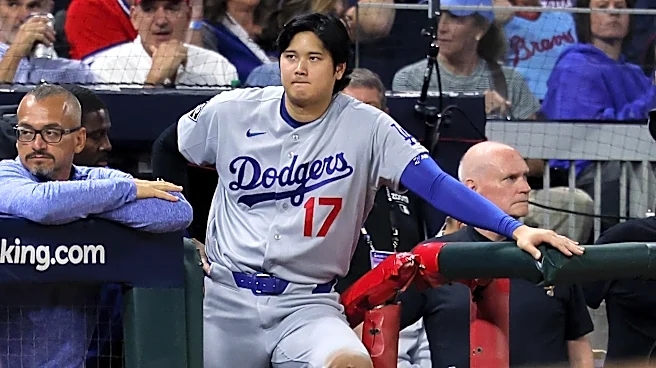
The Dodgers advanced past the Braves pretty handily despite Shohei Ohtani remaining mostly absent for the series. It was part of a protracted slump to end the year for the four-time MVP, Ohtani mustering just a 72 wRC+ in September and a 106 mark in the second half. His last home run was on August 18th, the downturn in form likely the result of left knee and right biceps injuries that convinced the Dodgers to remove him from the rotation to DH full time in early July. He went 2-for-13 in the NLDS and will have his streak of three straight NL MVPs snapped by Pete Crow-Armstrong.
Also largely absent from the NLDS were Mookie Betts and Andy Pages. Betts got red-hot to end the regular season but couldn’t carry that into the series against the Braves, where he had a 75 wRC+ in 17 plate appearances. Pages established himself as one of the game’s premier center fielders this year and last, but was only good for a 77 wRC+ in 15 plate appearances.
Instead, the onus was on Max Muncy, Freddie Freeman, and Kyle Tucker to carry the load against Atlanta. Ever-reliable postseason performer Max Muncy led the way with three home runs and three RBIs to extend his lead atop the franchise postseason home run list to 19. Freeman hit a pair of home runs and drove in a pair against his former team to earn a 174 wRC+ while Tucker batted .333 with a 151 wRC+.
Starting rotation
The Dodgers provided a blueprint for how they might deploy their four-headed rotation monster of Skubal, Yamamoto, Snell, and Glasnow with each pitcher making one start in the NLDS. With Skubal and Yamamoto already lined up for the first two games, I imagine Snell and Glasnow will start Games 3 and 4, respectively, based on rest.
Skubal pitched to a 2.61 ERA and 2.36 FIP in ten regular season starts for LA and allowed a run on two hits and two walks with seven strikeouts in six innings in the Dodgers’ Game 1 win over the Braves. Yamamoto was even better in Game 3, holding Atlanta to a run on four hits and a walk with ten strikeouts in seven innings following a brilliant regular season in which he went 14-9 in 28 starts with a 2.53 ERA, 3.33 FIP, and 182 strikeouts in 185 innings. Snell was limited to just nine regular season starts in another injury-plagues season, but was dominant to the tune of a 1.90 ERA and 1.72 FIP without giving up a home run in 42.2 innings. He started their lone loss of the NLDS, lasting just 3.2 innings in Game 2 after allowing a run on three hits and five walks. Like Snell, Glasnow was largely unavailable in the regular season, making just 13 starts with a 3.53 ERA and 2.74 FIP, but he helped seal the series in Atlanta by pitching 4.2 innings of one-run ball on one hit and five walks with five strikeouts in the decisive Game 4.
Bullpen
Often the one shaky unit of their playoff runs, the Dodgers bullpen has looked far more settled this postseason. Edwin Díaz returned from a disastrous regular season that saw him demoted from the closer role and suffer elbow and neck injuries to make three scoreless appearances and secure two saves against the Braves. Roki Sasaki, Brock Stewart, and Alex Vesia didn’t allow a run in their combined five innings of relief while Edgardo Henriquez’s fastball has touched as high as 104 mph. Only Tanner Scott struggled, allowing two runs in 2.2 innings, but he still struck out four of the 11 batters he faced.
Milwaukee Brewers
Regular season record: 103-59 (1st, NL Central)
(Beat Padres in NLDS, 3-1)
The Brewers were the class of MLB, pacing the league with 103 wins. They are what every team aspires to be, blending a cutting edge analytics department with robust player development successes to both produce homegrown cornerstone talent and squeeze as much surplus value out of every player who joins the organization — proof that you do not need a salary cap to make small market teams competitive.
Their offense remained remarkably consistent relative to last year. In 2025, they posted a .257 average, .736 OPS, 166 home runs, a 107 wRC+, and 28.4 fWAR. In 2026, they posted a .257 average, .743 OPS, 154 home runs, a 107 wRC+, and 26.1 fWAR, their offense ranking third right behind the Dodgers in wRC+ and fWAR. Their starting pitching took a big step forward as you might expect when led by a historic campaign from The Miz, the unit finishing fourth in MLB in FIP (3.73) and fWAR (15.6) and fifth in ERA (3.61). The bullpen remained an undeniable strength as it does every year, placing in the top-four in ERA (3.40) and FIP (3.70).
Offense
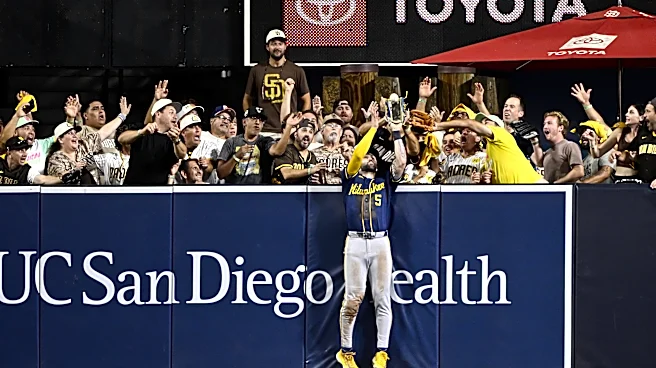
The Brewers were led by ascending superstar Jackson Chourio, who became the all-time franchise leader with five postseason home runs at only 22 years old. Despite just a 73 wRC+ in the series overall, he hit the game-tying two-run homer in Game 1 and the walk-off RBI single with two strikes and two outs off Padres closer Mason Miller in Game 2. He batted .291 with 25 home runs and a 130 wRC+ in the regular season and drove in six in just four games against San Diego.
Their most consistent contributor against the Padres was William Contreras, who went 6-for-16 with two home runs, two RBIs, and a 225 wRC+. Christian Yelich was 5-for-14 with a 162 wRC+ while Jake Bauers and Sal Frelick were on-base machines in that series. Brice Turang, Garrett Mitchell, Joey Ortiz, and Cooper Pratt were all above average by wRC+ during the regular season but none of that quartet did much of anything in the NLDS. If Turang in particular can find his swing after posting a 6 wRC+ in 18 PAs, you’d like their chances a lot more against an LA starting rotation that’s in a league above the Padres.
Starting rotation
If the Brewers are going to have any chance of advancing to the World Series, it’s going to come down to pitching, specifically Jacob Misiorowski. He will likely run away with the NL Cy Young after leading MLB in ERA (1.80), FIP (2.17), strikeouts (252) and fWAR (6.6). He allowed two runs on four hits and a walk with six strikeouts in four innings in the Brewers’ Game 1 victory, and in all likelihood will have to start twice and probably make a relief appearance against the Dodgers. He struck out nine in five innings of two-run ball in Game 3 of last year’s NLCS against LA.
The quality of options in the rotation after him thins out significantly with Robert Gasser, Logan Henderson, and Dustin May each making one start in the NLDS. Henderson pitched to a 2.47 ERA and 3.32 FIP in 18 regular season starts, the rookie holding the Padres to two runs on two hits and three walks in five innings of a Game 2 walk-off win. Gasser posted a 3.87 ERA and 4.23 FIP in 20 regular seasons starts and held San Diego to a run on three hits and a walk in four innings of the series-clinching Game 4 win. May is the clear black sheep of the bunch, struggling mightily in ten starts after joining from the Cardinals at the deadline and getting tagged for two runs on three hits and two walks of a Game 3 loss.
Bullpen
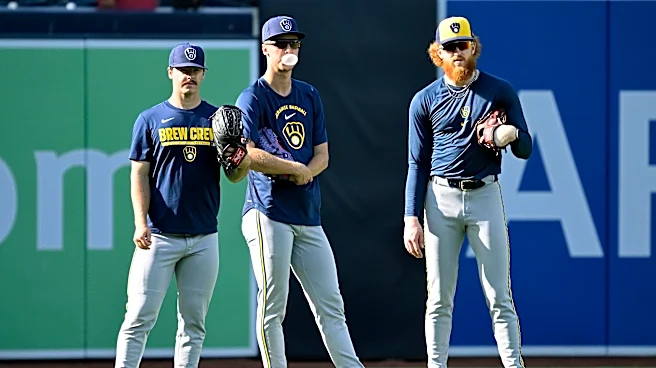
In my opinion, the X-factor of this series will be the Brewers bullpen, who was taxed heavily in their four games against San Diego, yet have still posted the second-lowest bullpen ERA of any playoff team at 1.80. I expect Milwaukee to continue to lean on the high leverage, high velocity dual threat of Aaron Ashby and Trevor Megill, the pair combining to toss nine scoreless innings and secure two saves against San Diego. DL Hall, Anthonio Senzatela, and Abner Uribe might not strike out ten-percent of batters they faced but the three held San Diego scoreless across 7.2 combined innings. The unit as a whole is a ground ball generating machine facing a Dodgers team that posted the third-lowest ground ball rate in the majors.