
“Throw out the records.” “Anything can happen on any given night.” There are dozens of over-used idioms that make the same point: at their core, all athletic competitions have an element of chance. The mathematically-inclined
would call that a sequence of random events.
The best athletes and teams maximize the likelihood that the things in their control will go as planned. But even then, there are dozens of events completely outside their control inherent in every competition.
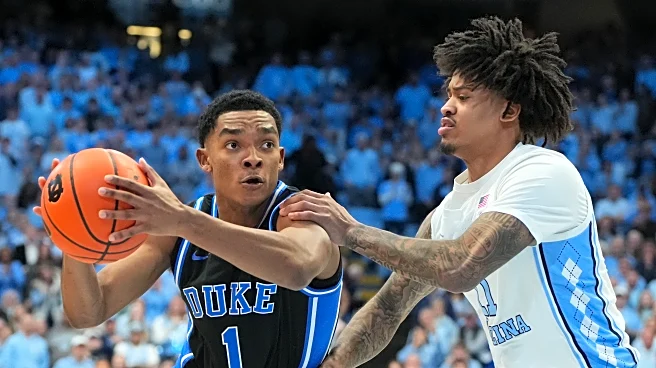
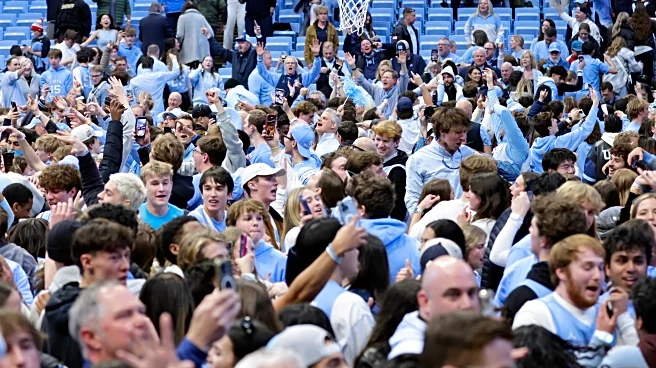
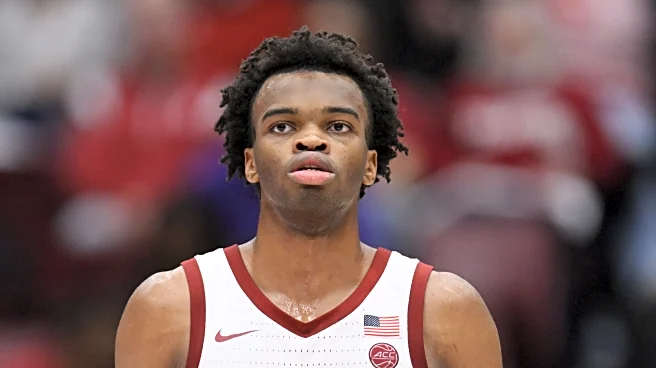
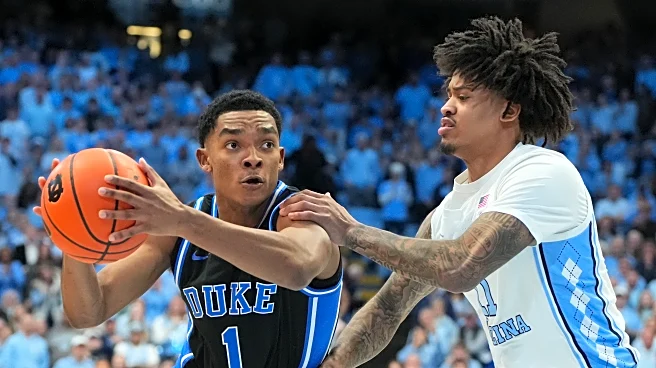
For about 38 minutes Saturday night, Duke skewed that proverbial random number generator their way at almost every opportunity. Cameron Boozer continued his mesmerizingly consistent excellence. Dame Sarr made open shots that he has been missing the last month. Blue Devils swarmed the glass for every rebound and were on the floor for every loose ball. It was a stellar performance, particularly on the road against a Top 15 North Carolina team.
But there were plenty of things out of Duke’s control that kept the Tar Heels in the game. Duke consistently forced Caleb Wilson into contested, mid-range jumpers—the ideal outcome for the opposition’s best scorer who is most adept finishing at the rim. Wilson, though, was undeterred, finishing 8-for-12 from the field in the contest. The Blue Devils made each of those shots as challenging and unlikely as possible, but whether those shots found their way into the basket was out of their control.
A particularly improbable foul disparity was also largely out of Duke’s control (although reasonable parties may argue that Jon Scheyer could have tried exerting his influence over the officials more). A 6-to-1 foul disparity against the Blue Devils in the second half—particularly when Duke attacked the rim at will—is an outlier event, plain and simple. The effects of that improbability dampened how the Blue Devils’ excellent play manifested on the scoreboard—making starting center Patrick Ngongba a non-factor in just 16 minutes and neutering defensive stalwart Maliq Brown’s play down the stretch—keeping the Tar Heels in the game.
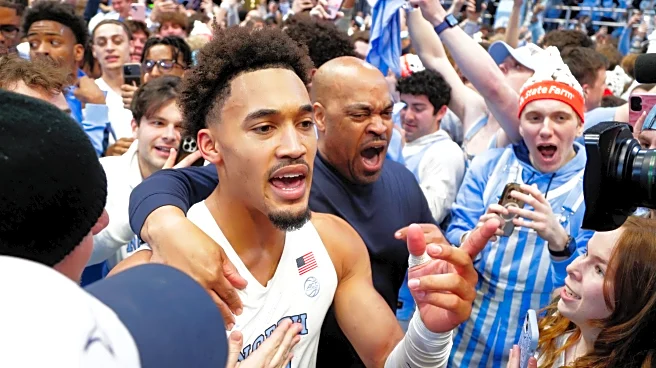
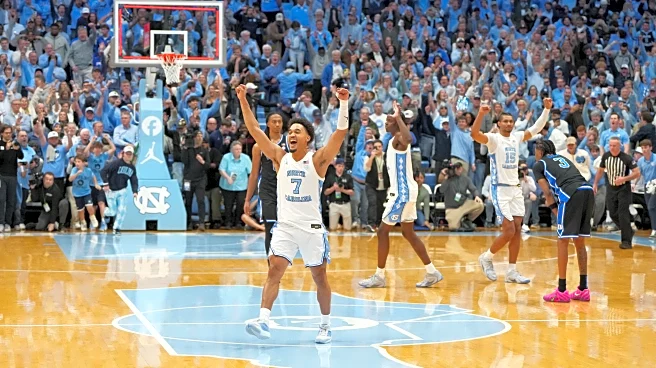
Despite all that, Duke still was in a position to win with 2 minutes to go. But to their credit, the Tar Heels took control of the probabilities in that final stretch. They forced the Blue Devils into less quality looks, while (finally) making open shots of their own. The Tar Heels were just 5-for-16 from deep, including a number of open looks, before making three straight to win the game.
Looking at the game through this lens makes one thing abundantly clear: it takes a lot of chance events going against them for this Duke team to lose. In a hostile environment, against a Top 15 team, in a rivalry that “always delivers,” the Blue Devils skewed the random number generator as much as they possibly could to emerge victorious. Yet, enough improbable events happened so that Duke left Chapel Hill licking its wounds.
That doesn’t change who this Blue Devil team is—a team, lest we forget, that still just has two losses by a combined three points a week into February. The best team, or even the team that played the best on that night, does not always win a given college basketball game. But that is inherently what makes the sport, and specifically this rivalry, so great. As painful as this loss will be for Duke fans, this same principle is what gave the Blue Devils the Austin Rivers buzzer-beater and the Tre Jones-led OT win in Chapel Hill.
Run a weighted number generator long enough, and it will output some crazy things. That happened last night. Now it’s up to the Blue Devils to skew those probabilities even further so that craziness is less likely to happen again.