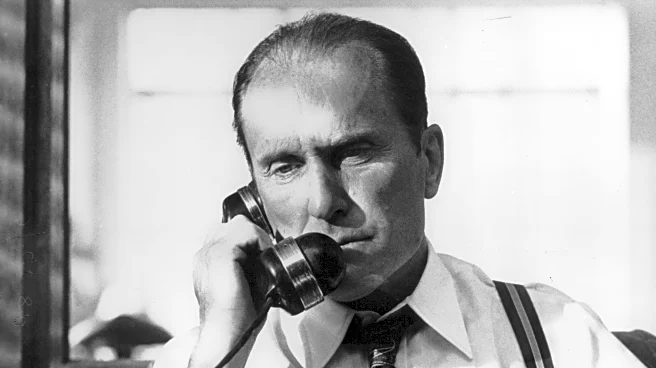

Robert Duvall, who played Max Mercy in the best baseball ever made, “The Natural,” has died at the age of 95, it was announced today.
The Natural came out when I was 13 years old — an awkward age for me, and for most everyone, I think. Anyone who says they were happy, well-adjusted and in a good place at age 13 is not to be trusted, in my opinion. I remember seeing it in the theater, and as a young baseball fan who was, in retrospect, still romantic about the game (though I wouldn’t have used that
phrasing at the time), I was captivated by Roy Hobbs, exhilarated in his success, aching when he slumped, transfixed by the memorable ending.
Other baseball movies since then may have been more popular. Bull Durham is beloved, despite Kevin Costner’s wooden acting. The Sandlot is a perpetual favorite, though like the Teenage Mutant Ninja Turtles, I was a few years too old for it to have hit my demographic. Moneyball was a cultural phenomenon, even if it slandered Art Howe and Grady Fuson and shoehorned in an unnecessary father-daughter subplot. Fever Pitch highlighted Hollywood’s ability to take a memoir about how intertwined football is with life in England and turn it into rom-com pablum about the Red Sox.
But none of them are as good as The Natural. There’s a reason why Chuck Morgan has been playing the music from The Natural when there’s a Texas Rangers home run for over 30 years, and why it still produces goosebumps. There’s a reason why Roy Hobbs’ name is still evoked in regards to a certain type of baseball player, someone who can seemingly do everything, and do it easily.
The Natural is the rare book-to-movie adaptation that exceeds the source material. That isn’t a criticism of Bernard Malamud’s novel, seemingly inspired in equal parts by Eddie Waitkus and Shoeless Joe Jackson, which I read not long after the movie (and have re-read a couple of times since). Its simply a credit to how good a film Barry Levinson, in just his second directorial performance, made.
Robert Redford as Roy Hobbs is front and center when you think about the cast, and it says something about this movie that, with Redford’s lengthy resume and litany of iconic performances, Roy Hobbs is up there with Bob Woodward and the Sundance Kid as one of his most memorable. Then there’s Glenn Close as Iris Gaines, who you can still see standing silently in the crowd. Barbara Hershey as the femme fatale who almost ends Hobbs’ career before it begins. Kim Basinger as Memo, the devil on Roy’s shoulder to Iris’s angel.
But Robert Duvall as Max Mercy, the sportswriter who first discovers Hobbs, who covers him years later when he’s with the New York Knights, feels like the moral center of the film, the character whose eyes the audience watches through. It is a role that could have been a cut-out or a cartoon in the hands of a lesser actor, but Duvall brings a depth to Mercy, allows you to see and feel the ambiguities and moral complexities of the sportswriter that mirror the ambiguities and moral complexities of the movie as a whole.
Duvall’s work is legendary and legion, and so rich with great characters in terrific movies that any one of a couple of dozen of his roles could be described as your best, or your favorite. The Godfather Saga, Lonesome Dove, Apocalypse Now, Tender Mercies, The Great Santini, Network, Sling Blade, A Civil Action…the list goes on.
I will say that, aside from The Natural, the movie I most associate Robert Duvall with is The Apostle. A passion project that Duvall wrote the script for, but couldn’t get made for over a decade, it centers around The Apostle E.F., another one of the complex, complicated, and seemingly contradictory characters Duvall so excelled in playing. Y’all may have heard me say before that his character in that movie reminds me of my grandfather, who I’ve told stories on here about.
The movie world has lost a great one today.