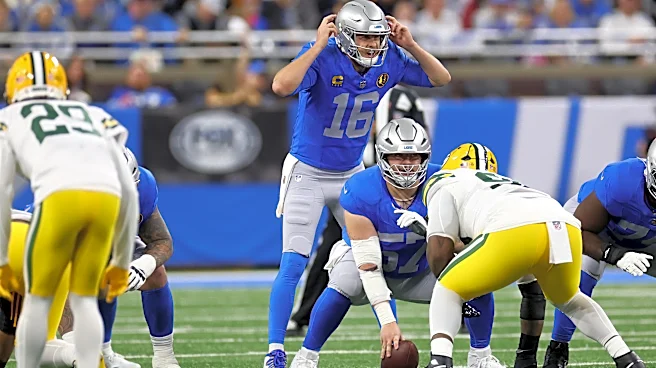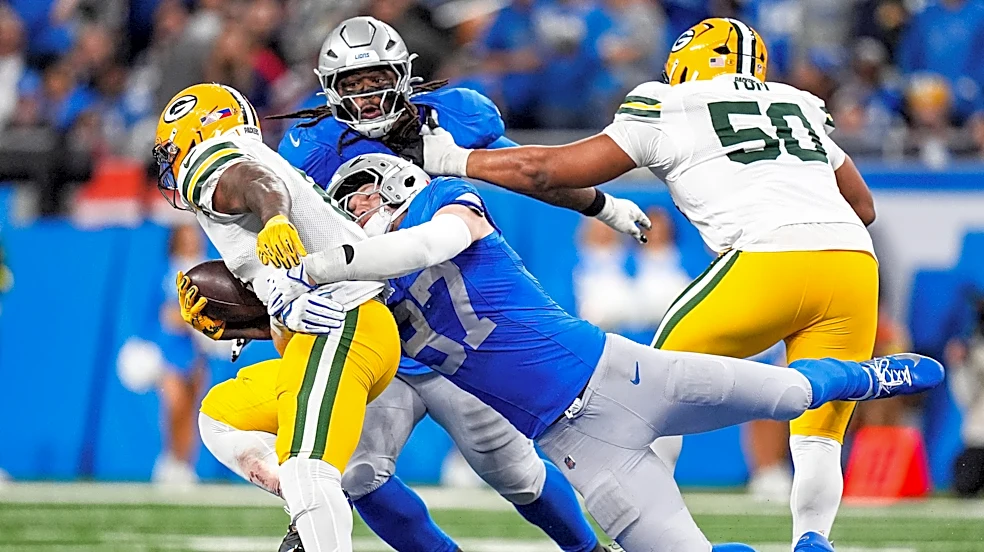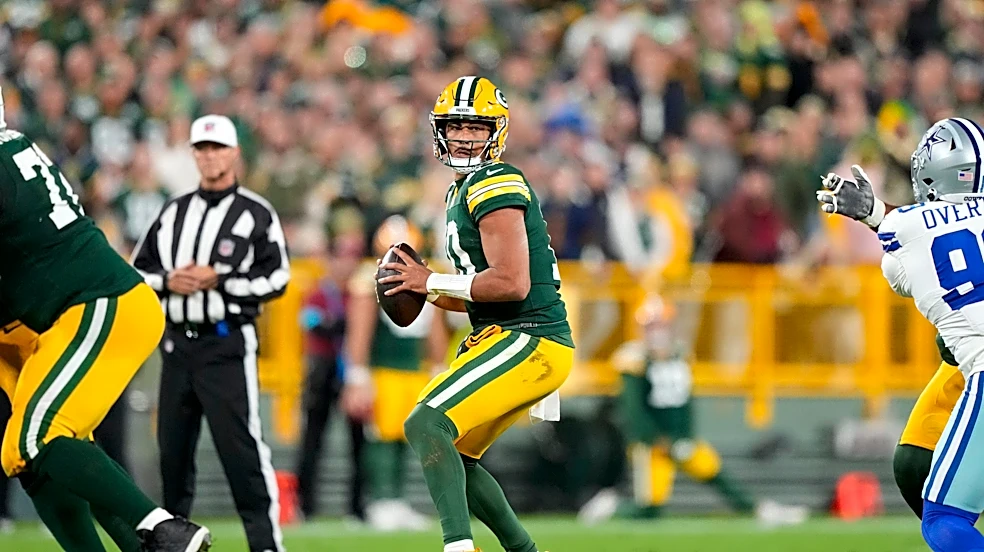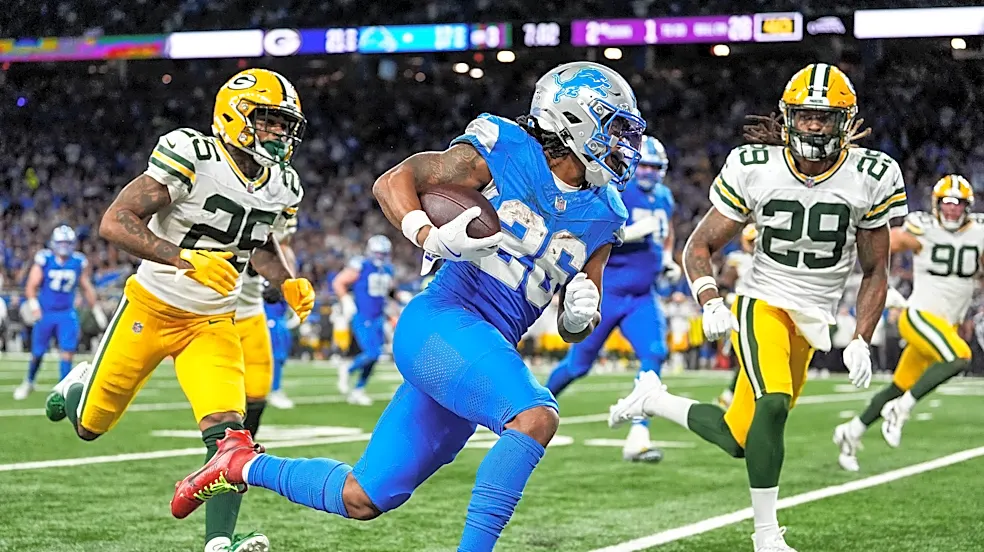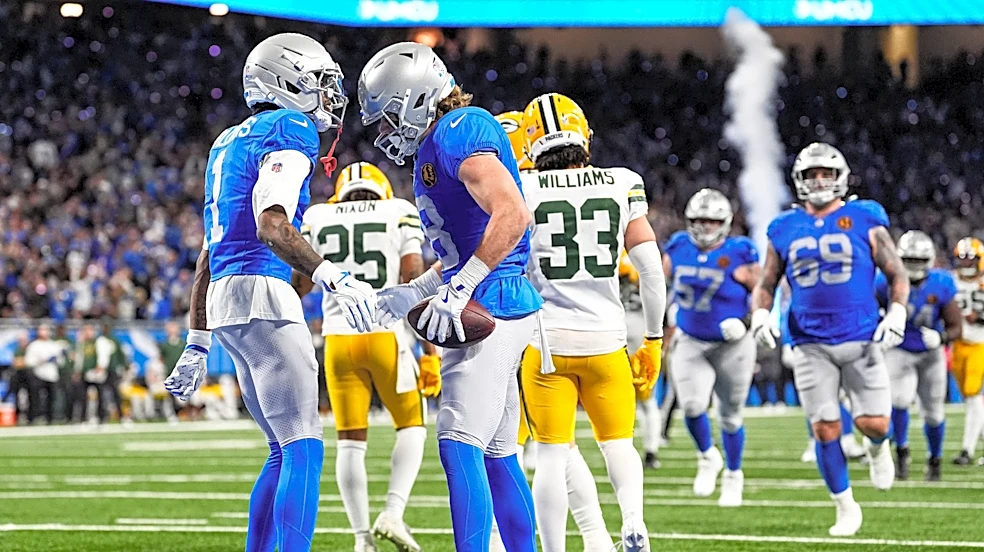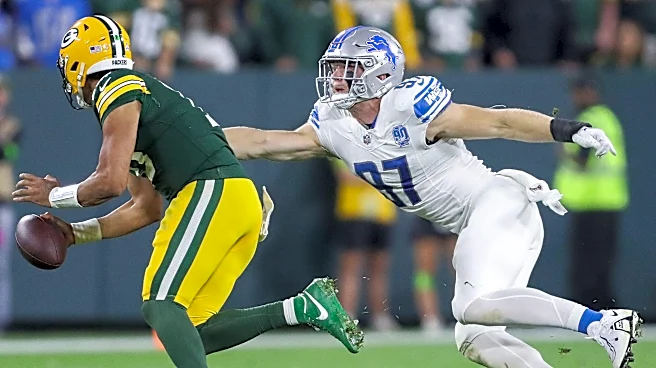


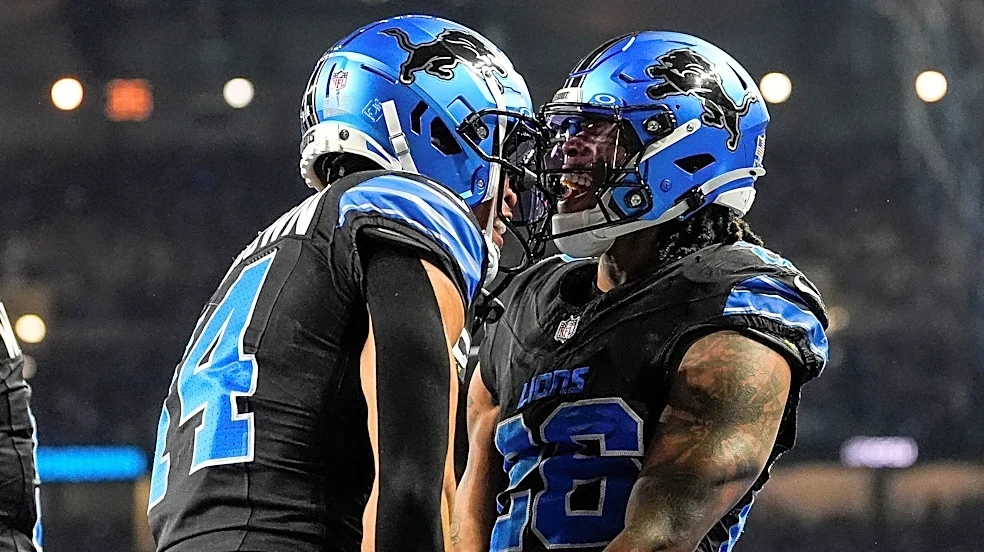
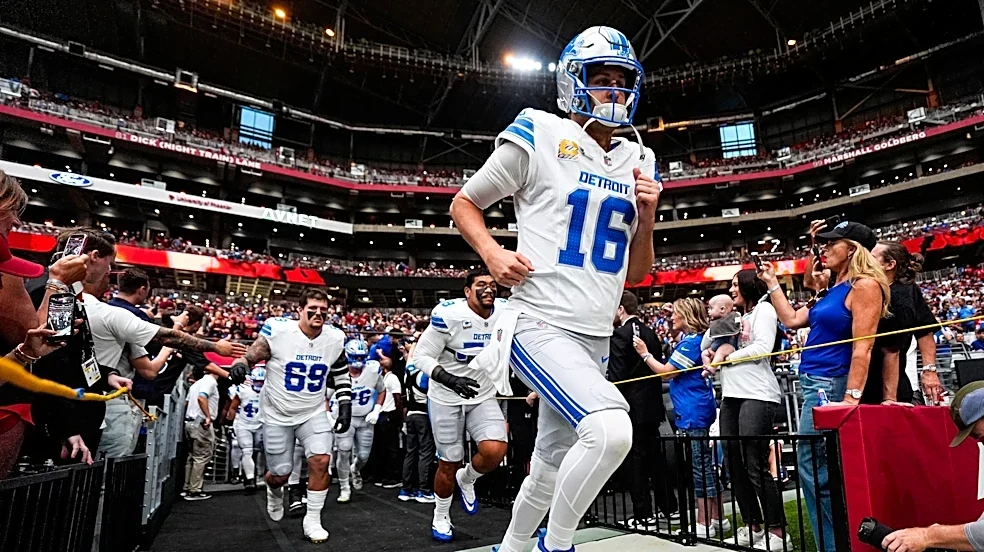

The Detroit Lions (3-2) and Green Bay Packers (4-2) will square off in Week 7 in an NFC North divisional clash.
“Division games are big, man,” Lions coach Dan Campbell said on Wednesday. “You talk about wanting to win a division, you have got to win division games. […] They’re really a game and a half if you want to look at it a certain way. But I mean, look, they’re (the Packers are) playing good football. They have got good players; they get good coaches. And so I respect that, man. This is a tough
division.”
Let’s take a closer look at this matchup and predict how the Lions will earn a victory over the Packers in this week’s Honolulu Blueprint.
This week’s predictions preview is sponsored by the folks at FanDuel Sportsbook, who currently have the Lions listed at +1800 to win this year’s Super Bowl and are currently 3-point favorites in Week 7.
Packers base scheme
For a detailed look at the opposing scheme, check out our complementary breakdown piece: Lions Week 7 preview: Breaking down the Packers’ offensive and defensive schemes.
Prediction 1: Lions take the ball, get an early lead
The Lions have struggled to get things going early in games this season. After scoring a touchdown on their second possession in Week 1 against the Saints, they’ve scored only three more points on their next nine first-quarter drives. Through five games, the Lions have scored just 10 first-quarter points, compared to 57 in the second quarter, 45 in the third quarter, and 52 in the fourth quarter and overtime.
Here’s offensive coordinator Drew Petzing addressing the Lions’ slow starts:
“Sometimes it’s play calls. Sometimes it’s execution. It’s always a combination of both. And honestly, and I’ve said it here before, anytime we don’t score, I’m a little irked whether it’s the first drive of the game or the last drive of the game. I was really excited that we have got it rolling and kind of saw it in the momentum carry into the next drive and the next drive and the next drive, which was excellent. [..] So again, it’s doing your job. It’s calling the right plays. It’s staying in the moment and doing it as hard and as fast as you can. I think that’s got to be the focus.”
Petzing added that the team isn’t focusing too much on the slow starts because he doesn’t want the offense to strain to overcorrect, but there are subtle clues that the Lions are trying to gain an early advantage. For example, the Lions won the toss in Week 5 and elected to take the ball on offense first. While it didn’t work out in Arizona, the ideology made sense, and it wouldn’t be surprising to see them want the ball first against the Packers in this game as well.
Green Bay’s offensive strength is in their aggressive approach in the passing game and willingness to take deep shots. However, as Anthony Balaj pointed out in his film study of the Packers’ passing attack, Packers coach Matt LaFleur calls a very different style of offense when his team has the lead vs. when they’re trailing.
If the Lions can get an early lead on the Packers, LaFleur has a tendency to be less aggressive in his attack, take fewer deep shots, and deploy a more measured, cautious approach. Look for Detroit to want the ball first, score, and put LaFleur in an uncomfortable spot.
Prediction 2: Detroit stretches the field with Jamo, softens the zone
On defense, the Packers secondary is a strength, and they’ve posted impressive stats lately. This season, they’re allowing only 193.3 passing yards per game (6th best in the NFL), 5.9 yards per reception (3rd), -0.18 EPA per pass (3rd), and the fewest explosive passes allowed in the League.
Now, they haven’t exactly faced a murderer’s row of quarterbacks this season. In Weeks 1, 4, and 5, the Packers faced backup quarterbacks, all of whom failed to throw for more than 200 yards: Vikings’ Carson Wentz threw for just 133 yards (though they scored 39 points), Bucs UDFA rookie Jalon Daniels threw for 148, and Chicago’s Tyson Bagent (87) and Case Keenum (108) combined for 195 yards. Against starters Geno Smith (Jets, 247 passing yards), Michael Penix (Falcons, 256), and Dak Prescott (Cowboys, 258), the Packers secondarily allowed closer to 250 passing yards per game.
While the Packers are coming off a great performance against the best quarterback they’ve faced this season in Prescott, Jared Goff is arguably playing even better right now. Through five games, Goff is averaging 279.6 passing yards per game (3rd best in the NFL), 7.8 yards per reception (8th), an EPA of 0.25 per pass (2nd), and an 111.3 passer rating (3rd).
Goff also has solid EPA results against the style of defense that the Packers run. For example, the Packers spend around 75% of the time in nickel defense, where Goff averages an EPA of 0.26 (4th), per SumerSports. The Packers also play zone coverage concepts roughly 78% of defensive snaps, and again, Goff’s EPA is very solid, averaging 0.20 (7th). And finally, the Packers run a two-high safety shell in their secondary, and Goff averages an EPA of 0.37 (4th) against this approach at safety.
For Goff to keep producing at this rate, the Lions will need to soften the Packers’ zone, and despite the Packers running so many two-high safety looks, the Lions will need to keep them stretched out to create gaps underneath. The best way to keep the Packers’ defense honest and open is to test them deep with Jameson Williams. The Packers don’t want to give up explosives, and if the Lions even threaten to push the ball downfield to Williams, the safeties will need to respond accordingly, opening up the intermediate area of the field and allowing players like Amon-Ra St. Brown and Sam LaPorta to work.
As accurate as Goff has been with the football this year, pushing the safeties back with Williams and taking what’s underneath should help the Lions sustain drives and stay consistent. But they’ll need one other component to make it all work …
Prediction 3: Lions attack with Jahmyr Gibbs on outside zone runs
While the Packers’ secondary has been solid, their defensive front has struggled with consistency against the run, allowing three opponents to rush for over 100 yards, including both of their losses: the Vikings ran for 107 yards, and the Falcons tuned them up with 242 rushing yards.
With the Packers running a 34 front in base (25% of defensive snaps) and a 24 front in subpackages with stand-up edge rushers, teams have attacked them on the edges, running outside zone concepts on 62.2% of run calls (2nd highest rate in the NFL).
Fortunately for the Lions, they lean on outside zone rushing as their primary blocking scheme; 45.6% of the time, with 54% of run calls going to the outside (10th most).
When running outside zone, Jahmyr Gibbs has amassed 274 of his 504 rushing yards (4th most), 5.48 yards per carry (5th), a 50% rushing success rate (4th), eight “impact plays” (2nd), and 10 runs of 10+ yards (T-1st).
Attack the edges in the run game to pinch the front, stretch them deep with Williams to expand the secondary, take what’s there in the intermediate zones, possess the ball, control the clock, keep the Packers offense on the sidelines.
Prediction 4: Lions stay disciplined on deep shots
The Packers’ deep ball has been a weapon in 2026, as quarterback Jordan Love has been aggressive in attacking downfield with both Matthew Golden and Christian Watson. Together, the pair account for nearly 50% of Love’s targets—Golden sees 26% of Love’s throws, Watson 22%—and the duo is amongst the most productive pairs in the NFL.
Here’s Lions defensive coordinator Kelvin Sheppard discussing the Packers’ ability to be explosive on offense:
“They’re number one in the League when it comes to that category, as far as big plays, the deep balls. It’s why Jordan Love is special. He has one of the best deep balls I’ve seen. And I mean he flicks it 50 yards off his fingertips. It’s very impressive. They have two of the most explosive vertical receivers in the game. It’s a tremendous challenge for us, and we understand what we’re going into. First division game, we’re excited for it, and we’ll be ready.”
Through the first four weeks, the Lions secondary has been a mess. They’ve been attacked in multiple areas and have been very susceptible to the deep passing attack. However, in Week 4, the Lions landed on a combination of players who showed improvement, and in Week 5, Sheppard’s approach on X-and-long situations was effective in taking away the Cardinals’ best offensive weapons.
That being said, things won’t be as easy this week for Sheppard because the Packers don’t just feature two offensive weapons; they also have a third in tight end Tucker Kraft. And when defense rolls coverage over the top of the receiving duo, Kraft is often available underneath at the intermediate level.
So how do the Lions counter the Packers trio of impactful skill players?
They welcome back Brian Branch.
On most plays, I fully expect Branch to play at safety, helping either Chuck Clark or Keith Abney II patrol the secondary, but when the Lions get the Packers into X-and-long situations where Love will want to go deep, I believe the Lions can shift into three-safety sets, run the double teams on Golden and Watson, and drop Branch into a coverage role on Kraft. This approach isn’t necessarily something the Lions have put on film this year, so it could catch the Packers by surprise, and it’s certainly something the Lions defense can do with Branch back in the mix.
In addition to matching up creatively, the Lions also need to trust their assignments and stay disciplined not to commit penalties. Through six games, the Packers have amassed more penalty yards off deep plays than any other team in the NFL. Their strategy often seems to be to throw the ball deep and hope to win a contested catch, or bait the defense into a harsh penalty. The Lions must stay disciplined in these situations.
Prediction 5: Detroit’s pass rush investment pays off vs. Love
The Lions invested in their pass rush this season, and it’s paid off. Despite playing one less game than most of the NFL, they still currently lead the League with 20 sacks, have 90 pressures (6th), and are second in the NFL is quick pressures.
The Packers’ offensive line has struggled this season, and while Love has done well to mitigate the issues in front of him, pressure can disrupt the Packers’ offense. Through six games, the Packers have surrendered 97 pressures (4th most in the NFL), allowed a 40.2% pressure rate (8th highest), and rank 10th in allowing quick pressures—when pressure arrives, it’s quick, averaging 2.36 seconds, the worst in the NFL.
Opponents have blitzed the Packers on 37.7% of plays (6th most in the NFL), but Love’s ability to navigate the pocket and distribute the ball quickly has kept him to only 13 sacks (15th). He’s also improved in this area as the year has progressed, so Sheppard will need to be strategic and timely in when he elects to call his blitzes.
In fact, with the Lions’ struggles in the secondary, Detroit would benefit from dropping as many players into coverage as possible, and while that would mean rushing only four players, the Lions have been extremely successful with this approach this season—ranking second in the NFL in ability to create pressure when rushing only four.
With the Packers struggling to create any semblance of a rushing attack (they’re last in the NFL in almost every rushing category), Love will have to beat the Lions. And while he will put up yards against a Lions defense that has struggled to defend the pass this year, the ultimate difference in this game could come down to the Lions’ ability to jam passing lanes and generate pressure and sacks with just four rushers.