
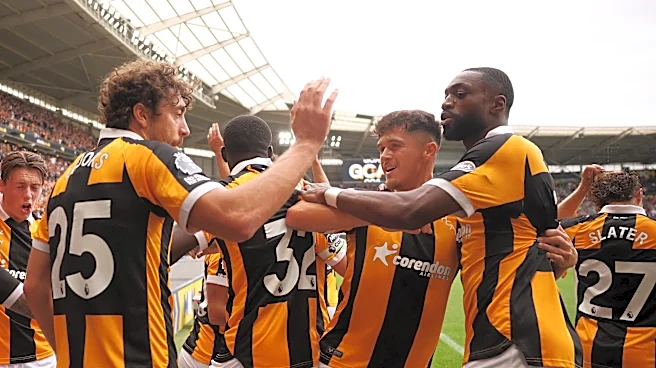
Sunderland kicked off their 26/27 campaign with a long trip down to Premier League newcomers Ipswich Town, having not visited Portman Road since January 2024, given both sides have swapped leagues simultaneously since then. With a raucous opening-day atmosphere, Sunderland were going to need to weather the early storm, but ultimately lost control and fell to their first defeat of the season.
With a same-look Sunderland side, what went wrong on the day for Le Bris, and how does a more controlled, in-possession
Sunderland look now we’re expected to control more games throughout the 26/27 season?
Sunderland Line-Up
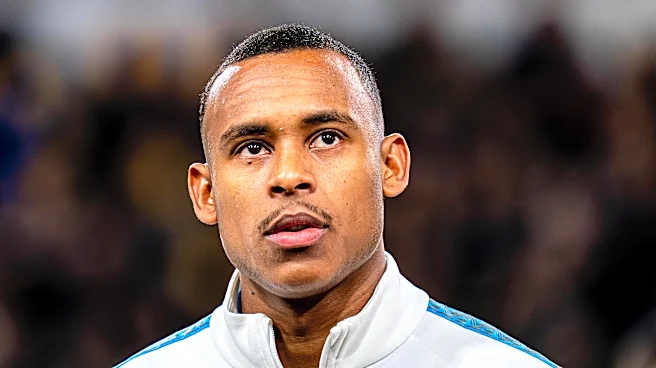
In a team selection that was largely unchanged from the final pre-season friendly against Stade Rennes a week earlier, Le Bris had a late call to make around player fitness, with both Nordi Mukiele and Omar Alderete very much touch and go ahead of travelling.
In the end, one change was made, which saw Thomas Meunier make his league debut at right-back at the expense of Chemsdine Talbi. This allowed Trai Hume to operate within his hybrid right-wing role whilst the search for a first-team option continues.

Dan Ballard and Luke O’Nien partnered in central defence, which was also the same pairing on our last visit to Portman Road, whilst Reinildo Mandava held his position at left-back following the Friday announcement of Dayann Methalie.
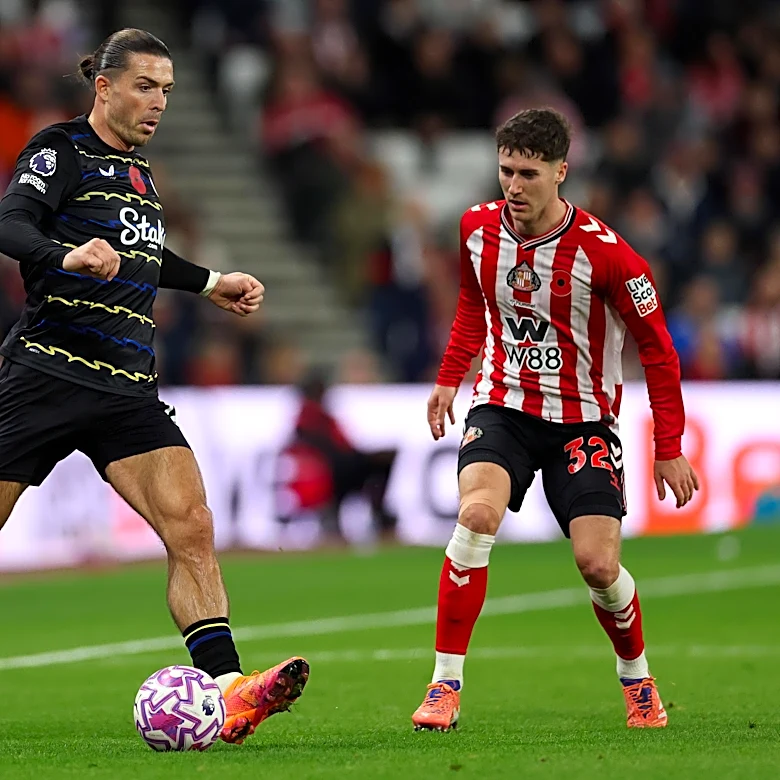
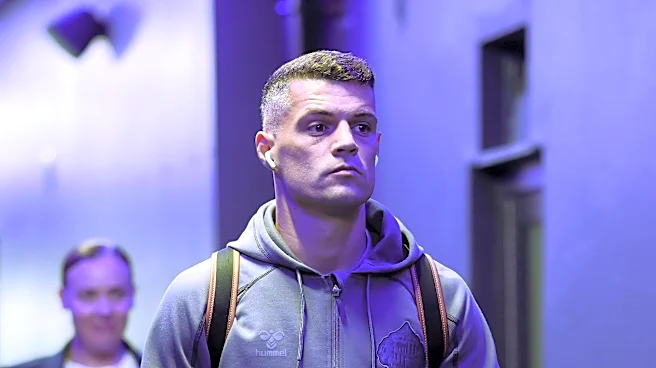
Sunderland’s usual midfield trio of Granit Xhaka, Noah Sadiki and Enzo Le Fée sat in the middle, whilst Nilson Angulo was given the nod wide left and Brian Brobbey started up top in our usual 4-3-3/4-4-2 system.
With Sunderland now no longer considered the Premier League new boys, teams are likely going to stand off Sunderland a little more and therefore force more possession upon a side who really eclipsed 45% possession in games last year, placing us in the bottom four sides in the league for time spent on the ball, at just 44.9% share of average possession in 25/26.
How Le Bris looks to set up in order to best counter this is something we’ll likely revisit across the course of the season.
Opposition Line-Up
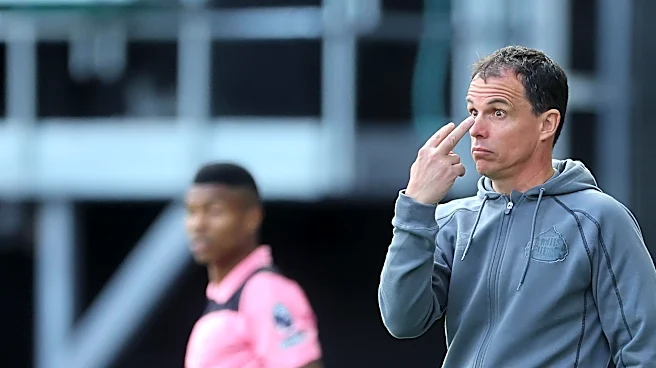
Following the departure of Kieran McKenna during the summer to focus on his personal life, Gary O’Neill walked into a summer of manic recruitment by Ipswich, very much looking like Sunderland last summer by constructing a new squad with over a dozen signings and discussions of more to be made before the deadline.
Ipswich handed seven full debuts for their opening-day game – six if we don’t count Enciso’s return for his second spell – however, it was a greatly changed team from last season, with an entirely new midfield and attack..

Despite playing a 3-4-3 during his time with Strasbourg, O’Neil is very tactically fluid and mainly did so in order to adapt to the playing philosophy of his clubs owners therefore was allowed to revert back to his favoured 4-2-3-1 toDespite playing a 3-4-3 during his time with Strasbourg, O’Neill is very tactically fluid and mainly did so in order to adapt to the playing philosophy of his club’s owners. He was therefore allowed to revert back to his favoured 4-2-3-1 to open the season for Ipswich.
Sasa Lukic and Marcelino Nunez were tasked with anchoring the midfield, whilst an attacking front four were given licence to roam, consisting of Fatawu wide on the right, Maeda wide on the left and Enciso sat just behind new frontman Emersonn, who was leading the line.
With a clear siege mentality, O’Neill started the game with a high press but very quickly reduced to a compact 4-4-2 shape off the ball, allowing Sunderland to dictate the tempo and looking for lapses in concentration to recover the ball and attack quickly in transition, as Sunderland had done to West Ham on their return 12 months ago.
Getting Caught Out
Whilst Le Bris will have been fully aware of Ipswich’s desire to press early with a high level of intensity, whether he expected that to continue for longer than initially anticipated remains to be seen.
After some early pressure, Sunderland were able to bypass the Ipswich press and exploit the space left from their high press, as Brian Brobbey had a shot excellently charged down by Leif Davis, creating the first real opportunity of the match – and one Brobbey will have regretted not getting his shot away earlier.
The following ten minutes saw Ipswich drop deeper, having been burned twice by pressing high, which resulted in Sunderland gaining controlled possession as the hosts retreated into a more compact low block.
Here we saw the first mistake of the afternoon, as Sunderland looked to apply control and advanced both of their full-backs into the final third to pin back the Ipswich threat on the counter, whilst also helping to widen out their defensive low block.
Luke O’Nien was guilty of playing a rather lazy, under-hit pass into midfield, which Enciso was able to easily pick off. Without the defensive cover from either of Sunderland’s full-backs, he was left with acres of open space to skip into, with only Sunderland’s two central defenders left to help.
The Paraguayan was then able to sidestep O’Nien and drag Ballard across before sliding the ball back across the box to an unmarked Emersonn to stab home into the empty net and open the scoring for the hosts – the nightmare start.
Adapting to Maintain More Control
Sunderland looked to bounce back immediately following the goal and saw the first real instance since Burnley at the Stadium of Light in January where we’d been given the possession and asked to create, as Ipswich looked to retreat into their shape and defend the lead they’d been gifted.
With a whopping 64% possession in the opening half, paired with 240 completed passes – for context, Sunderland were only completing an average of 297.5 passes per 90 minutes during the entirety of the 25/26 season.
With a more controlled structure comes a slower tempo and more of a reliance on coached attacking patterns of play to generate openings, as Meunier, O’Nien, Brobbey and Hume all saw efforts on goal either charged down or wide of the mark.
Sunderland looked to be more aggressive in the final third, racking up a total of four first-half corners and eight shots, which again, for comparison to 25/26, was a big improvement, with Sunderland’s total shots per match only averaging 12 during last season.

TThe breakthrough ultimately came in the form of something which Sunderland relied on a little too often at times – moments of individual brilliance from one of the players. This time, Nilson Angulo scored his first goal for the club from a wonderful set piece just after the half-hour mark.
Striking the ball from around 25 yards out on the left side of the box, he was able to generate enough pace to whip the ball off the underside of the bar from an xG of just 0.06 to pull Sunderland level.
New Half – Same Story
Following the half-time interval, Sunderland looked to have put the errors of the opening period behind them and started off the second half looking to break Ipswich down and grab the goal to go ahead.
Whilst Ipswich started the second half much like they did the first, after a ten-minute spell they quickly retreated back into their shape after a sweeping move saw Brobbey once again pin his defender, seeing his effort cleared off the line.
With Ipswich back in their settled structure, Sunderland were forced to control the possession, holding similar numbers to the first period with a further 249 passes completed and 60% of the overall possession.

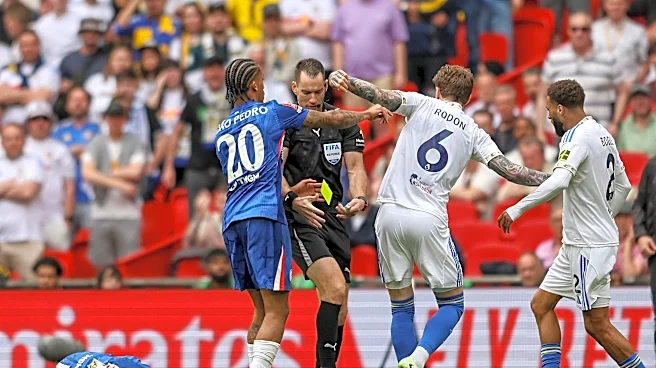
Like a carbon copy of his first incident, unfortunately Luke O’Nien was caught on the ball, allowing Enciso to once again pick his pocket and charge through on goal, only to be hauled down by the Sunderland man in a cynical manner to prevent a certain second goal.
Fortunately, Ballard was once again covering and therefore O’Nien only received a yellow, but Le Bris saw enough and only three minutes later he was hooked in place of Omar Alderete, who’d not played a single competitive minute since his tie against France six weeks earlier.

With the game entering the closing stages, both sides were clear that whilst a draw was perfectly acceptable, all three points were the aim.
Ipswich loaded up their front line with a host of fresh attackers, even sacrificing their midfield trio in order to deploy a classic 4-4-2 shape by adding Egeli, McAteer and Chuba Akpom, as well as a first meeting with Jack Clarke since his departure in 2024.
Snapshots from Meunier and Isidor were enough to give the away side some encouragement. However, as the clock ticked into the 90th minute, Sunderland really slowed the tempo and looked content with the draw.
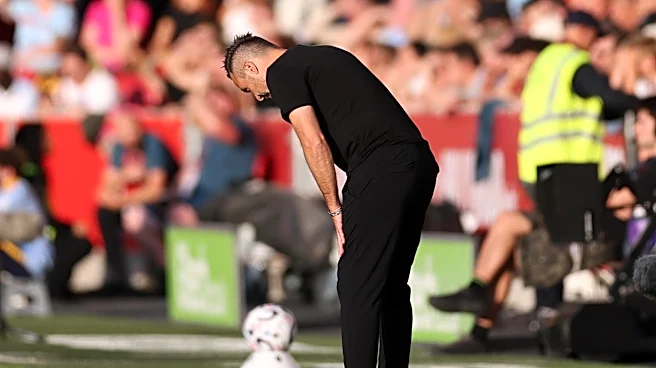
Roefs held possession to kill the clock before sliding a ball to Alderete, who tried a rushed ball to split the lines and free Diarra, only for it to be intercepted, giving Clarke a breakaway opportunity to slide the winner past Roefs.

Seen Signs, Encouraging Signs…
Despite the self-destruct button truly being slammed by Sunderland, there were also some positive aspects to take from the game which are likely to be overlooked.
Tactically, Le Bris was able to set his team up to maintain passive control in-game, which needed adjusting on the fly. He was able to utilise both his full-backs to pin the opposition back whilst also limiting Ipswich to only 0.82 xG outside of their two goals.
Whilst our attacking potency remained rather blunt, Sadiki was able to utilise the left flank to his advantage and formed some cohesive triangles with Angulo and Reinildo to generate most of Sunderland’s opportunities.
The lack of a true right-winger still remains Sunderland’s Achilles heel due to the filtered build-up Sunderland play in possession.

Within the build-up, Xhaka will often look for a bounce pass from his midfield to create an angle to slide a forward pass into the feet of Le Fée or Sadiki, with the aim of spreading the play quickly laterally out to Angulo, giving him an isolated 1v1 against the opposition full-back due to the overload and speed of the switch.
Without a spread approach between the wings, Sunderland found it increasingly difficult to consistently perform their build-up against a static defence, as Ipswich identified no threat was present on the right and so would not follow the ball as it transitioned over to Hume, knowing it would eventually be directed laterally to Angulo as we entered the opposition penalty area, thus not pulling the defenders out of position.
It’s clear that there’s been a concerted effort to coach this build-up during pre-season. However, until we have a balance on the wings, or Mukiele is available to push on as a wing-back, we’re going to struggle for balance and unpredictability.
That being said, it’s the beginning of a wider development of how we’ll be expected to play this season.
Moving On
With a full week to prepare for the next game against Fulham on Bank Holiday Sunday, Sunderland will need to reassess how they look to tackle playing on the front foot, with the aim almost certainly being to open up their account for the season and get off the mark.
As the window draws to a close, we’re likely to have a full complement of players except Simon Adingra, with valuable match fitness built up for Alderete and Meunier and potentially some new additions to add to the mix.
With a heavy schedule and a range in playing tactics required, the lads will look to dust this one off as a one-off and pick the standards back up in training ahead of Sunday’s clash.