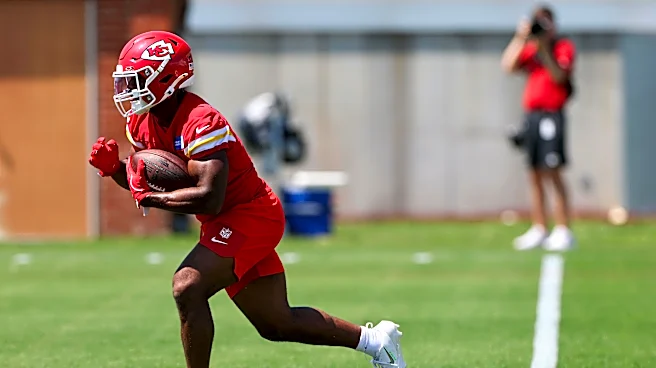




The Kansas City Chiefs’ roster is littered with new faces heading into the 2026 season, with star running back Kenneth Walker being the headliner. The Super Bowl LX MVP signed with Kansas City for three years and nearly $29 million guaranteed in free agency.
The big-time addition could reshape the way the Chiefs’ offense looks.
Walker was a monster for the Seattle Seahawks last season, and he will need to continue that momentum with quarterback Patrick Mahomes coming off an ACL injury.
Chiefs head coach
Andy Reid and offensive coordinator Eric Bieniemy have years of combined experience, but they would be wise to adopt some of the plays that made Walker so effective in Seattle.
How do the offenses differ?
Throughout Reid’s tenure in Kansas City, the Chiefs’ run game has varied, but last season, the talent deficiency in the backfield handcuffed the types of runs the team could run. The Chiefs primarily ran zone looks, with power and counter mixed in.
The Seahawks’ run game was much more diverse, and the offensive coordinator, Klint Kubiak, maximized Walker’s ability with plays that included some of the Chiefs’ same looks, as well as more outside tosses, lead plays with a fullback, and man-blocking plays like trap and wham.
Where Kubiak and Seattle found ways to maximize Walker was not only in the plays they called, but also in the formations they set him up in.
Lead blocking looks from under center
Last season, Seattle ran 52.6% of snaps from under center, the second-highest rate in the NFL. By contrast, the Chiefs ran 80% of their snaps from shotgun and only 20% from under center, which ranked third-fewest in the NFL.
With Mahomes coming off an injury and Walker in the mix, the Chiefs should look to run the ball more frequently under center and adopt some of the lead-blocker looks that Seattle used in 2025.
Motioning into the I-Formation, Seattle runs a midzone look to the right with the fullback as a lead blocker. The frontside of the run is not perfectly blocked, and the defense has a man-in-the-box, but the backside of Seattle’s offensive line perfectly washes and seals the flowing defenders, opening up a cutback lane for Walker.
Not every running back in the league can make this play, but this is why Walker is who he is, and why he is being paid the way he is in Kansas City.
Zone is a play designed to benefit from cutback lanes, and Walker has the vision, patience, and burst to capitalize on these looks. When run from under center, it gives the defense even less time to read the look.
The presence of a lead blocker can create the illusion of a downhill run and cause defenders to react more quickly and flow harder to the ball.
Pre-snap, the tight end shifts over, causing the defense to lean toward the heavy side of the field, but once the ball is snapped, the run heads to the right.
This does two things: causes the defense to flow harder to the right at the snap, and gives the offense the backside advantage with reach blocks and seals.
The front side is decently blocked, but Walker reads a ton of space, and quickly cuts it and gets upfield. A few moves later, he is close to a 20-yard gain.
The Chiefs don’t currently have a fullback on the roster, so who would be the lead blocker can be muddy, but the team does have the personnel on the offensive line to find ways to win with under-center zone looks.
Same side toss
One of my personal favorite looks that Seattle used to get Walker rolling last year was the same side toss, and it would be a very simple concept to implement in the Chiefs’ current scheme.
Running out of shotgun looks, this pin-and-pull concept emphasizes athletic blocking along the perimeter and a sense of misdirection that the Chiefs’ coaching staff should look to incorporate.
Walker motions over with Seattle in a balanced look, which does not give the defense any pre-snap indication of what they will run.
On the snap, the tight end in the slot pins the defensive end, while the left tackle gets out in space. Walker does a great job of avoiding second-level defenders and receives a few nice blocks downfield to help him find the endzone.
It is unreasonable to think that one of the most shotgun-heavy teams in the NFL will go fully under center in 2026, but this look would be great to mix into the fold and serve as a good counterpunch to the Chiefs’ zone-run game out of shotgun.
The misdirection comes into play when defenses align to stop typical zone looks where the running back crosses the quarterback in the backfield. This quick-hitting play gives athletic blockers a chance to climb quickly and also gives Walker a chance to pick apart scrambled defenders.
While the Chiefs might still need better tight-end blocking to pull this off, they certainly have the offensive line and athletes needed to replicate these looks for Walker.
The bottom line
With Walker in the mix, the Chiefs would be fools not to run the ball more consistently in 2026, and with a few new looks added, Walker could unlock new depths to what the offense can do.
Part of what the team can do in the run game will depend on the offensive line, but the Chiefs have the athletes up front to make it work.
These looks don’t have to be one-to-one carbon copies, but just an attempt to replicate them and put the Chiefs’ own flavor in should be more than enough to help Walker quickly find his footing in Kansas City.