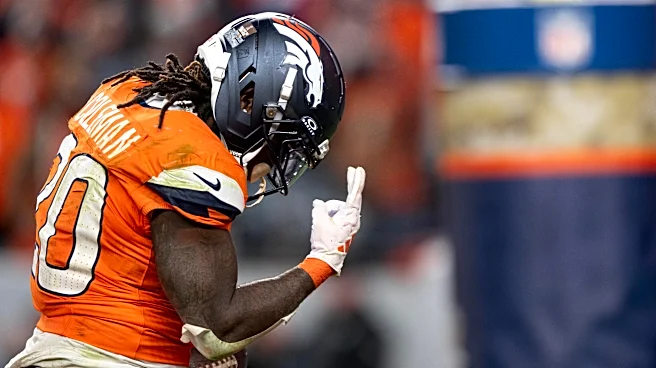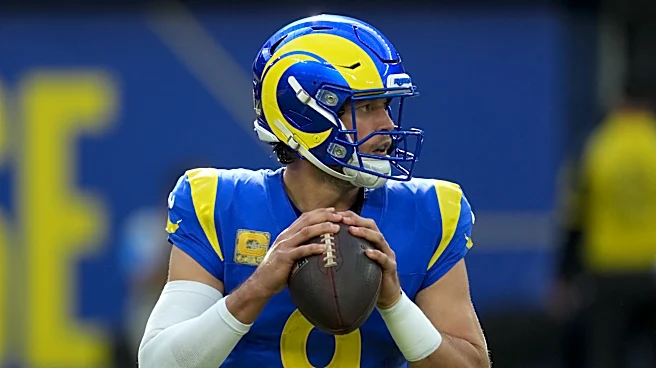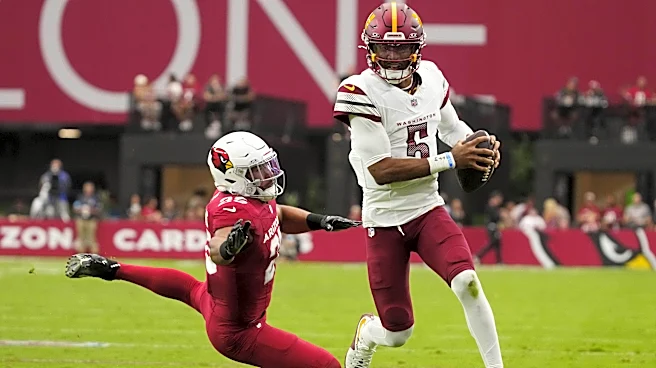

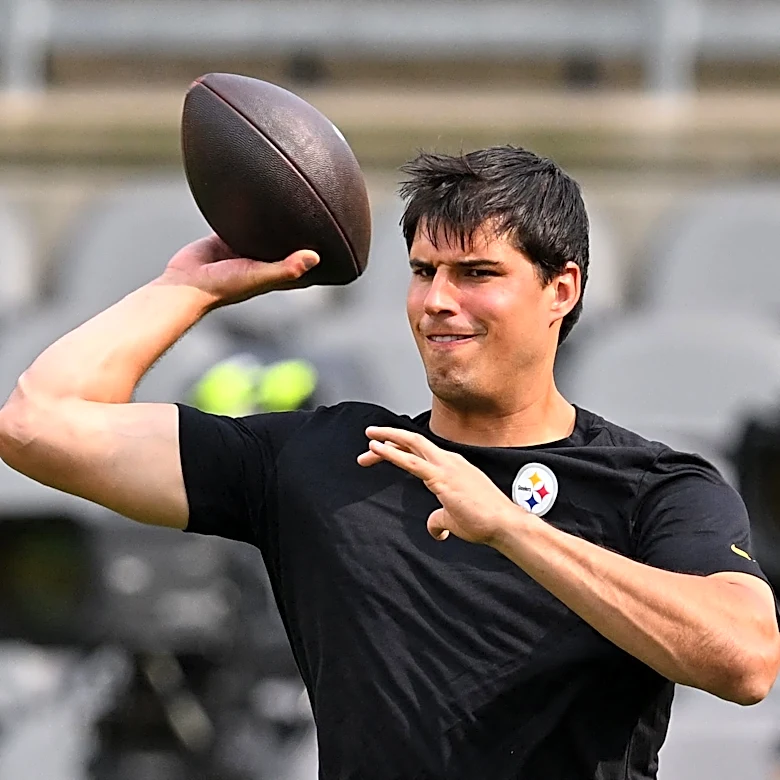

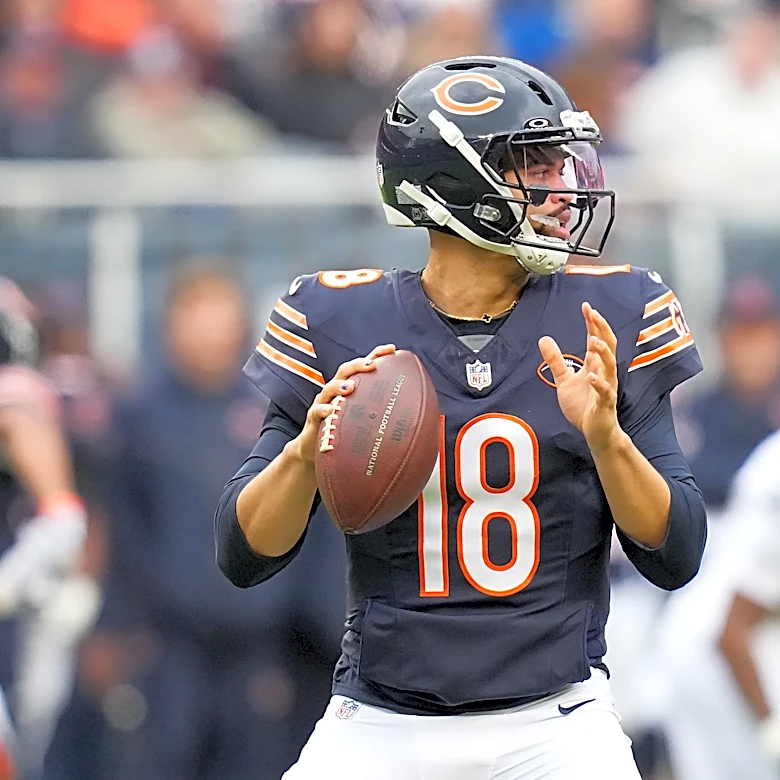
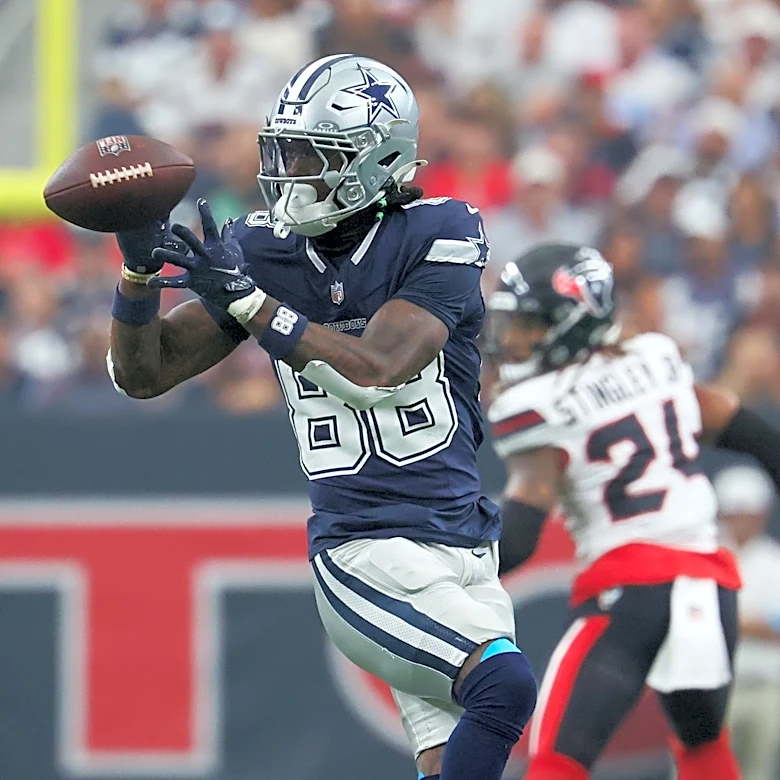
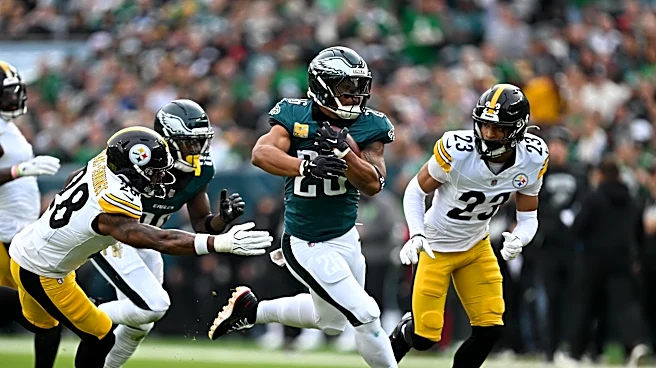
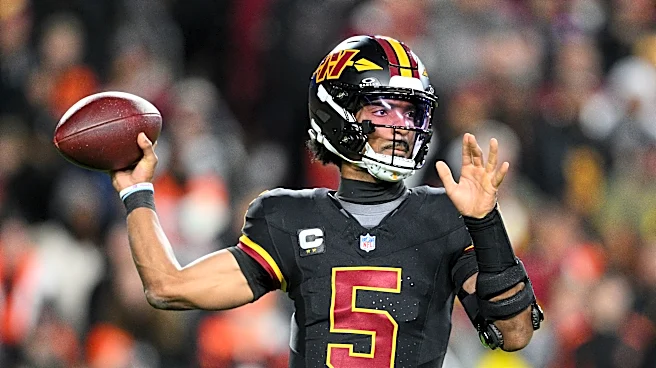
Back in June and early July, HH veteran writer Bill-in-Bangkok, offered a week-by-week preview via the 5 O’Clock Club of the Washington Commanders regular season schedule for 2026. As we roll into the actual games during the regular season, Hogs Haven will revisit each of these previews with John Portis adding additional thoughts and updates as we go inside the matchup to get you ready for every opponent the Commanders face in 2026.
From John Portis:
The 4-5-1 Washington Commanders go on the road this week following
an impressive last-minute win over the Bengals on Monday night. Meanwhile, the Arizona Cardinals’ season is all but over at 3-8, following a blowout loss to the Chiefs on Sunday and wholesale personnel and coaching changes. While the odds of Washington securing their third consecutive win seem good, Dan Quinn made it clear earlier in the week that the Commanders are not in a position to overlook anyone.
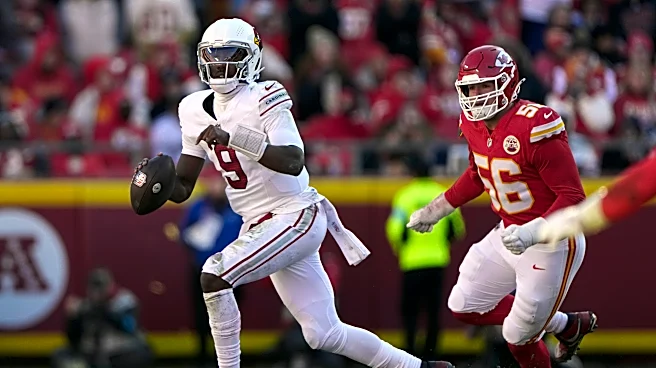
A lot has changed since Bill-in-Bangkok previewed this matchup back in July, with starting quarterback Jacoby Brissett traded to the Baltimore Ravens in Week 9. His current replacement should look familiar to Commanders fans, as 40-year-old journeyman Josh Johnson is expected to make his second start of the season, with backup Gardner Minshew on season-ending injured reserve and rookie Carson Beck still not practicing on Wednesday. Johnson went 18 of 31 for 155 yardswith one touchdown on Sunday while being sacked three times.
The Cardinals also traded 2024 No. 4 overall pick Marvin Harrison Jr. to the Texans before the trade deadline, while wide receiver Michael Wilson joined several of his teammates on season-ending injured reserve a couple of weeks ago. Arizona currently lists undrafted rookie Harrison Wallace III on their depth chart as the starter at the “X” position opposite veteran Simi Fehoko.
The No. 3 overall pick of the 2026 NFL Draft, running back Jeremiyah Love, is still on injured reserve along with Trey Benson. That leaves the Cardinals with a committee backfield of Bam Knight and Tyler Allgeier, who have averaged 5.6 and 4.0 yards per carry, respectively. Paired with the constant carousel at the quarterback position, Arizona’s offense has been outscored 85-16 over their last three games while averaging just 175 yards of total offense per game. The Cardinals best offensive weapon is Trey McBride, who leads the team in receiving and could be a problem for a Commanders defense that has allowed 9 receiving touchdowns and 804 receiving yards to tight ends across their first 10 games.
The Cardinals defense is also currently undergoing changes, following the firing of defensive coordinator Nick Rallis on Monday. Rallis has been replaced by interim defensive coordinator Teryl Austin, who was a long-time assistant and former defensive coordinator for the Pittsburgh Steelers, and interviewed for the same role with the Washington Commanders back in January.
Austin takes over a group ranked #29 in pass defense and #28 in run defense and, according to ESPN, ranked #26 in overall defense. The squad has also suffered several key injuries on the defensive side of the ball, including their best pass defender in Will Johnson, one of their best tacklers, safety Andrew Wingard, and rookie defensive tackle Kaleb Proctor, who was supposed to help anchor the middle of the defensive front. Edge defender Josh Sweat is having a down year; both he and Zaven Collins only have 3 sacks through 11 games. Safety Budda Baker turned 30 before the season started, and the Cardinals have allowed the highest number of passing TDs (25) in the league and are #31 in passing yards per completion (8.4).
Expect Austin to carry on Rallis’ defensive philosophy, which centers around a versatile 3-4 alignment that relies on pre-snap disguise and simulated pressures, but focus on simplifying the defense to get more disciplined play. As BiB also outlined, head coach Mike LaFleur comes from the Shanahan-West Coast tree and will look to dig deep into his creative playbook to get something going on offense.
While the Washington Commanders are clearly ascending and the Cardinals are continuing their march towards an early selection in next April’s draft, head coach Dan Quinn and his team would be wise to not look past an Arizona team that could end their playoff hopes just when they are starting to get off the ground.
Betting Lines:
Oddsmakers have established the home team as the solid underdog for this matchup.
- Point Spread: Commanders -7
- Game Total (Over/Under): 41.5 points
Bill-in-Bangkok’s original preview published July 12th:
Date: November 29, 2026, 4:25 p.m. ET
Location: State Farm Stadium in Glendale, Arizona
The Cardinals finished the 2025 regular season with a 3–14 record, placing last in the NFC West and missing the playoffs for the fourth consecutive year. After starting the year with wins in Weeks 1 & 2, the team lost 14 of its final 15 games, including a 9-game losing streak to close out the ‘25 schedule. The defense struggled throughout the second half of the year, allowing 37 or more points in 6 of those final 9 matchups. Following the conclusion of the season, the front office sacked head coach Jonathan Gannon and parted ways with quarterback Kyler Murray.
Expectations remain low for the 2026 season under new head coach Mike LaFleur. Most national publications project the team to win four or fewer games as the franchise enters yet another rebuilding period. As mentioned above, the schedule features a difficult opening stretch, with six of the first nine games on the road and five matchups against 2025 playoff teams. With veteran Jacoby Brissett expected to manage the offense, external expectations focus primarily on evaluating young roster talent rather than competing for a postseason spot.
While national expectations are not very high for the Commanders this season, most analysts expect Washington to occupy a tier above the Cardinals, who are expected to be in contention for the top pick in the 2027 Draft. While there are no easy games in the NFL, this appears, from the perspective of the offseason, to be the most favorable matchup of Washington’s 2026 schedule, and Commanders fans are likely to believe that the burgundy & gold will enter the season with the more talented roster of the two teams.
By Week 12, it is very possible that the Cardinals will be thinking more about the draft than the playoffs, while Washington, barring an embarrassing meltdown reminiscent of 2025, should still have hopes for a possible playoff spot.
From USA Today:
Six NFL quarterbacks who could lose starting jobs in 2026
Jacoby Brissett, Arizona Cardinals
Brissett was a more-than serviceable fill-in for former Cardinals starter Kyler Murray after Murray’s injury in 2025. In 12 starts, he set career highs in passing yards (3,366) and touchdowns (23). Brissett’s 64.9% completion rate was also his best in any season with at least 25 pass attempts.
In the offseason, the 33-year-old veteran requested a multi-year extension that would pay him starting quarterback money. Instead, the Cardinals repaid him with a likely future replacement when they selected University of Miami (Fla.) quarterback Carson Beck in the third round of the 2026 NFL Draft. With Arizona expected to be one of the league’s worst teams again in 2026, it’s likely only a matter of time before the team gives Beck a shot at the starting job.
The Athletic recently named the Cardinals as one of the NFL’s 2026 ‘losers’
At 3-14, the Cardinals already had a low floor, but they actually might be worse after this offseason. The team has several big question marks hanging over the coaching staff after taking a large gamble on first-time head coach Mike LaFleur, who struggled in his lone stint as a play caller with the Jets and revived his reputation by working under McVay for three seasons with the Rams. LaFleur hired Nathaniel Hackett as his offensive coordinator, despite Hackett’s struggles as head coach with the Broncos and as offensive coordinator with the Jets.
Arizona parted with the talented yet oft-injured Kyler Murray and opted against upgrading its quarterback position. Veteran Jacoby Brissett, who went 1-11 as the Cardinals’ starter last season, held out for much of the offseason. Rookie running back Jeremiyah Love, the No. 3 pick in the draft, represents the main bright spot in an offseason of conservative moves.
The All-Time Series Numbers
Younger fans may not realize that Washington has a substantial history with the Cardinals because the two teams were in the same division for over 3 decades.
The Cardinals left the NFC East following the 2001 NFL season, officially moving to the NFC West in 2002 as part of a major NFL realignment caused by the addition of the Houston Texans, which brought the league to 32 teams.
Prior to this, the Cardinals had been a part of the NFC East since the 1970 NFL merger (first in St. Louis before relocating to Arizona in 1988). Because the NFL had previously prioritized historic rivalries over strict geography, the Cardinals stayed in the NFCE for over 30 years despite being located out West.
Moreover, the rivalry is among the oldest in the NFL, dating back to 1932, when the burgundy & gold was introduced to the NFL as the Boston Braves and the team that resides in Arizona today was still known as the Chicago Cardinals. The Cardinals won that inaugural game by a score of 9-0; going forward, the burgundy & gold would dominate the series until 1957, winning 19 of 28 games.
After 1957, the Chicago/St Louis Cardinals would win 15 of the next 21 games as Washington went through its first ‘dark’ period as an NFL franchise, with 11 losing records in 12 seasons, (they were 7-7 in 1966) including a pair of back-to-back 1-win seasons in 1960 & 61.
Things turned around when Vince Lombardi took over the Washington team in 1969, achieving the team’s first winning record since 1955.

After Lombardi’s unexpected death, three coaches — George Allen, Jack Pardee, and Joe Gibbs — built on his one-year legacy, eventually turning the Redskins into a powerhouse franchise that appeared in 5 Super Bowls between 1972 and 1991, winning 3 of them. During this stretch, the Washington Redskins had a 31-9 record against the St Louis/Phoenix Cardinals.

Even during Washington’s most recent “dark” period under Dan Snyder, the Redskins/Football Team/Commanders continued to mostly get the best of the struggling Cardinals — which is the oldest continuously operating team in the NFL, and which holds the longest active championship drought in major American professional sports, having lost its only Super Bowl appearance and winning its last NFL Championship in 1947.
Washington has won 14 of the past 18 games against the Arizona Cardinals, dating back to 1999, and holds a substantial lead in the 94-year series at 78-47-2, heavily tilted in favor of the burgundy & gold.
Cardinals Coaching Changes
The Cardinals completely overhauled their coaching staff this offseason, headlined by the firing of head coach Jonathan Gannon immediately following the conclusion of a 3–14 regular season and the subsequent hiring of Mike LaFleur.
LaFleur was appointed head coach after having served as the offensive coordinator under Sean McVay for the division-rival Los Angeles Rams, where he led an offense that ranked first in points per game (30.5) last season.
Nathaniel Hackett was hired as offensive coordinator after stints as OC with the Jets & Packers, though LaFleur will call the plays.
Defensive coordinator Nick Rallis was retained from the previous coaching staff, with 2026 marking his 4th season in charge of the Arizona defense, which ranked 27th overall and 29th in scoring in 2025.
LaFleur brought in Michael Ghorbial as the new special teams coordinator from the Giants.
Offense
The Cardinals enter the ‘26 season under complete offensive reconstruction following a massive offseason overhaul. With the departures of the former head coach and OC, as well as former franchise quarterback Kyler Murray, the organization is pivoting sharply with the hiring Mike LaFleur as head coach and Nathaniel Hackett as OC. Together, the duo faces the task of instilling a brand-new identity.
Schematic Philosophy: The Shanahan-LaFleur Hierarchy
As with so many other NFL teams seeking to copy successful offenses, the 2026 Cardinals’ offense will shift entirely to the Shanahan-style West Coast system, which LaFleur mastered during his time with the Rams and Sean McVay.
This scheme will be familiar to Commanders fans – specifically, heavy reliance on the outside zone run game in order to stretch opposing defensive fronts laterally. By establishing a consistent, physical rushing attack, LaFleur can sequence his passing game off heavy play-action fakes that look identical to the run presentation. The goal is to reduce processing demands on the quarterback, emphasize strict timing, heavy pre-snap motion to diagnose coverage, and maximization of yards after the catch through precise, horizontal passing concepts. While Hackett holds the title of OC and will heavily influence game-planning, weekly script construction, and daily installation, LaFleur is expected to call plays on game days.
New and Featured Personnel
With the franchise moving into a rebuilding period, the personnel group is a mixture of unproven young talent and veteran bridge options.

- Quarterback: With Murray gone, veteran Jacoby Brissett is projected to run the offense. He provides the prototypical size and huddle discipline needed to operate under center in an outside-zone system. Veteran Gardner Minshew and rookie Carson Beck are behind him on the depth chart.
- Jeremiyah Love: The running back room has a lot of options. But you don’t spend the third overall pick on a back of Love’s caliber and then bring him in off the bench.
- Marvin Harrison Jr.: The centerpiece of Arizona’s passing game remains the young wide receiver. While the system heavily prioritizes distributing the ball evenly based on defensive alignment, Harrison’s route-running precision makes him the most likely primary target on critical third downs and in the red zone.
Outlook for Success
External expectations for the 2026 offense are muted, with most analysts expecting Arizona to struggle to score points due to a lack of elite roster depth and a punishing opening schedule that features five road games in the first seven weeks. Success for LaFleur and Hackett in 2026 will not necessarily be measured by raw point totals or a postseason berth, but rather by the developmental arcs of young core players. If the team can establish functional run-pass utility and protect the football, the season will be viewed as a successful foundation for the future.
Defense
Cardinals defensive coordinator Nick Rallis returns for his 4th consecutive season despite leading a unit that struggled significantly in 2025. Arizona’s defense floundered at the bottom of the league last season, allowing a porous 28.9 points per game and surrendering 37 or more points in six of their final nine matchups. While head coach Mike LaFleur chose to maintain staff continuity on this side of the ball, Rallis faces immense pressure to correct the chronic tackling flaws and structural breakdowns that haunted the ’25 season.
Schematic Philosophy: Aggressive Fronts and Simplicity
The story on Arizona’s defense may sound somewhat reminiscent of Washington’s situation with Joe Whitt a year ago. Rallis’s defensive philosophy centers around a versatile 3-4 alignment that relies on pre-snap disguise and sim pressures to disrupt opposing quarterbacks. The scheme prioritizes hybrid defenders who can seamlessly rotate between coverage and blitz packages. However, following the defensive collapses late last year, Rallis is expected to implement a more simplified coverage shell, at least to start 2026. The goal is to reduce mental processing errors in the secondary, ensuring a young defensive backfield can play faster, fill running lanes decisively, and drastically improve upon last season’s poor open-field tackling.

Outlook for Success
Projections for Rallis’s defense remain pessimistic heading into 2026. Because the front office focused the bulk of its offseason resources on offensive coaching and roster changes, the defensive side still sorely lacks elite, proven star power along the defensive line. If the edge rushers can’t produce a double-digit sack player, opposing quarterbacks will have comfortable pockets to pick apart this transitioning secondary. Unless Rallis can dramatically improve the league’s worst-ranked points-allowed average with schematic adjustments alone, this unit projects to be a clear liability against a brutal schedule against NFC West, NFC East, and AFC West opponents.
Key statistical 2025 rankings
Offensive Rankings
With a new head coach & offensive coordinator implementing a new scheme with a new quarterback, the 2025 offensive statistics don’t seem particularly relevant to this preview, so I am not including them here.
Key 2025 Defensive Rankings
- Total Points Allowed: 29th (488 total / 28.7 per game)
- Total Yards Allowed: 27th (6,081 total / 357.7 per game)
- Passing Yards Allowed: 18th (3,923 total / 230.8 per game)
- Rushing Yards Allowed: 25th (2,158 total / 126.9 per game)
Roster Moves: Free Agency and the Draft
Free Agency
Arizona’s 2026 free agency was not dissimilar to the Commanders 2024 free agency, two years ago, under then-new GM Adam Peters. The Cardinals made no trades, and signed 25 veteran free agents this offseason including 9 extensions of players from the 2025 roster, but the vast majority of these deals were low-dollar contracts. The Cardinals also let 14 veterans leave who have not signed with any NFL team so far this offseason.
Key Free agent signings
- WR Kendrick Bourne
- RB Tyler Allgeier
- LG Isaac Seumalo
Free agent losses
- S Jalen Thompson
- DT Dalvin Thomlinson
- Edge Calais Campbell
The 2026 NFL Draft
Round 1, No. 3: Jeremiyah Love, RB, Notre Dame: Locks in Day 1 starter with highest guaranteed money in running back history. Provides immediate fix for ground offense that averaged second-fewest rushing yards in NFL last season.

Round 2, No. 34: Chase Bisontis, G, Texas A&M: Versatile blocker competing immediately for starting RG or RT vacancies. Zero sacks allowed across final 18 collegiate games.
Round 3, No. 65: Carson Beck, QB, Miami: Low-risk, high-reward flier bringing 43 games of collegiate starting experience to QB room. Can develop behind veteran bridge options Jacoby Brissett and Gardner Minshew II without pressure.
Round 4, No. 104: Kaleb Proctor, DT, SE Louisiana: Some size concerns at 6-foot-3, 280 pounds, but seems to have intangibles to boost transitioning defensive front. Proven big-game motor evidenced by logging two sacks and three tackles for loss against LSU.
Round 4, No. 143: Reggie Virgil, WR, Texas Tech: Enters crowded, talented wide receiver room; must fight for targets as bottom-of-the-roster player during training camp. 1,583 career receiving yards and 16 TDs.
Round 6, No. 183: Karson Sharar, LB, Iowa: Projects as special teams contributor and LB depth.
Round 7, No. 217: Jayden Williams, OT, Ole Miss: 6-foot-4, 315 pounds; raw developmental tackle project likely starting on practice squad.