
More rule changes are coming to baseball — sort of.
On Monday, FanGraphs’ Eric Longenhagen reported the details of a document circulating in MLB front offices that is to be passed down to managers and coaches throughout each organization. Minor League Baseball will pilot several more new rule changes during the 2026 season, some of which are likely to remain in the lower levels of the game as player-development aids rather than eventually becoming major league rules.
Here’s the short and sweet of it:
- Complex League/DSL pitchers allowed to re-enter
- Expansion of ABS System and Check Swing Adjudication
- Pitch clock changes
- Second base positioning
Let’s go through each of these and break them down.
The first rule change involves pitchers re-entering games.
“Arizona Complex League, Florida Complex League, and Dominican Summer League games, the starting pitcher will be permitted to re-enter a game after being removed.”
No, this isn’t some reversion to Little League. It’s about “player health and development,” according to Longenhagen. If you’ve ever been to a Complex League Game, or even Single-A for that matter, you know things can get out of hand pretty fast when a starter doesn’t have it. Bullpens get used up throughout the week, inevitably leading to some second baseman who threw a couple of innings in high school finishing off the game.
So MiLB’s answer to this problem is removing a pitcher and letting them come back in at some point later on. Weird? Yes, but it makes sense. There are also a couple of stipulations that must be met. The pitcher “must throw at least 25 pitches in the inning during which he is removed,” to be eligible for re-entry, and he can only do so in the inning after his removal. This can be done once per game and only starting pitchers are allowed to do so.
The idea here is to limit that single-inning pitch count and spare a struggling youngster some wear-and-tear on his arm without completely removing him from the game. That was he can still get experience sitting between innings and going back out to start a fresh frame. How often will teams want to trot a guy who can’t get out of an inning back to the mound remains to be seen, but it’s a decent rule in theory, especially at the lowest level of professional ball.
BYB Says: Good for the game, kind of.
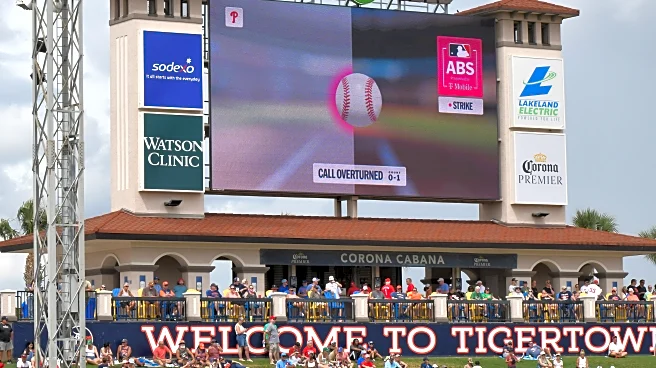
This next change shouldn’t be all that shocking. The Automatic Ball-Strike System (ABS) and Check-Swing Adjudication are coming to the Pacific Coast League.
“The Pacific Coast League will use the ABS Challenge system and follow the same rules that have been adopted at the Major League level for the 2026 season. Consistent with past seasons, MLB will monitor gameplay to determine if there is a desire to test changes at a later point in the season. Beginning on May 5, 2026, the batter, pitcher, or catcher may also appeal the umpire’s decision regarding whether the batter swung at a pitch. A swing will be considered to have occurred if the maximum angle between the bat head and the bat handle exceeds 45 degrees. This rule was tested in the Florida State League and Arizona Fall League in 2025.
This doesn’t really matter to Tigers fans. The Toledo Mud Hens are in the International League, which has already had ABS since 2024. The Check-Swing Challenge won’t be coming to the International League, but umpires will begin calling swings and no-swings based on the 45-degree threshold mentioned above, starting May 5. This is clearly to reduce strikeouts, and there will be very few checked swings ruled as swings with 45 degrees past the line of the fron of the place now the standard.
The Florida State League, in which the Lakeland Flying Tigers play, will have both systems in use as the PCL. “Teams have 2 challenges that may be used for ball/strike calls or swing/no-swing calls.”
With ABS making its way to The Show, one would think the Check-Swing Adjudication system is next. Testing it at higher levels matters, but these things take time. It’s also pretty jarring to see where the line is between a swing and no swing. Using the system to be sure is one thing, changing the definition of a check or no-check swing is a different matter entirely.
BYB Says: Robots are the future. Deal with it.
MLB is always trying to speed up the game. The introduction of the pitch clock helped, but that’s not enough… apparently.
This is a multi-parter, so break down the breakdown.
PitchCom Safe Harbor: Have you ever watched a game and thought, “Yeah, he’s lying about having a PitchCom issue to buy more time?” This is for you!
“In Triple-A teams will be assessed a mound visit if play is stopped for the purpose of addressing an issue with PitchCom.”
If a team doesn’t have a mound visit remaining, that’s an automatic ball. Take that, you cheats and liars!
Teams will probably need a dedicated employee responsible for keeping the PitchCom systems working perfectly if they don’t already. No more gaming the Coms!
Defensive Signals: This one is weirder.
“At all levels, the clock will no longer stop and reset when the catcher leaves his position to give defensive signals.”
So, if the catcher comes out to give bunt-coverage signals or first-and-third signals, he better do it fast. If he doesn’t get back in the catcher’s box with nine seconds left on the clock, that’s an automatic ball.
This feels unnecessary, but maybe it’s an issue that I’m not noticing. Defensive signals matter. Baseball is a strategic game and keeping the defense all on the same page in a high leverage situation is crucial. Rushing the mental aspect feels like it will upset the ancestors, but I suppose they aren’t around to grumble for a reason?
Mound Visits: Okay, this one is funny.
“At all levels, mound conferences must end and all coaches and players, other than the pitcher, must be off the dirt of the mound and moving toward their positions or the dugout before the mound visit clock reaches zero.“
I love it when a coach or manager has something they want to say to an umpire, so they wait for them to come out and break up the mound meeting, only to get an earful of whatever perceived grievance is ruffling feathers that day. It’s good stuff, but also let’s be adults and just shout at each other from the dugout when that needs to happen. Overall, this is good. Less stalling, even if it means a bullpen guy has to rush to get ready.
Batter Timeouts:
- “Double-A & Triple-A. When a batter requests time, the home plate umpire will grant time, point at the batter, then immediately reset the Pitch Clock. Batters must return to the batter’s box and become alert to the pitcher before the clock reaches 8 seconds remaining.“
- “High-A. Batters will only be permitted to request time with runners on base (i.e., batters will not be permitted to request time with the bases empty). Umpires may continue to grant time if a special circumstance applies (e.g., hitter is brushed back, there is bona fide equipment issue, or injury concern).“
- “Single-A. Batters will not be permitted to request time. As in High-A, umpires may continue to grant time if a special circumstance applies (e.g., hitter is brushed back, there is a bona fide equipment issue, or injury concern).“
Single-A guys are getting the short stick here, but the umpire’s special circumstance discretion should be just enough to keep things reasonable. Sometimes, guys need a second to compose themselves, but keeping the game moving is important, especially at the low levels.
Disengagement Limit: This feels like the most important one of the bunch.
“In Double-A, the Disengagement Limit will be reduced from 2 to 1. When there are runners on base, pitchers may pickoff or step off once during a plate appearance without penalty.”
No one likes to watch 15 pickoff attempts in a row, but there are speedsters who warrant a throw or two to keep them honest. In my opinion, this is too easy to exploit. One pickoff attempt and then a guy can take a much, much bigger lead and swipe a bag. It’s going to make runners more aggressive, and maybe that will lead to some fun plays by catchers, but it feels like a slippery slope. Testing it at one level is smart.
BYB Says: Does baseball need to be this fast? Maybe the minor leagues do…
Last but certainly not least is the positioning of second base change.
“International League second base will be placed entirely within the perimeter of the infield diamond during the second half.”
First off, terrible wording. The “second half” refers to the second half of the season, and the language about where the base is actually moving is unclear. The short answer is that the back of first and third base line up with the middle of second base. The goal is to move the base in a bit to make the diamond an actual diamond and shorten the distance between the bases, which encourages stealing.
Maybe this image will help, courtesy of the Official Baseball Rules 2021 Edition:

This decreases the distance between first and second, and second and third, by 9 inches, which is double what MLB did by increasing the size of the bases.
BYB Says: Every inch matters.
Alright MLB, we get it. You want more balls in play and more offense in general, and you’ll do anything to get what you want. Other than forcing teams to cut their infield grass, apparently. All these things are just being tested, so we’ll have to see how teams react to their minor league implementation, but they really are forcing it at this point.