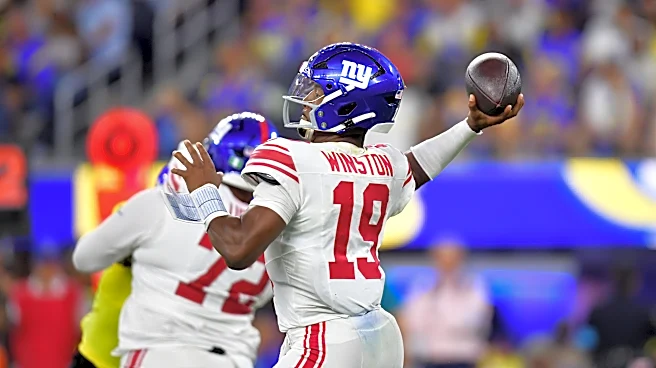


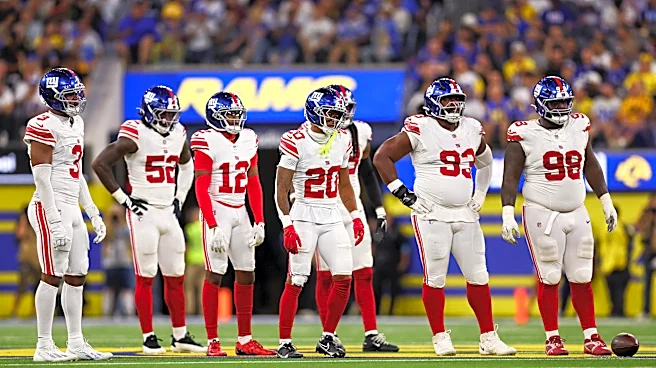
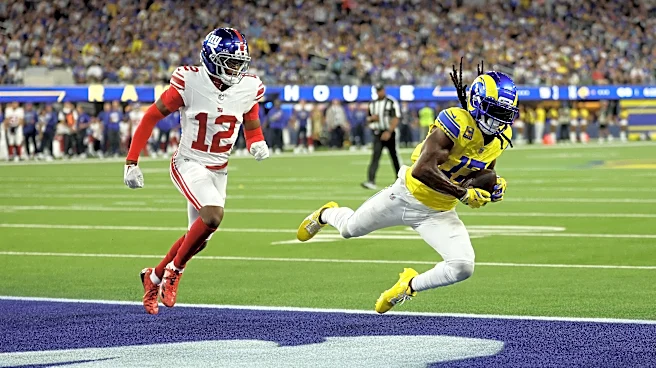
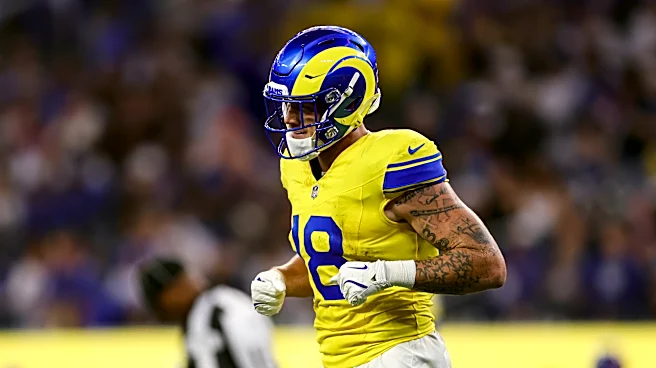
The New York Giants had a nightmare of an evening against the Los Angeles Rams in Week 2 on Monday Night Football. Just about everything that could go wrong for the Giants, did go wrong.
The headline is obviously the knee injury suffered by quarterback Jaxson Dart, but that wasn’t the only storyline from the night. The Giants’ had six rookies playing major roles for them against the Rams, and how the Giants’ 2026 class develops will be one of the most important things to watch as the rest of the season
unfolds.
The Giants are relying heavily on their young players, and their rookies, this year. In fact, the Giants had the third-most snaps played by rookies of any team in the NFL in Week 2, and perhaps it also isn’t a coincidence that the Los Angeles Rams had the fewest snaps played by rookies.
That the Giants are asking so much of their rookies makes the team more prone to mistakes while the players develop. However, it does give them valuable experience to aid in their development. Let’s take a closer look and see how they did in their second game of NFL action.
Arvell Reese (LB)
(59 snaps, 95%)
The Giants’ first pick played almost every snap against the Rams, as well as contributing on special teams.
We saw every facet of Reese’s skill set employed by Dennard Wilson against the Rams. Reese played the run, played in coverage as a linebacker, was walked up to the line of scrimmage to show pressure on simulated blitzes, and was asked to rush off the edge.
Of those, Reese looked most comfortable playing downhill. He appeared largely disciplined in his run fits and is remarkably strong for a 241-pound linebacker. He is able to take on and stalemate offensive linemen when he engages with good leverage. He also showed off his power with an impressive bull rush off the edge to drive left tackle Alaric Jackson back into the pocket, and he might have been able to disrupt had Blake Corum not delivered a timely chip block.
Reese looks less comfortable dropping into space and playing coverage. He typically processes quickly, but doesn’t quite play with a natural feel for coverage. Reese can be a step late to pick up players as they enter his zones, and shows some indecision as well. That said, his speed is absolutely an asset and he simply flies to the ball once he commits.
Sisi Mauigoa (RG)
(58 snaps, 100%)
We saw both the highs and lows of Mauigoa’s game in his play against the Rams.
On the plus side, Mauigoa’s power and agility were on full display. At his best, he showed some of what he did against the Cowboys’ interior defensive linemen. Mauigoa was able to displace the Rams’ linemen laterally on zone blocks, vertically when blocking downhill, and move laterally to mirror pass rushers. He has great range as a pulling guard, and was a load for any defender not prepared to block him.
On other plays, however, Mauigoa struggled mightily.
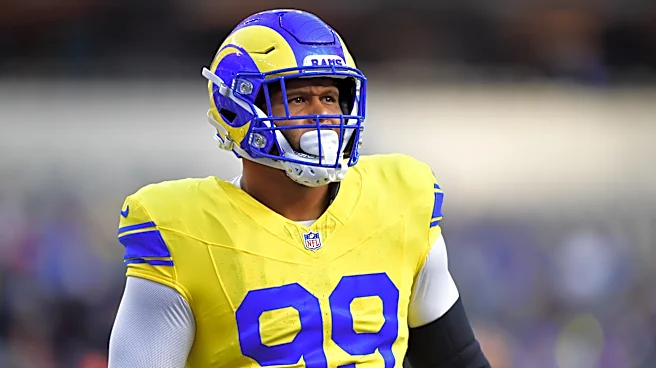
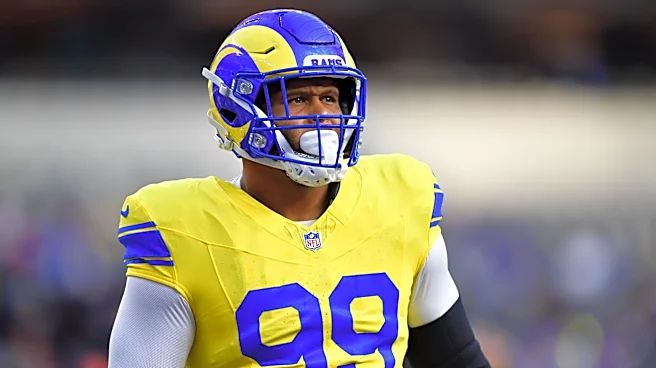
In particular, he had a tough time with Aaron Donald in his first game back. Sisi struggled to deal with Donald’s technique, leverage, and explosive first step — Donald’s 0.75-second get-off was the third-fastest by a defensive tackle so far this season. There were times when Mauigoa was pushed backward despite the considerable size disparity, as well as times when he struggled to deal with Donald’s speed rushes.
The arrow is still pointing up for Mauigoa and his good plays were impressive, but this game definitely made him look like a rookie.
Colton Hood (CB)
(62 snaps, 100%)
Hood got the start in place of the injured Deonte Banks, and it was a long night for the rookie. He played every one of the defensive snaps and was a factor in both run defense and pass coverage.
Hood wasn’t always a positive factor, but he did flash the traits that made many consider him a fringe first-round talent. Hood is a tough, physical corner who started the game with a great tackle to limit Kyren Lacy to a 2-yard gain on the Rams’ second play. He doesn’t hesitate to take on bigger blockers or to get his hands dirty. He also has quick feet and fluid hips as a cover corner and flashes the ability to stick in receivers’ hip pockets as a man cover corner.
Hood is still a work in progress in off coverages. He has a tendency to overreact to savvy route runners, biting on double-moves or stumbling after a fake. At best that can make him a bit slow to react and at worst he can give up separation that can lead to big plays. Hood flashes the ability to be a good cover cornerback, but isn’t there yet. The upside to playing so many snaps is that he got valuable experience against a great offense.
Malachi Fields (WR)
(47 snaps, 81%)
Fields had an inconsistent day against the Rams, which is to be expected from a rookie.
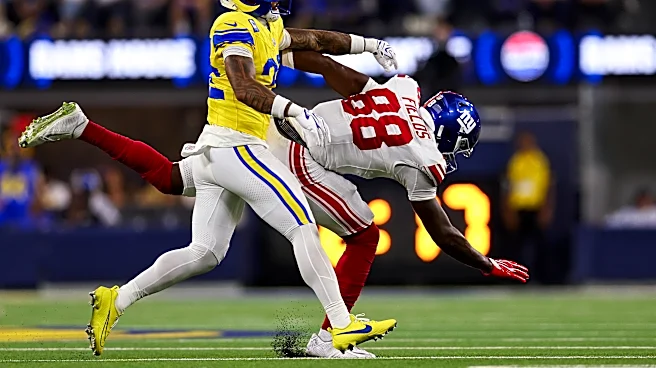
He flashed the upside of what the Giants hope he can be with the diving 14-yard catch from Dart on 1st and 10 early in the first quarter. That play showed off the body control, concentration, and ball skills that the Giants hope will make Fields a weapon on third downs and in the red zone. He generally seemed to run his routes well enough, and did a good job of using his frame to try to create traffic on clear-outs or create natural rubs.
The Giants continued to use Fields in condensed formations, frequently starting with him as a slot before motioning a player around him, condensing the offensive formation and leaving Fields him as an outside receiver.
That said, Fields also struggled with the Rams’ physical coverage. His size and strength are assets in that regard, however his technique isn’t there yet. Considering he doesn’t have the quick-twitch athleticism to cut with exceptional suddenness, it can be difficult for Fields to generate separation against tight coverage.
The Giants can work around that going forward while Fields works on improving his technique to get off physical coverage.
The Giants also frequently made use of Fields as a blocker in the run game. He became their primary receiver in 22 or 13-personnel sets after Malik Nabers suffered his shoulder injury, and comported himself well enough. Those were primarily running plays, and Fields is a problem for perimeter defenders as a blocker. There were times where the Giants also used Fields as a pulling tight end or asked him to insert in the box as an extra blocker. He was, predictably, less of an impact player in those situations. However, he was able to lose slowly enough to do his job.
Dominic Zvada (PK) and Ben Mann (LS)
(13 snaps combined)
No slight to specialists, but I think it’s appropriate to lump these two together, as much of the time they’re working as a unit.
Fittingly, we’ll start with the long snapper, and Mann was largely solid. His snaps appeared crisp and accurate, arriving on time and well placed for Jordan Stout as a punter and holder for Zvada. Mann did give a fair amount of ground when blocking for Stout on punts, but held up well on both of Zvada’s field goals despite facing the Rams’ starting defensive linemen.
For his part, Zvada largely remains a weapon on kickoffs. He had one touchback, but otherwise did a good job of dropping his kicks around the 5-yard line to force a return. Unfortunately, Zvada was the Giants’ lone source of points against the Rams, but we did get to see his strong leg in action. His 52-yard field goal was not only accurate, but appeared as though it would have been good from 62 yards.