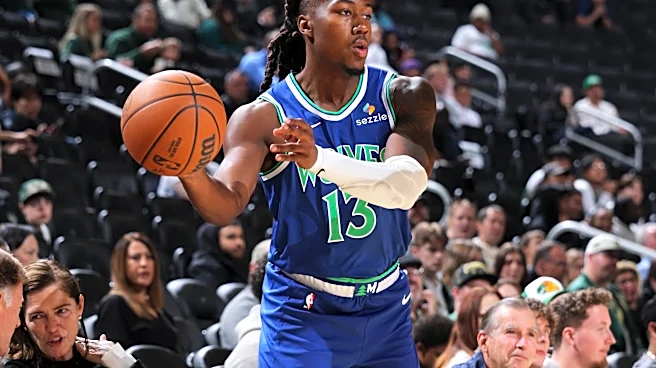

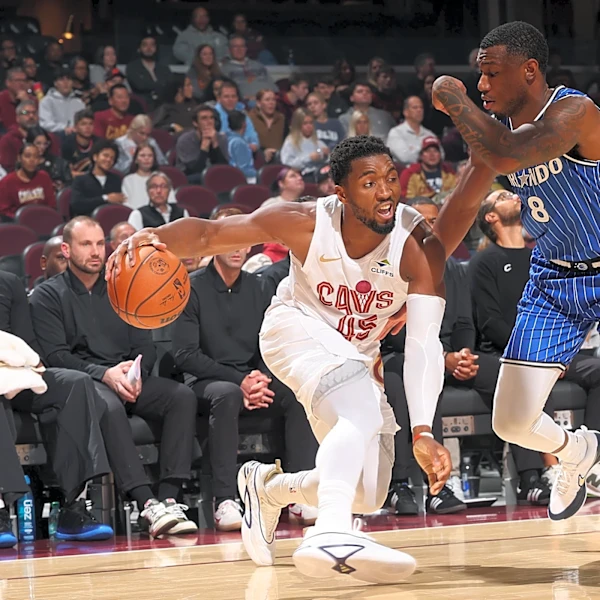
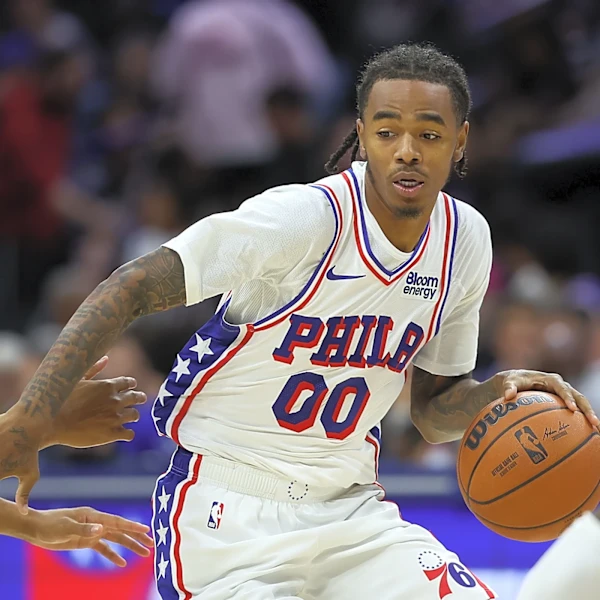


“Positional size” was the term Jon Horst used repeatedly in connection with Brayden Burries and Nate Ament during his post-draft press conference. And yes, while striving for as much positional size as possible is very much en vogue right now across the broader basketball world, it feels like the Bucks, in particular, are making a concerted shift (back) in that direction.
Whether intentional or not, the team is becoming increasingly loaded with guys who are big for their position. Kasparas Jakucionis
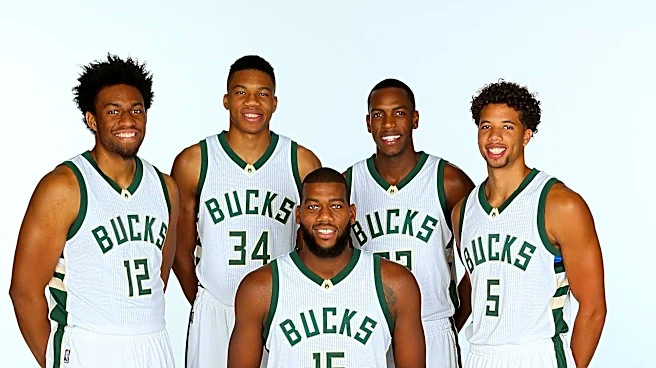
(6’5”) is a big point guard; Ousmane Dieng (6’9”) is a big combo guard; Nate Ament (6’10”) is a big wing; Kel’el Ware (7’0”) is a big four/five. Turner, Burries, Jaquez, Porter… the list goes on. Though, as I just alluded to, this wouldn’t be the first time Milwaukee has loaded up on size—the Jason Kidd Bucks made it fashionable:

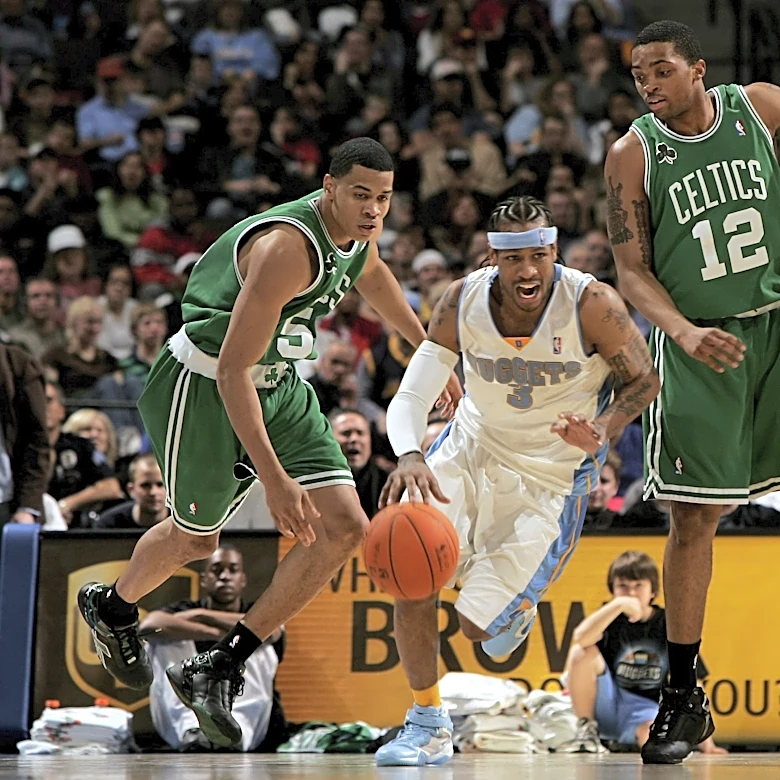
Such an iconic photo. Bless.
But as we know, the Kidd Bucks—despite their limitless limbs—weren’t exactly worldbeaters. In fact, this team taught us the pitfalls of believing size alone is some cheat code. As SB Nation’s Kristian Winfield noted back in 2018, Kidd, hired ahead of the 2014-15 season, came in with a philosophy that the Bucks would be known for their vigorous defence—buoyed by their size. More specifically, the NBA legend instructed his players to be super aggressive at the point of attack because he believed the team’s collective size would allow it to recover on the back side better than other teams.
“Kidd had implemented an aggressive defensive scheme that was supposed to stop offences from making passes in stride,” Winfield wrote. “It was a blitzing defence that sent two defenders at the ball-handler with ball hawks lurking for an errant pass.
“The idea was supposed to take offences completely out of their comfort zone and force floating passes that took teams away from their game plans.”
And yeah, that scheme worked a treat in the first season—when the team finished 41-41 and posted the NBA’s fourth-best defensive rating—but proved ineffective in the following three campaigns, finishing 23rd, 19th, and 18th. Frankly, this calls into question whether Kidd’s scheme was ever truly effective, or whether that first season had more to do with luck than anything else, given it’s a major outlier. In any event, the scheme was largely a flop and stood in stark contrast to the uber-conservative (and uber-successful) blueprint of Kidd’s replacement, Mike Budenholzer.
To be clear, I’m not trying to make an apples-to-apples comparison here; multiple factors outside the defensive scheme itself likely contributed to one coach overseeing mostly poor defences and the other overseeing elite defences. For one, Budenholzer had Brook Lopez to anchor his back line, while Kidd had Greg Monroe (all due respect, Moose). At the very least, though, we can deduce that scheme is the most important factor in maximising defensive potential. If Bud had run Kidd’s scheme—even with the elite defensive personnel he had at his disposal—the defence would have been considerably worse. We saw this firsthand when Adrian Griffin took the reins and tried to make the team something it was not.
But there’s more to consider.
You see, another crucial part of leaning into positional size and getting the desired results is that it’s all well and good to say, “look at this oversized player at position X,” but the player still needs the prerequisite attributes to play that position (or those positions) effectively. Let’s use the 6’9” Ousmane Dieng as an example. I have no doubt he is best optimised as a guard rather than a wing because of his enticing passing and feel (but also lack of physicality and burst). However, Dieng shot just 33% from deep as a Buck, which is unders for a rotation-level guard.

If the Frenchman can’t shoot efficiently from deep, his avenues to succeed as a guard narrow considerably. Luckily, he’s got the size to shift up to the wing, right? Maybe he ends up as a wing with some guard-adjacent skills? That could work! But to play as a wing, he would need—at a minimum—to be able to get downhill and convert efficiently in the lane, which he hasn’t shown yet, shooting ~50% from two (about 4% below the league average). Moreover, Dieng would need to show he can be a plus (or at least average) defender, and anecdotally, I can’t say I’ve seen that from him either.
So, to recap: Dieng has the passing chops and feel to qualify him as a guard, but not the shooting ability, and the size to qualify him as a wing, but not the intangibles wings require (not to mention that in today’s age, wings do still need to be able to shoot; maybe not as well as guards, but they can’t just hover around 30%). This puts the 23-year-old in an awkward spot regarding his utility as a basketball player. The word “functional” is key here; a player can look the part, but if they don’t act the part, their size means virtually nothing. That’s why it’s tough to lock Dieng in as a guaranteed part of the future just yet, even though he’s pleasantly surprised Bucks fans since he arrived.
The Kidd Bucks had many such problems. Kidd played a whole suite of big, lanky specimens who looked the part but lacked functionality. I mean, their size probably would’ve given them a higher defensive ceiling if Kidd had run a less aggressive scheme, but they also had major issues on the other end. Now, admittedly, I wasn’t following the team all that heavily during most of this era—and maybe I’m missing some finer details—but it doesn’t take a genius to see why the Bucks weren’t worldbeaters on offence. Sure, they were big, but most of the main players didn’t have the attributes required for the positions they were deployed at (or just weren’t very good in general), and as a unit, the puzzle pieces didn’t fit. Take the most common lineup from the 2015-16 season and consider how this group was expected to play together on offence:
- PG: Michael Carter-Williams (career 25.6% three-point shooter, not great in general, got in Giannis’ way)
- SG: Khris Middleton (played the position well on both ends)
- SF/PG: Giannis Antetokounmpo (playing his own position, obviously dominant but career 28.5% three-point shooter)
- PF: Jabari Parker (very talented but career 32.6% three-point shooter, poor defender, overlapping skillset with Giannis)
- C: Greg Monroe (non-shooter, not great in general, poor defender, got in Giannis’ way)

Unsurprisingly, the 2015-16 Bucks missed the playoffs, ranking dead last in three-point attempts and 21st in percentage. You can’t win that way. Not then, and especially not now. To their credit, though, Milwaukee later drafting Thon Maker—a prospect who fit their positional size agenda and helped increase their three-point volume—showed they recognised these weaknesses and were trying to fix them, even if Maker never panned out. Of course, pairing Giannis with a shooting centre—along with good-to-great shooters at every position—became a staple of Milwaukee’s DNA for the next decade.
Surrounding a physically dominant star with shooters at every position sounds simple in theory, but, as we know, it’s much harder to execute in practice. Frankly, it speaks to how unique Antetokounmpo is that Horst was willing to bend the entire team’s identity toward him, not the other way around. But that’s largely beside the point. The point is that, generally, if you want to play big in the hope that it will allow you to build a sturdy defence, you 1) must make sure that your players aren’t just big, but actually have some natural defensive acumen, and 2) you must still retain the necessary skill and functionality at each position to keep the offence humming.
If a coach wants to lean into positional size but knows deep down that their players are known more for their size alone than their traits and ability at that size, there’s probably little point in championing those players in pursuit of that stylistic goal. However, if a coach has players with size who also may possess outlier traits in certain areas—even if they’re far from perfect across the board—it may be worth a shot. These are the players the Bucks seem to want to take chances on: big, flawed in a few areas, but capable of doing one or two things at an above-average level. Horst is clearly betting on the org’s recent investments in player development—namely, hiring Johnny Carpenter and T.J. Ford—to fill these gaps as best as possible. The hope is that, if it comes off, you have built a team capable of excelling on both ends, which is what you need to win a title.
Ultimately, who knows if transitioning back to “big ball” is actually what Milwaukee’s brain trust is trying to do over the next few years, but honestly, it wouldn’t be the worst idea if it is. Unlike the Kidd Bucks, teams have built their foundation on positional size and succeeded because of it; the Orlando Magic immediately spring to mind as a team that has returned to relevance on the back of such a philosophy. Heck, Milwaukee’s chances of out-talenting the NBA’s best teams are slim, so they might as well get weird with it and try to be a relative point of difference around the league.