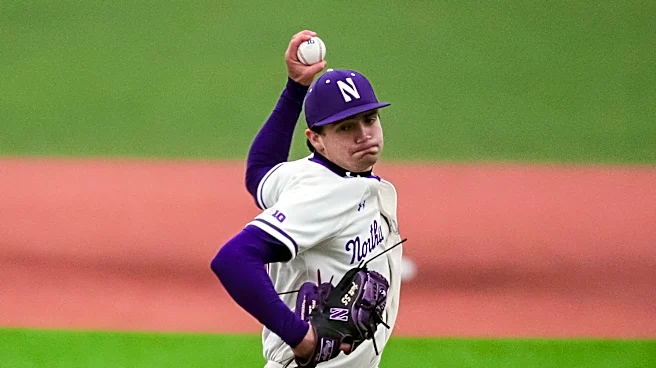



It’s difficult to be a Northwestern baseball fan and not be reeling in frustration after a disappointing series loss to Washington in Seattle. In what felt like a pivotal moment in the Wildcats’ season, they faltered, suffering two substantial losses and barely eking out their only win by a single run. The Huskies outplayed the ‘Cats on both sides of the ball all weekend, and it’s getting increasingly difficult to maintain a positive outlook for Ben Greenspan’s squad in his third year.
The Good
Despite the
compounding concerns I have for this team, I continue to be impressed by their late game competitiveness and execution. Since the opening series at Rice, Northwestern is 5-1 in one-run games. In the analytical world, a team’s record in one-run contests is viewed as a highly variable statistic rather than an indication of some coachable clutch skill. I’ve never subscribed to that narrative; when games are close in the late innings, preparation and poise shine brighter than ever. The early innings continued to kill the ‘Cats against Washington, but from the fifth inning onwards, Northwestern outscored Washington 8-7. Some poor starting pitching performances put Northwestern too far behind the eight-ball to come back, but this team will always fight.
The Bad
The weekend in Seattle, in all respects, was ugly. The thrill of a 10-9 victory where the ‘Cats nearly avoided a Huskies ninth-inning comeback can’t gloss over the roster’s glaring weaknesses. Last week, I wrote about how Northwestern ranks last in the Big Ten in the ratio of pitcher to batter strikeouts. The team didn’t help itself over the weekend. Northwestern batters struck out 27 times and their pitchers only punched 23 tickets. To add insult to injury, the ‘Cats drew just six walks, while conceding 14. Walks and strikeouts are just two metrics of performance, but they are isolated incidents compared to balls put in play. In a game where so much is decided in awkward bounces and unexpected gusts of wind, Northwestern continues to struggle in the two areas where a team’s performance is fully in their control.
But the issues with both run production and prevention extend beyond the walk and strikeout numbers. The Wildcats rank dead last in batting average in the Big Ten. Although they managed to collect 12 extra-base hits across the weekend, Northwestern hitters simply do not put the barrel on the ball consistently enough to capitalize when it matters. Coming into the season, I felt so assured in my belief that this team would go as far as their arms would take them. With 25 games in the rearview mirror, I can admit the offense is simply not as well-rounded as I thought it would be.
The Best
In a series where the usual names didn’t fill up the stat sheet, the Wildcats got some solid contribution from a few surprising faces. Logan de Groot, who has been swinging the bat very well since being inserted into the starting lineup against Oregon, recorded hits in all three games of the series. The sophomore isn’t known for his pop, but he walks at a decent clip and, for a team that struggles to accumulate base hits, his five-game hitting streak is a sight for sore eyes. Behind the dish, Shane Hofstadtler filled in for Jay Slater in all three games and more than pulled his weight. He mashed two doubles, a home run and knocked in five runs to provide some much needed juice when so many Wildcats’ bats sputtered. Hofstadler proved that Ben Greenspan has a genuinely reliable catching duo, which will likely prove vital as the season wears on.
Northwestern will continue the search for their first Big Ten series win at home against Michigan State over the weekend. The Spartans, who are 4-8 in conference, are beatable and lack elite talent. If the ‘Cats hope to get their season back on track, it starts this Friday, April 3rd, at 3 p.m.