


The Michigan Wolverines enter the 2026 NCAA Tournament as the top seed in the Midwest Region and are one of the favorites to make a deep run. But navigating a tournament region is never easy, even for a top seed like the Wolverines. With talented teams scattered throughout, Michigan will likely face numerous challenges in order to get to the promised land (Indianapolis, the site of this year’s Final Four and National Championship).
Here’s a look at three of the biggest potential threats standing between
Michigan and a regional title.
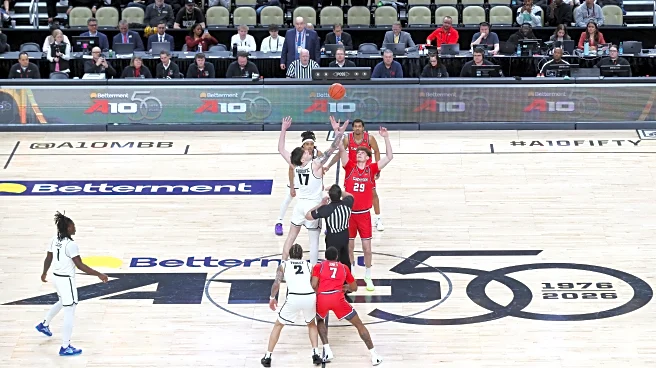
Round of 32: 9-seed Saint Louis
We’re skipping right past the Round of 64 (no offense, Howard). Of the two possible opponents in the second round, I am more afraid of the 9-seed Saint Louis than I am of the 8-seed Georgia.
Saint Louis may be behind Georgia on KenPom and other analytical websites, and it may have ended the season 4-4 in its last eight games after a monster 24-1 start. However, the Billikens are balanced: their leading scorer Robbie Avila only averages 12.9 points per game. They also shoot the ball really well — they hit 50.9 percent of their shots as a team, 40.09 percent of their three-pointers (second in the country) and have an effective field goal percentage of .600 (fourth in the country). When they’re on, they’re on.
Plus, do you REALLY want to see Michigan have to play against a guy that has epic nicknames like Cream Abdul-Jabbar and Milk Chamberlain? Yeah, I didn’t think so.
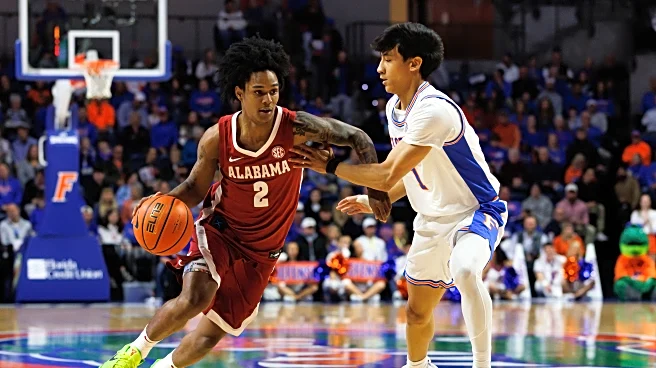
Sweet Sixteen: 4-seed Alabama
This one is pretty easy for me. The Crimson Tide have the third-best offensive rating on KenPom and have elite guard play. Those two things are always an epic combo for a deep tourney run. Not to mention, Alabama is the fourth-fastest team as far as adjusted tempo is concerned; Michigan is a pretty fast team as well (22nd in the country), but the Tide play at a much faster pace than the Wolverines.
Sophomore guard Labaron Philon Jr. averages more than 21 points per game by converting 50.9 percent of his field goals and 40.2 percent of his three-point shots. Here is his stat line over the last six games:
- 28 points vs Ole Miss
- 21 points vs Auburn
- 26 points at Georgia
- 23 points at Tennessee
- Eight points at LSU
- Season-high 35 points vs Arkansas
Meanwhile, when he isn’t busy sitting in county jail for possessing a pound of marijuana, guard Aden Holloway is also a bucket waiting to happen. He averages 16.8 points per game while hitting 48.1 percent of his field goals and 43.8 percent from beyond the arc. The duo of Holloway and Philon alone is enough to power Alabama to make a deep tournament run, and given how Michigan has been struggling to defend the three-point line lately, I would want to stay as far away from the Crimson Tide as much as possible.
Elite Eight: 2-seed Iowa State
I thought hard about 3-seed Virginia here, but Iowa State would worry me just a little more. The Cyclones’ style of play is similar to Purdue’s — they want to muck it up and play a physical brand of basketball.
They are elite defensively with the fourth-best defensive rating on KenPom. That isn’t by accident, as head coach T.J. Otzelberger prioritizes double-teaming opposing big men in the post to limit easy shots/layups/dunks (Aday Mara would face a tall task against the Cyclones) as well as consistently applying pressure to force turnovers (15.26 per game, seventh-best in the nation).
Junior forward Milan Momcilovic (17.1 points per game, 49.6 percent from three) is a major scoring threat, and Second-Team AP All-American senior forward Joshua Jefferson is one of the best overall players in the tournament — he averages 16.9 points, 7.6 rebounds and 4.9 assists per game while hitting 47 percent of his shots and 34.5 percent of his threes.
Iowa State was undefeated up until the second week in January when it lost at Kansas and at Cincinnati in back-to-back games. The Cyclones dropped a few more games after that in a tough Big 12 Conference, but they also beat some really good teams like Kansas, Houston and Texas Tech. At their best, Iowa State is an elite team capable of beating anybody on any given night.
So while Michigan has the talent and experience needed in order to make a serious run in March, the beauty — and danger, in this case — of the NCAA Tournament is that every game presents a unique challenge. If Dusty May and the Wolverines can handle the early tests in the Midwest Region, they’ll be in a good position to keep their Final Four and national title hopes alive.
Which team do you view as Michigan’s top challengers in the Midwest Region? Let us know what you think down in the comments section below!