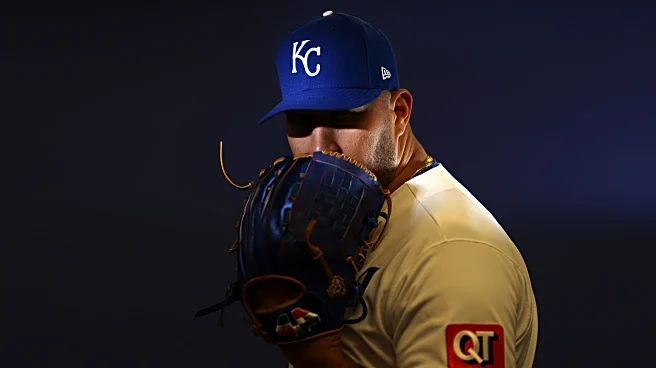

One of the most consistent storylines in the Kansas City Royals world this spring was about their closer, Carlos Estevez. Looking out of sorts for the duration of Spring Training, Estevez threw an uneven five innings where he walked more batters than he struck out and gave up three home runs and four runs overall. Most notably, Estevez’s fastball velocity was way down; whereas he averaged about 96 MPH on his heater last year, he was struggling to hit 90 prior in Spring Training and during the World
Baseball Classic.
But the Royals were not worried. General manager JJ Picollo told the Kansas City Star that they knew that Estevez ramped up slowly in the spring and that they had confidence he would be ready when the season began.
“It’s hard not to notice it but we also had the experience of last year, and we went through the same thing,” Picollo said Thursday in a phone interview. “And I think last year we were a little bit more nervous about it, because we hadn’t been with him before.
“But not only did he tell us that this is how he always starts in spring training, but the other clubs he had been with, our coaches called their coaches and asked, ‘Is this normal?’ And they confirmed it for us.
“So while you would like to see him more in the 91-92 range right now, this is exactly where he was last year.”
Last year, the Royals brought in Estevez in a free agent deal to shore up the bullpen, and Estevez ended up leading the entire league with 42 saves. So with confidence in his ability to get his control and velocity back, the Royals gave Estevez the first save opportunity of the year on Saturday.
It did not go well.
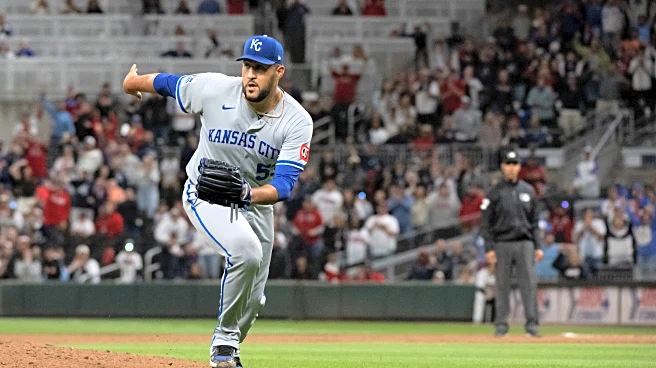
From the jump, Estevez looked bad. Estevez struggled mightily to find the zone, throwing pitches that were way outside or straight down the middle; he tossed 27 pitches, and only 12 were strikes. Estevez walked a pair, struck out no one, and gave up four hits.
And his fastball velocity? Or, well, his velocity in general? Way, way down, with a fastball 4.7 MPH slower than last year and a changeup 5.6 MPH slower than last year.
After the game, the Royals reiterated their faith in Estevez.
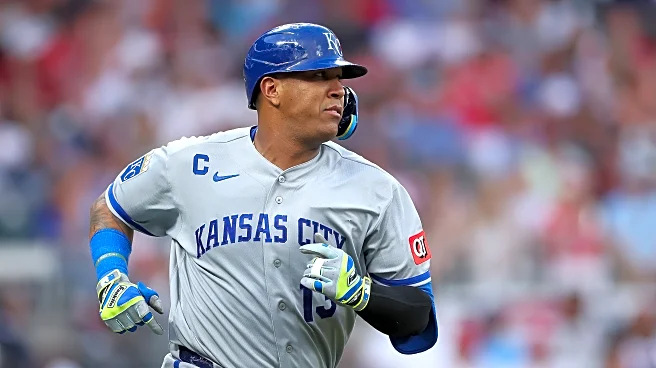
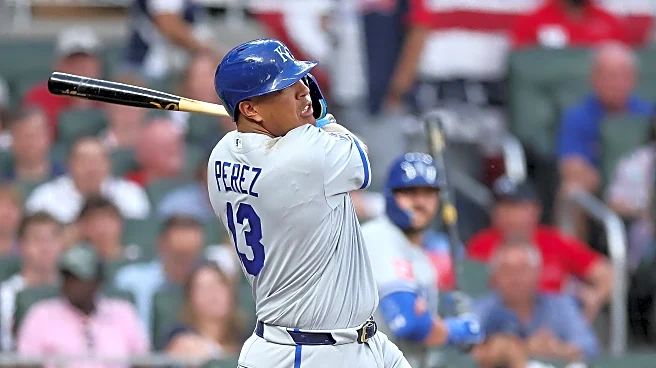
“I trust and believe in him 100%,” catcher Salvador Perez said. “It’s just a bad one. I think he is going to figure out what’s going on, and it’s going to be better for us. He did it last year.”
A drop in spring velocity wasn’t new for Estévez, and all spring he maintained he felt good, confident the velocity would return with adrenaline. The Royals echoed that statement and put their faith in Estévez’s veteran track record…
…“We talked about it a lot – we hope the velocity comes,” Quatraro said. “That’s a big difference from throwing 91 to 97-98 like he does. You can have a lot more margin for error that way. But we’re not going to run from him.”
Now, the Royals wouldn’t and shouldn’t throw Estevez under the bus here publicly, especially after only one outing (awful as it may be). And you could argue that it’s just the early part of the season and that there’s still time for everything to work out.
That could still be true! But what makes this frustrating is that, like, come on, the Royals should have known better.
Kansas City clearly knows about Estevez’s low velocity at the beginning of the year. They are aware that he starts slowly and have firsthand knowledge of this. Last year, Estevez blew two saves and walked nine batters—18.4% of total batters faced—in his first 10 games and 11 innings worth of work. Furthermore, they knew that his velocity dip this year was worse than it was last year.
And after all of this, the Royals chose Estevez to single-handedly take on the heart of the Braves order in his first outing of the year. Quatraro did not have anybody warming up in the pen at any point. The team did not use the line drive comebacker to his leg as an opportunity to yank him out of there when it was clear he didn’t have the juice. They just left him in to wear it, and wear it he did.
The other factor here is Estevez’s baseline performance from last year. Last year, his velocity had fallen nearly a full MPH from 2024, and he also posted the lowest strikeout rate of his career. His batting average on balls in play was an extraordinarily low .234, and he allowed the fewest home run rate of his entire career. All of this meant that his xFIP—a stat that tells how many runs per nine innings he should have given up based on expected walks, strikeouts, and home runs allowed—was a whopping 4.95, compared to his ERA of 2.45. In other words, even if Estevez maintained his 2025 velocity and control, he would have almost certainly seen worst results.
This is not to say that Estevez couldn’t positively contribute to the 2026 Kansas City bullpen. He can. But the Royals should have known better than to automatically trust Estevez with high leverage innings out of the gate. Saturday’s result was imminently predictable, which means it was also avoidable. Sure enough, the Royals are already pumping the breaks on Estevez being in high-leverage scenarios:
Maybe there is some stuff going on behind closed doors that we don’t know about. There always is to some degree. But this was a decision that could and should have been arrived at before the Royals unnecessarily lost a game they should have won, and at the beginning of the year, whoopsies like this are magnified.