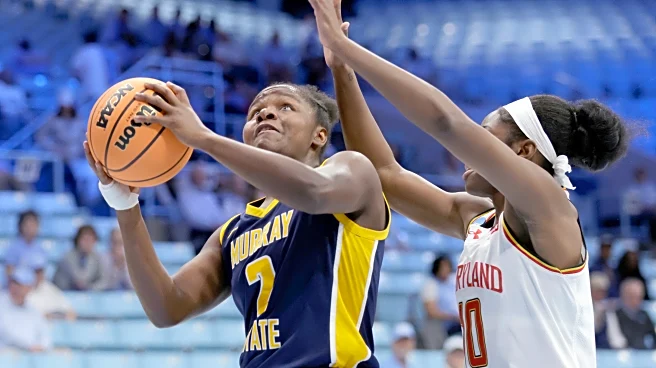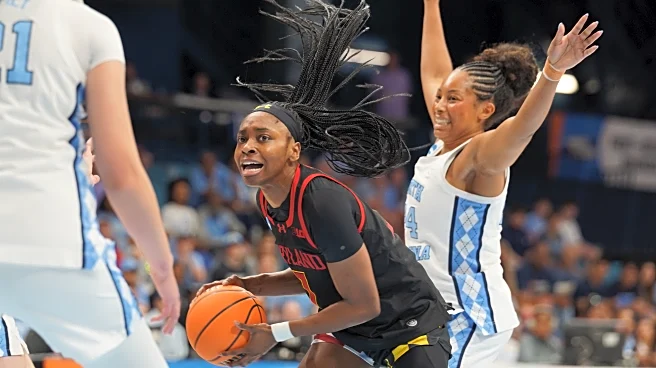

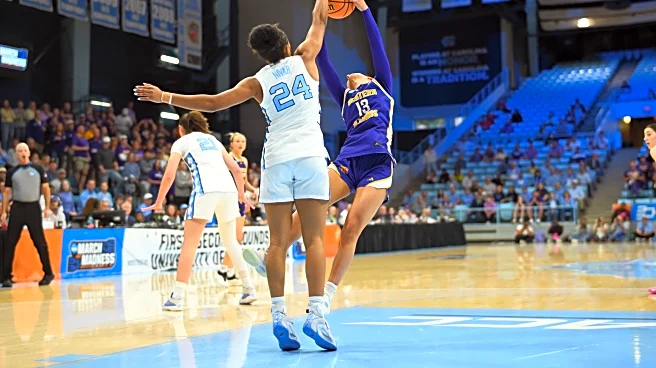
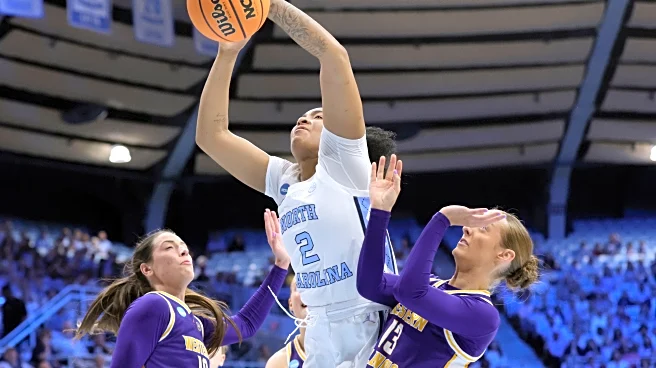

CHAPEL HILL, N.C. – With just over a minute to go in Sunday’s NCAA Tournament second round action, North Carolina’s Nyla Brooks stepped into a 3-pointer and caught nothing but net, extending her team’s lead to six. It was the dagger in No. 5-seed Maryland women’s basketball’s 2025-26 season, which ended with a loss to No. 4-seed North Carolina, 74-66.
“I felt like it was there for the taking,” head coach Brenda Frese said. “We didn’t manage enough plays to go take it.”
Here are three takeaways from
Maryland’s loss.
Free throw shooting killed the Terps
All season long, the Terps have looked to get into the heart of defenses and draw fouls as a primary offensive strategy. This, combined with their tenacity on the glass, has provided them plenty of free points from the charity stripe.
“In the NCAA, when you’re playing on someone else’s home court, it’s extremely difficult,” Frese said. “We missed 14 free throws … so a lot of uncharacteristic plays for us.”
Coming into Sunday’s contest, the Terps were shooting over 15 free throws per game and making almost 78% of them. Against the Tar Heels, Maryland shot 31 and made 16 — good for a conversion rate under 55%.
In the madness of March, margins like these decide whose season is over for good and who gets a date in the Sweet 16. The Terps put themselves in enough winning positions against the Tar Heels but fell due to an inability to collect free points at the line.
It started early with Oluchi Okananwa, whose relentless drives to the basket often draw contact from defenders. Okananwa has made over 77% of her shots from the line this year, but was 3-of-11 from the charity stripe — including many misses that could have closed the gap for Maryland in key moments.
“That was uncharacteristic of us, uncharacteristic of me,” Okananwa said. “Those are controllables, and I think that’s something that you look back on.”
Yarden Garzon doesn’t go to the line often, but was essentially automatic when she got there, shooting just under 93% on free throws this season.
Garzon stepped up to the charity stripe with Maryland down six points with just over a minute on the clock, and she bricked a pair of free throws. That essentially wrapped up the game.
On the other end of the court, the Tar Heels have been a below average free-throw shooting team on the season. They shot it right at their normal clip of around 70%. They made just three fewer free throws than the Terps on 11 more attempts and got some clutch ones late from Lanie Grant and Elina Aarnisalo to help ice the game.
Tar Heels found favorable matchups
A strength of Maryland’s team this season has been its defensive versatility. The Terps bolster a lot of length and athleticism, allowing them to switch matchups on screens and aggressively guard the perimeter.
Knowing this, North Carolina head coach Courtney Banghart told her team it needed to get away from its usual identity of ball movement and beat their defender off the dribble.
“I watched the last 16 games that Maryland played to make sure that was really what they were going to do; they just kept requiring some one-v-one attack,” Banghart said.
The Tar Heels made just four 3-pointers and took only 11. Normally reliable deep shooters like Lanie Grant instead opted to attack the paint. Elina Aarnisalo tied for a game-high 21 points and proved extremely difficult for Maryland to stay in front of, setting the tone for the Tar Heels in the first half with a string of layups.
“They’ve got depth, they’ve got speed, they’ve got size,” Frese said. “So it was really, really difficult [to gameplan].”
Banghart had individualized plans of attack for each of Maryland’s perimeter defenders.
“With [Okananwa], we wanted to use her athleticism to our advantage, we wanted to get her closer to us so we can go by her,” Banghart said. “The other guys, we wanted to make them be shifty. We wanted Garzon and Addi Mack to have to move their hips.”
The Terps slowed the Tar Heels down more in the second half, but North Carolina unequivocally executed its offense better than Maryland.
Poffenbarger, Garzon, and McLean’s last dance
The end of a season always means a goodbye to the team’s players that are out of eligibility. Maryland had three this season: Garzon, Saylor Poffenbarger and Mir McLean.
None were career Terps, but all were important components of this year’s squad.
Garzon and Poffenbarger’s careers didn’t end on the floor as they would have hoped. As two of the team’s sharpshooters, they couldn’t get anything to drop from beyond the arc, going a combined 0-of-16 from three-point range.
There seemed to be a lid on the rim — particularly for Poffenbarger, who had several threes rim out from inside the cylinder. She did contribute in the margins as she typically does, posting 10 rebounds and four steals.
“They tried to do everything they can,” Frese said of her seniors. “It was just awesome to be able to bring [Poffenbarger] and [McLean] back home and a full circle moment after recruiting them.”
While the two Maryland natives played their last two seasons with the Terps, Garzon played just one after being a standout at Indiana. She was a glue piece for the Terps, but didn’t deliver as the elite shooter they needed her to be in the postseason. In Maryland’s three postseason games, she went 2-of-20 from beyond the arc.
“They all got really bright futures and whether that’s continuing on to play or the next move they make they’re going to be very successful,” Frese said.
McLean went down swinging, playing some of the best basketball of her career in the back half of this season. She is a relentless force on the offensive glass and demonstrated a ridiculously high motor on the defensive end.
“I’ve learned a plethora of things behind her in two years,” McLean said. “I feel like I’ve had a four year experience and I’m very grateful for my coaches, who always poured into me.”