


Two more position groups to go after today: cornerback and safety. I decided to place inside linebacker into its own post. I felt its a massive need beyond 2026 with Alex Singleton entering his mid-30s and Justin Strnad a bit of an unknown as a 16-game NFL starter. Drafting a guy just makes sense.
Even if he doesn’t play much this year, he’ll get the development he needs to compete for a starting job next season. Plus, linebackers can get dinged up with the physical demands of the job. It’s always
good to have depth you can trust behind the starters. Let’s get to the position!
Other Big Boards:
Note: Prospects scored against the empirically-derived Payton/Paton Fit Score (PPFS) rubric. Tier 1 (A, Bullseye: 85-100) and Tier 2 (B, Strong Fit: 75-84) prospects shown in full. Tier 3-4 listed at end of each section. All descriptions of prospects are AI generated as part of its reasoning and ranking. Round projections based of Dane Brugler’s The Beast draft board.
Broncos Big Board: Inside Linebackers
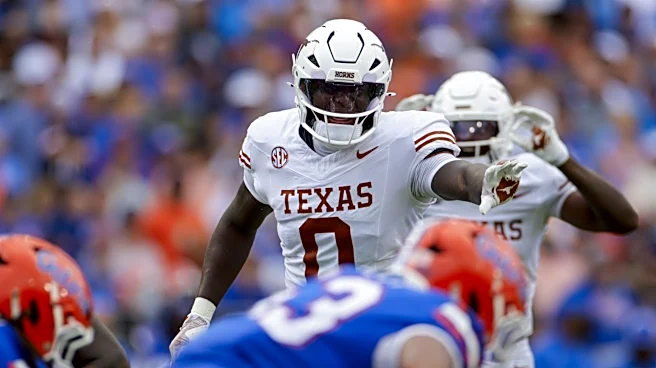
Anthony Hill Jr., Texas, LB, Projected Round: 2nd-3rd
A 6’2”/238 three-down thumper from Texas with captain traits and legitimate coverage range. Former five-star, age 21 on draft day, with sideline-to-sideline pursuit and P4 pedigree. Fits as an immediate cornerstone for Vance Joseph’s second level — a rare off-ball LB who can handle MIKE or WILL, stack blocks, run with backs in the flat, and eventually wear the green dot. The kind of centerpiece Denver’s defense could build around for a decade.
(Tier 1, PPFS ~94)
Sonny Styles, Ohio State, LB, Projected Round: 1st
A 6’5”/244 Ohio State S/LB convert and Brugler’s LB1. Coverage-first nickel linebacker with rare length, safety-to-LB bloodlines, and elite range in space. Would give Denver a matchup eraser against TE-heavy personnel and spread attacks, bringing safety-style instincts to the second level. The modern hybrid mold Payton and Joseph have gravitated toward, and a plug-and-play answer for three-receiver sets.
(Tier 1, PPFS ~89)
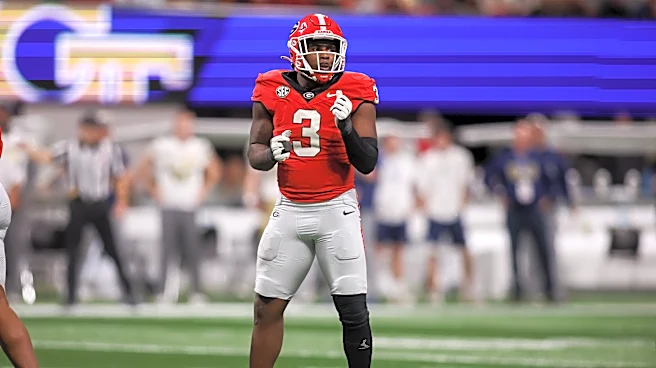
CJ Allen, Georgia, LB, Projected Round: 2nd
A 6’1”/230 Georgia captain and three-down processor with a clean read-and-react game, plus tackling form, and functional coverage chops. SEC pedigree and UGA pipeline feed directly into Paton’s board. Legitimate green-dot signal-caller — the defensive quarterback Denver could trust to align the front, handle communication, and anchor the middle of the defense long-term.
(Tier 1, PPFS ~88)
Kyle Louis, Pittsburgh, LB, Projected Round: 3rd
A 6’0”/220 Pitt LB with legitimate blitz flex and sideline-to-sideline range. Pass-rush production from the off-ball spot is the exact trait Joseph’s scheme weaponizes — a sub-package coverage/blitz chess piece who can add a fifth rusher off the edge or A-gap and cover backs in the flat. Undersized, but the twitch and pressure value show up on every tape. A modern-traits Day 2 bet.
(Tier 1, PPFS ~86)
Jacob Rodriguez, Texas Tech, LB, Projected Round: 2nd
A 6’1”/231 Texas Tech LB, age 23 on draft day, and Brugler’s LB2. Experienced three-down processor with starter-caliber reps and a pro-ready feel for run fits and pass-game recognition. Not flashy, but the “ready-now” profile gives Denver a high-floor Day 2 piece who can step in immediately on base and nickel downs.
(Tier 2, PPFS ~83)
Jake Golday, Cincinnati, LB, Projected Round: 2nd-3rd
A 6’5”/239 Cincinnati LB with rare length and plus athletic traits — Brugler’s LB4. Rangy frame that projects well against tight ends and in zone drops, with the kind of coverage-capable body Paton prefers. Still raw, but the ceiling is high in Denver’s match-zone looks where length and closing speed matter most.
(Tier 2, PPFS ~82)
Josiah Trotter, Missouri, LB, Projected Round: 3rd
A 6’2”/237 Missouri LB, only a redshirt sophomore (age 21), with NFL bloodlines — brother of Eagles LB Jeremiah Trotter Jr. and son of Eagles legend Jeremiah Trotter. Downhill MIKE with youth, pedigree, and a violent physical run-thumper profile. Would bring an edge and an identity to Denver’s interior run defense while offering long-term development upside.
(Tier 2, PPFS ~80)
Keyshaun Elliott, Arizona State, LB, Projected Round: 3rd
A 6’2”/233 Arizona State LB with three-down tools, steady run-fit, and functional coverage — Brugler’s LB8. Ascending starter without a standout trait but no glaring weakness, the kind of dependable, scheme-versatile body who adds rotational depth and core special-teams value.
(Tier 2, PPFS ~75)
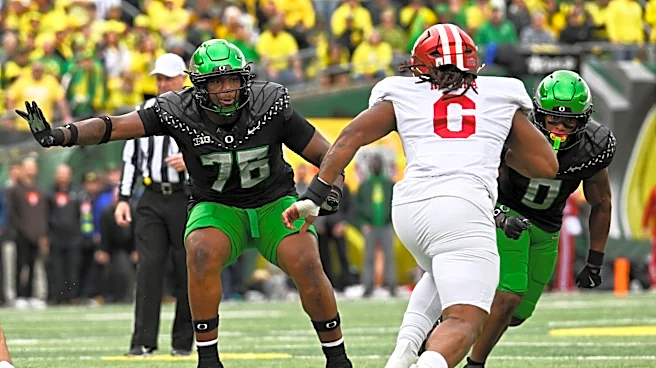
Bryce Boettcher, Oregon, LB, Projected Round: 4th
A 6’1”/230 Oregon LB, older prospect (23.8 on draft day), with a multi-sport background and a physical thumper profile. Senior Bowl attendee with solid processor traits. A Day 3 downhill run-defender who would compete immediately for base-down snaps and carry legitimate four-phase special teams value.
(Tier 2, PPFS ~73)
Jimmy Rolder, Michigan, LB, Projected Round: 4th
A 6’2”/238 Michigan LB who led the Wolverines in tackles as Barham kicked to EDGE. Awareness and movement skills exceeded expectations given limited early-career reps. Ascending Day 3 starter type with Michigan-program polish — a fundamentals-first profile who could climb Denver’s depth chart with coaching and reps.
(Tier 2, PPFS ~72)
Kaleb Elarms-Orr, TCU, LB, Projected Round: 3rd-4th
A 6’2”/234 TCU LB with five years of starting experience, age 22.65 on draft day. Veteran three-down processor, reliable tackler, and smart communicator. A backup-to-starter Day 3 bet who brings maturity, position flex, and immediate special teams contribution.
(Tier 2, PPFS ~71)
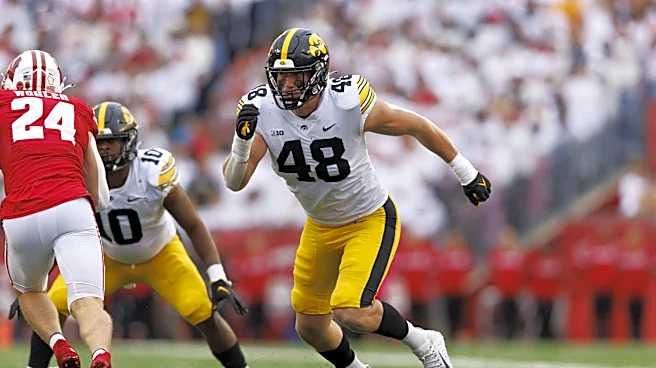
Tier 3: Red Murdock (Buffalo, 4th-5th), Aiden Fisher (Indiana, 5th), Jack Kelly (BYU, 5th), Justin Jefferson (Alabama, 5th-6th), Harold Perkins Jr. (LSU, 5th-6th), Kendal Daniels (Oklahoma, 6th), Wade Woodaz (Clemson, 6th), Owen Heinecke (Oklahoma, 6th)
Tier 4: Taurean York (Texas A&M, 6th-7th), Deontae Lawson (Alabama, 6th-7th), Xavian Sorey Jr. (Arkansas, 6th-7th), Jackson Kuwatch (Miami OH, 7th), Karson Sharar (Iowa, 7th), Jaden Dugger (Louisiana, 7th), Lander Barton (Utah, 7th), Scooby Williams (Texas A&M, 7th), Namdi Obiazor (TCU, 7th), Ernest Hausmann (Michigan, 7th), Wesley Bissainthe (Miami, FA), Eric Gentry (USC, FA)
My Analysis: It’s a good year to need an ILB if you are George Paton or Sean Payton. A lot of guys fit their draft tendencies in players. The highest scored player across all positions is Anthony Hill Jr, so if he is on the board at 62 I would be absolutely shocked if the Broncos aren’t writing his name in. We’ll have to see if this methodology plays out. There are plenty of options in the fourth round too it would seem.
PPFS (Payton/Paton Fit Score) Methodology
What it is: An empirically-derived scoring system that measures how well 2026 draft prospects align with the historical drafting patterns of Sean Payton and George Paton.
6-Step Process:
- Catalog historical drafts: 7 draft classes (2020-2025) analyzed. Joint Payton/Paton Broncos picks (2023-2025) weighted 3x; individual pre-partnership classes weighted 1x.
- Research player profiles: Pull pre-draft scouting reports for every historical pick to capture what scouts said at draft time.
- Extract tendencies across 8 dimensions:
- Physical thresholds (size per position)
- Athletic testing (40, 3-cone, broad jump, etc.)
- Production profile (starts, snaps, PFF grades, dominator rating)
- School/conference preferences
- Experience level (age, years starting)
- Injury history
- Character profile (captains, culture fit)
- Archetype tells (position-specific patterns)
- Derive the rubric from the data: Weights come from what Payton/Paton actually picked, not assumed importance.
- Score 2026 prospects against the position-specific rubric (0-100 scale).
- Group into tiers: Tier 1 through Tier 4 based on PPFS scores.
Two key refinements:
- Role-based assessment: Prospects scored by projected NFL role, not just raw position (e.g., situational pass-rusher vs. base-end)
- Medical sliding scale: Graduated injury severity rather than binary injured/healthy Important distinction: PPFS measures organizational fit, not absolute player quality. A great player can score low if they don’t match Payton/Paton’s documented patterns.
Roster Analysis in the PPFS Pipeline
The roster analysis sits between the historical tendency extraction (Steps 1-3) and the scoring rubric (Steps 4-5). It answers: “Given what Payton/Paton like, what does this team actually need right now?”
What it does:
- Breaks down each position group’s current players, ages, contracts, archetypes, and injury status
- Identifies complementary gaps (what’s missing) and duplication risks (what they already have)
- Assigns draft urgency per position (HIGH, MODERATE, LOW)
How it modifies scoring (two mechanisms):
- Roster Complementary Fit dimension: A 0-10 scoring dimension where:
- Prospect hits a proven archetype lane AND fills a roster gap = 10 pts
- Hits a proven lane but roster-neutral = 6 pts
- Off-type but fills a gap = 5 pts
- Off-type and roster-neutral = 3 pts
- Modifiers:
- +3 bonus for filling an explicit complementary gap (e.g., complementary power RB next to Harvey’s speed)
- Graduated duplicate penalties based on how entrenched the existing player is (e.g., drafting another speed scatback when you have three = penalty)
Who would you hope the Broncos draft from this big board?