



In the run-up to the draft, we’ve been breaking down all of the players added by the Jets during free agency and in the legal tampering window. We wrap up today with quarterback Geno Smith.
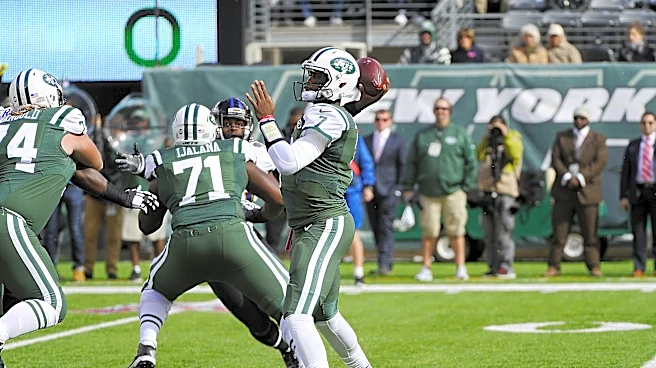
The 35-year old Smith is listed at 6’2” and 221 pounds and was selected by the Jets out of West Virginia with the 39th overall pick in 2013. After four seasons with the Jets, two of which saw him starting, Smith bounced around the league for a few seasons before resurrecting his career in Seattle, where he was a two-time
pro bowler. He returns to the Jets following a year with the Raiders.
Background
Smith was a four-star high school recruit who headed to West Virgina, where he was a backup in his first season in 2009, throwing less than 50 passes.
He became a starter in 2010 and had a solid year with 24 touchdown passes and only seven interceptions to earn second team all-Big East honors but it was the arrival of head coach Dana Holgorsen in 2011 which saw Smith take his game to new heights.
He had over 4,300 passing yards and 31 touchdown passes in his first season under Holgorsen and was named first team all-Big East.
The Mountaineers moved into the Big XII in 2012 and Smith led the nation with 42 touchdown passes as he completed 71 percent of his passes and had just six interceptions. He was an all-Big XII second-teamer.
There was plenty of talk that Smith could be the first overall pick but his stock fell during the pre-draft process. The Jets, having passed on him with their two first rounders, decided to select him when he dropped all the way into the second round.
In his rookie year, the Jets had Smith competing with Mark Sanchez, who was coming off an awful 2012 season. Smith appeared to be winning and then clinched the starting role when Sanchez suffered a preseason shoulder injury.
There were ups and downs in Smith’s rookie year as the Jets were largely carried by their defense and in the mix at 5-4 heading into the bye. However, they lost their next three games to drop out of contention.
Smith ended the season on an upwards trajectory as the Jets won three of their last four, but ultimately had held the team back as he threw 21 interceptions, completed just 56 percent of his passes and struggled with his consistency.
He returned as the starter in 2014 but won just three starts and was benched a couple of times as his struggles continued. Once again, though, the way he ended the season created some optimism as he passed for over 350 yards and posted a perfect quarterback rating in the finale in Miami.
By all accounts, he was having a solid training camp in 2015 under new head coach Todd Bowles, but that was halted abruptly when he got his jaw broken by his teammate IK Enemkpali in a locker room altercation. Ryan Fitzpatrick was handed the starting role and played well for most of the season, leaving Smith stuck on the bench. He made just one appearance, although he posted decent numbers in that game with 265 yards and two scores.
2016 saw Smith begin the year as the backup to Fitzpatrick, but found himself back at the helm when Fitzpatrick was benched. However, Smith’s lone start of the season ended prematurely when he suffered a season-ending knee injury.
In 2017, Smith was with the Giants and got a chance to start for them when Eli Manning was controversially benched but, despite playing reasonably well, Manning was put back into the starting role in the following week so he didn’t get another chance.
He spent 2018 with the Chargers, and only threw four passes all season, then signed for Seattle in 2019 and threw just five passes over the next two seasons. However, in 2021, an injury to Russell Wilson gave Smith his first three starts since 2017 and he acquitted himself well, throwing five touchdowns and just one interception.
In 2022, Smith was named as the starter and surprised everyone by completing 70 percent of his passes. He was eighth in the NFL in passing yards as he surpassed 4,000 yards for the first time and fourth with 30 touchdown passes. This saw him voted to the Pro Bowl.
His numbers were down slightly in 2023 but he went back to the Pro Bowl after posting the lowest interception percentage of his career (1.8%, good for 10th in the NFL).
He then led Seattle to a 10-7 record in 2024 as he passed for a career-high 4,320 yards to place fourth in the NFL.
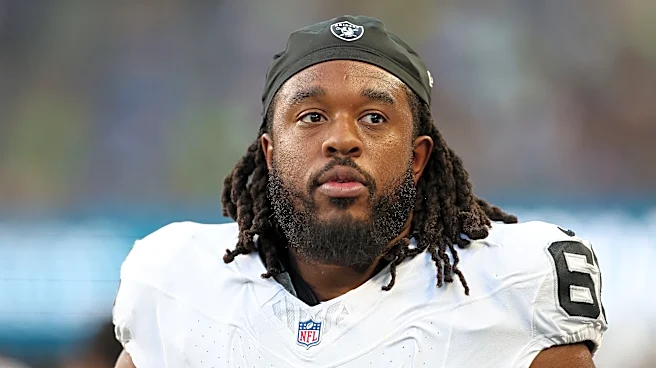
2025 saw him reuniting with Pete Carroll in Las Vegas, but he was just 2-13 as a starter and led the league with 17 interceptions. He was also sacked a league-high 55 times.
Smith was acquired by the Jets in a March trade and his contract was reworked so the Jets will pay him $3.5 million this year and then he will hit free agency.
Let’s move onto some more in-depth analysis of what Smith brings to the table, based on in-depth research and film study.
Measurables/Athleticism
Smith is 35 now, so he won’t be as athletic as he was during the pre-draft process. At the time, he ran a 4.59 in the 40-yard dash and posted a 33.5-inch vertical and 124-inch broad jump. He has average size.
Arm Strength
Smith has always been a player who can have success with deep passing and had over 500 passing yards last season on throws of more than 20 yards down the field. He definitely has a reputation as someone who throws a pretty deep ball.

It’s worth noting, however, that Smith only had a 40-yard completion in two of his 15 starts last season.
Earlier on in his career, he would sometimes struggle to get enough on a throw when trying to put zip on the ball to force it into a tight window or get it outside the numbers, but this is an issue that has improved with better footwork.

Accuracy
In his first stint with the Jets, Smith’s accuracy was poor, as his completion percentage was below 58 percent and he left a lot of missed opportunities on the field. These issue may still plague him at times, but a lot less frequently.

Clearly he was capable of being more accurate than this, as he had a year in college where he completed over 70 percent of his passes. In recent seasons he’s been consistently in the high-sixties and was at 70 percent in 2022.
He can hit receivers in stride and throw passes that are on time while also being capable of making completions into tight windows.

Under pressure
As noted, Smith was sacked a league-high 55 times in 2025. This is often as a result of hanging onto the ball for too long, an issue which has plagued him since his Jets days.
One of Smith’s most infuriating habits in his time with the Jets was unnecessarily taking a sack to kill a drive or move the team out of scoring range when he could have thrown the ball away or taken off running sooner. This can still be an issue at times.

When he is kept clean, Smith’s accuracy improves dramatically. However, he still threw nine interceptions in such situations last season.
When he is under pressure he does possess the ability to escape pressure and keep plays alive.

Smith has never been in double-digits for fumbles in any season and only had four last season despite being the most sacked quarterback in the league, so his ball security has been pretty good. The days of him passing the ball to himself behind his back in his own end zone as he once did with the Jets are thankfully a thing of the past.
Footwork/Technique
Smith’s sloppy footwork was a big issue behind his struggles earlier on in his career. He struggled in particular with dropping back from under center, having previously spent most of his college career in the shotgun.
He credits Dave Canales, who was the quarterback coach and passing game coordinator in Seattle, with helping him improve in this area.
One thing that changed was that he went from having his left foot back so having his right foot back instead, which “calmed his feet down”. In addition, Canales tried to get him to bounce up and down less at the top of his drop and this apparently helped him to see the field better.

Smith has always looked comfortable and been effective at throwing the ball on the move, even when rolling to the left.

Decision Making
Smith is a player that is not afraid to take risks, as evidenced by his league-high interception total last season. Two years prior to that he had posted the 10th lowest interception rate in the NFL though.

As noted above, some of the technical adjustments made to Smith’s game have helped him to see the field better in recent years.

Mobility
Smith was billed as a dual-threat quarterback coming out of high school but that was never entirely accurate as he was more of a pocket passer despite being athletic. He had just four rushing touchdowns in his college career and only surpassed 50 rushing yards four times.
Nevertheless, he has always had an ability to make plays with his legs and, even at 35 years old, accounted for 13 first downs last season. He also can still move well in and around the pocket.

Smith has 12 rushing touchdowns in his NFL career, although half of those were in his rookie season. Interestingly, the longest run of his career (34 yards) and his highest single-game rushing total (72) both came in 2024.

Special teams
Smith has zero special teams snaps at the NFL level.
Scheme Fit
Smith has been selected as someone who the Jets believe will be effective at operating Frank Reich’s system and his experience of playing for multiple different teams should serve him well in that area.
During his career, he has been a teammate of four current Jets: Demario Davis, Dylan Parham, Tre Brown and Chris Smith.
Injuries
Smith’s most serious injury was his ACL tear, but that was 10 years ago. Of course, the broken jaw played just as much of a part in derailing his career, but that was more down to timing than severity.
In recent years, he missed two games with a groin injury in 2023 and one each with a shoulder and ankle injury in 2025. He’s also dealt with knee, arm and head injuries during his career.
Intangibles
Smith, who posted a 24 in the Wonderlic during the pre-draft process, has gained confidence in recent years and has a strong belief in himself and determination to prove the doubters wrong.
During his time with the Jets, there were major maturity issues as he missed meetings, had a prickly relationship with the media and had the controversial locker room incident which cost him the starting role in 2015. He’s matured a lot since then, though.
Conclusions
Smith’s return to the Jets for a long time seemed implausible, but enough time has passed and Smith has grown to the point where he seemed a logical fit as the offseason progressed.
He is not the same person, or the same player, as he was when he departed the Jets 10 years ago.
Whether he still has it in him to keep the Jets competitive in 2026 remains to be seen after he struggled in Las Vegas, but the Jets will hope that they have a more stable nucleus so that he can be successful with them.
Ultimately, it’s only a one-year deal with a low salary, so there isn’t any long-term risk in him potentially being a bridge to the quarterback of the future. The current decision makers will need him to win games for them, though, if they are to be around to see that next phase.