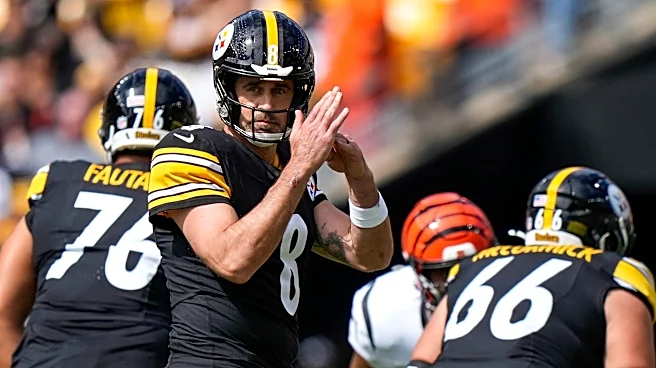


Inconsistency has been the name of the game for the Pittsburgh Steelers’ offense and defense through the first quarter of the 2026 NFL season, leading to a fitting 2-2 record through four weeks.
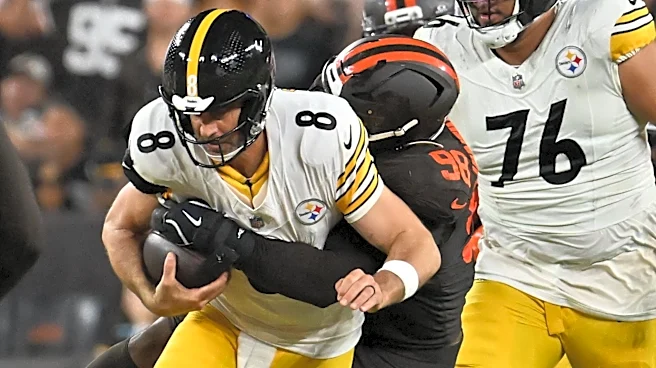
And after another recent low point, a 27-24 loss to the rival Cleveland Browns and Deshaun Watson last Thursday, Read and React is here to take a look at if there might be a light and the end of the tunnel to one of the Steelers’ struggling units.
Is there hope for the Steelers’ offense?

RP: The Steelers have been an undoubtedly frustrating watch
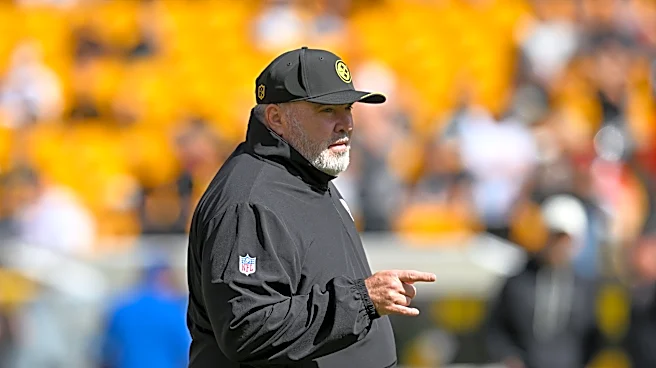
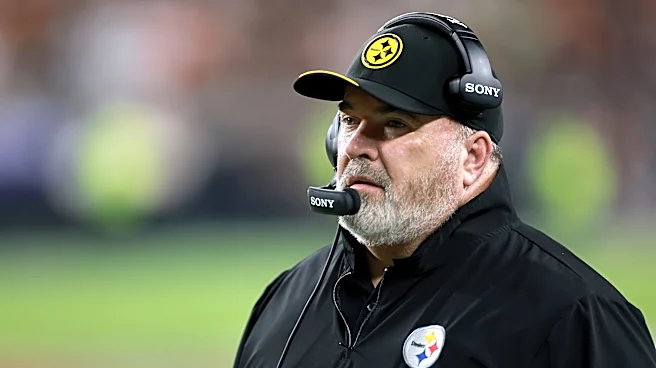
through the first quarter of the NFL season. While their record of 2-2 is certainly not reason to give up on the season — they are just one game back from the division lead after all — we can certainly empathize with any fans who think this Steelers team has proven they aren’t good enough to be taken seriously. You could argue the offense has only played one good game this year, Week 3’s win over the Bengals. That’s a tough pill to swallow considering the organization’s hiring of offensive-minded coach Mike McCarthy was supposed to finally fix what has been the glaring weakness of this team for the entirety of the 2020s.
But what makes the whole thing more maddening is that there have been glimpses of a promising offense. The Bengals game was a stellar performance from start to finish, and even the Browns game featured an immaculate first drive of the game, as well as a late-game surge that saw the Steelers score two touchdowns in the fourth quarter to tie the game. The issue again and again has been that the Steelers have lacked consistency. On one drive they’re Jekyll, the next they’re Hyde.
Naturally, fans are left wondering why that is. Are the players simply not good enough? Or are the coaches failing to utilize them well? Truthfully, the answer lies somewhere in the middle, but for the sake of this column, we’d like to argue, with film and data, that there is still a chance for this offense to be not only a fun one, but maybe even an above average one too. But to do so, the two most influential people in this offense, McCarthy and quarterback Aaron Rodgers, need to put ego aside, and embrace not the offense that they’ve enjoyed in the past, but the offense this roster is currently built to be.
The Steelers need to lean into playing bully ball. And by that, we mean they need to get under center more and, to use an old coaching adage, they need to run the damn ball.
But it’s more than just what the eye test is telling us. The Steelers have been dominant when they line up under center. Whether it’s run or pass, Pittsburgh is averaging 6.8 yards per play when they do so. That trails only the Kansas City Chiefs through the first four games of the season.
RB: Under center isn’t a magic bullet fix to an offense, but it does offer some advantages over shotgun in certain instances (and vice versa, of course).
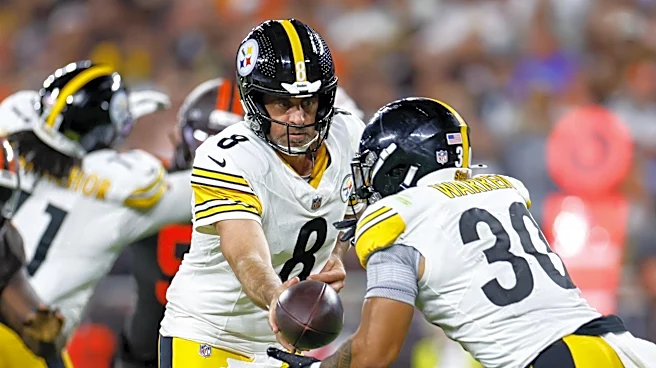
The most obvious is a more direct, downhill run game. The quarterback-center exchange is cleaner, the running back gets a running start and a wider field of view, and linemen have a tick longer to land their blocks.
The results can be a fun watch, even if some more of less boil down to hitting a narrow crease at full speed for four or five yards.
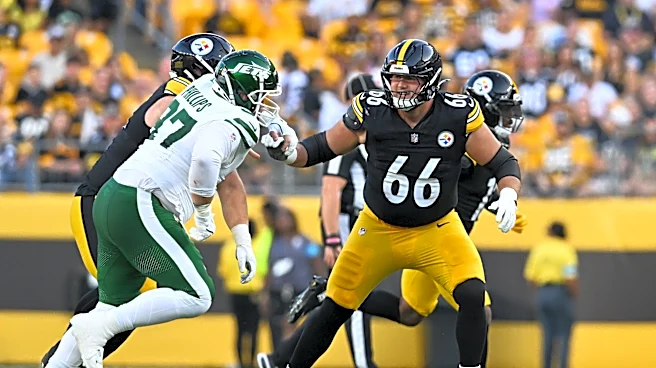
And the Steelers have the personnel to pull this style of play off. The addition of Brock Hoffman and Max Iheanachor on the Steelers’ offensive line has added a much-need infusion of extra physicality to a group that already includes maulers Mason McCormick and Zach Frazier, as well as a good left tackle in Troy Fautanu. Tight end Darnell Washington is, of course, one of the biggest bullies at his position in the NFL, and both running backs Jaylen Warren and Rico Dowdle (when healthy), are physical ball-carriers with the latter having even more of a decisive, downhill playing style.
And while this hasn’t been a great postgame week regarding the reputation of the Steelers’ wide receiver room, names such as Germie Bernard, Michael Pittman Jr. and Ben Skowronek have been putting some work in as blockers in recent weeks (including a lot of C-gap inserts), upping the “bully ball” potential of the offense as a whole.
But why under center? A mid-September article from ESPN’s Bill Barnwell further broke down why the league as a whole has been seeing increased usage of this concept. The explanation matches the eye test — defenses have become incredibly modern, and to beat them, sometimes you have to break out the old-school concepts.
Defenses have become unpredictable, meaning offenses need to follow suit. And under-center runs have far less tells of where the run will go as the running back is directly behind the quarterback to start the play. And in the passing game, play action and ball fakes are easier to pull off.
Barnwell points out that the uncertainty of reacting to an under-center offense has been the “natural response” to NFL defenses using increasingly exotic zone coverages. As the adage goes, it’s a game of inches, and hard play-action fakes can provide the extra millisecond of hesitation in the secondary needed to break a big play.
The Steelers have been especially productive in this aspect of the game. According to DK Pittsburgh Sports’ Chris Halicke, the Steelers run play action on 89% of their under-center drop backs — meaning almost every snap from that alignment starts off looking like a run play. As uninteresting as the Steelers’ offense has looked at times, the under-center concepts have found some success in confusing opposing defenses.
RP: Frankly, for as impressive as the Steelers look under center, they’ve been just as dreadful from shotgun.
Historically, both McCarthy and Rodgers have preferred not only a passing-dominant approach to offense, but they’ve preferred a heavy dose of 11 personnel (three wide receivers) and from shotgun. But as the chart above indicates, this version of Rodgers, mixed with this current collection of players, is simply not built to live in that style of offense.
A recent article from Mike DeFabo of The Athletic pointed out some of the key data points that can help contextualize the struggles we’ve seen play out on the field:
- The Steelers have used 11-personnel at 10th highest rate (63.8%)
- When doing so, they rank 30th in EPA per dropback (-0.23)
- That ranking drops to 31st when the defense rushes 5 or more (-0.68)
- 12 of the Steelers 13 sacks allowed have come while using 11 personnel
- When using 12 personnel, the Steelers improve to 18th in EPA per dropback (-0.05)
- They also improve against 5+ rushers in 12 personnel (-0.05)
- The Steelers have also ran the 7th most plays from shotgun (165)
- Steelers EPA from shotgun: -42.5 (31st)
- Steelers EPA on 89 plays from under center: +14.6 (5th)
Those figures start to paint a clearer picture of what the Steelers are actually good at right now, and where they aren’t so good. Despite this, McCarthy and Rodgers are struggling to break from their old tendencies. Currently, the Steelers are throwing the ball on 68.4% of their plays and Rodgers is averaging 41.8 dropbacks per game. Even the staunchest Rodgers defenders should be able to acknowledge that at 42 years old, Rodgers is no longer able to play like he did during his prime. It doesn’t take a Hall of Fame coach to realize that asking a passer of that age to throw the ball that much is asking to write checks that his body can no longer cash.
And yet, Rodgers is still attempting to play bombs away more than you’d expect. So far, the Steelers lead the league in pass attempts of 20+ air yards (25) and are third in pass attempts of 15+ air yards (36). That in and of itself isn’t a negative, but it sure is when you look at the results. Rodgers is completing just 24% of his passes of 20+ yards (26th) and just 33.3% of his passes of 15+ air yards (30th). Whether the blame for that ineffectiveness falls more on Rodgers or his pass catchers is frankly a moot point. At some point, you need to adjust and pivot away from what isn’t working, especially when there are other areas where you’re excelling but continuing to stray from.
At this point, it’s pretty clear that the Steelers should be helping ease Rodgers’ load not only with a strong diet of the running game, but also more play action passes. As a whole, the Steelers are averaging 4.4 yards per carry, the eighth-best mark in the league according to Next Gen Stats. And while they are ranked in the exact middle (16th) for average yards before contact (1.32), they are ranked seventh in average yards after contact (3.23), thanks in large part to Jaylen Warren. Meanwhile, they are ranked third in the league in EPA per pass (+0.42) when using play action, but use it at just the sixth-lowest rate (21.9%) in the league.
I’ve been asking for it every week since the season started, and I’m going to keep asking it: why aren’t the Steelers utilizing more play action? It’s been working! Use it!
RB: One of the downsides of play action, of course, is that the quarterback is turning his back to the defense to start the play. That’s less time to process — and react, especially if you have an offensive line that can struggle with free rushers (cough cough, the Steelers).
That’s to say, it’s not a huge surprise that an Aaron Rodgers offense in 2026 isn’t going to want to overuse these concepts. And to justify that decision, in a way, it’s fair to point out that Rodgers hasn’t been the sharpest when it comes to throwing with immediate pressure in his face, even when it’s an “easy,” quick read. And while he’s definitely dealt with his fair share of unblocked pressures this season, he also struggles with any perceived pressure as well.
But as Ryan has pointed out above, the alternative has been far worse. And yet, spread-out, shotgun offenses have been a staple of the Rodgers offense, especially in the later years of his career. Rodgers wants to spread the defense out, find a likely solution pre-snap, and play chess — something that’s become exponentially more difficult in recent seasons with defensive coordinators unleashing more and more ambiguous looks and unorthodox pressures and coverages.
But as the numbers illustrate, Rodgers — and the Steelers — haven’t been winning those chess matches. And while plenty of that blame falls on the team’s quarterback, some also falls on a group of wide receivers that have been inconsistent winning against man coverage and an offense as a whole that hasn’t always made things easy for its 42-year-old signal-caller.
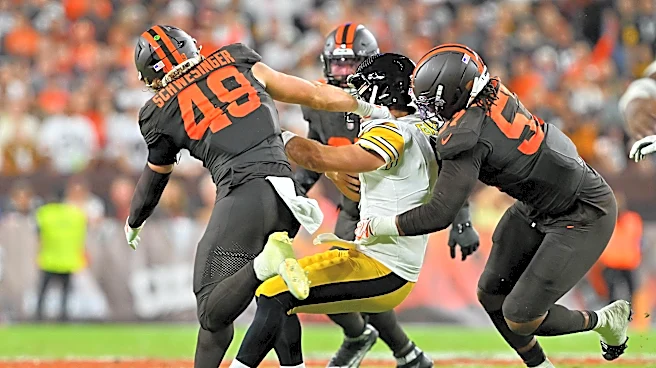
In the third play below, it looks like Rodgers wants to hit Pat Freiermuth coming across the middle of the field. Instead, the tight end stops, and Rodgers eats the sack.
And it’s worth noting all five sacks last week came from shotgun looks.
RP: That isn’t to say the Steelers have been completely resistant to making adjustments. After averaging just 71 yards rushing yards from their running backs through two weeks, the Steelers not only shook up the right side of their line, but they embraced more usage man/duo running concepts.
You can see a clear difference in how often they ran it the first two weeks:
Versus what their rates look like now after two weeks of Brock Hoffman and Max Iheanachor on the right side of the line:
Of course, even in the run game, the Steelers are being slightly stubborn in what they want to do versus where they’ve found success.
According to Next Gen Stats, the Steelers have attempted 42 runs outside of the tackle, averaging -0.27 EPA/Rush (30th). Compare that to rushes inside the tackle (39), where they are averaging +0.12 EPA/Rush (3rd). Week 4 was the first game where the team actually attempted more runs inside the tackle than outside, and while I don’t think they should abandon outside runs entirely — those plays can lead to explosives after all — it’s probably for the best that they continue to skew more inside than out. That’s especially true with a back like Warren whose long speed is limited, but who excels at changing direction and sifting through traffic.
RB: Of course, the Steelers’ offense isn’t talented enough for any of these projected “fixes” to be an easy button towards immediate success. But Pittsburgh has shown more flashes on offense this year than some of the team’s lowest points have indicated, and the numbers are clear that the group is much stronger in some areas than others — so why not lead into those successes more?
The strengths and weaknesses of the Pittsburgh offense versus the Browns in Week 4 illustrated a point I’ve felt like a broken record repeating over the last several months: While Rodgers could very well have been the best quarterback available for the Steelers in 2026, his weaknesses and strong preferences haven’t always been conducive to a young offensive line and a scheme that needs modernization. And the Mike McCarthy hire might’ve further muddied those waters.
Join in on Steelers R&R by sharing your takes on this week’s topics. Feel free to pitch future questions in the comment section or on Twitter/X: tag @_Ryland_B or @ArmchairScout21, or email us at steelersreadnreact@gmail.com.