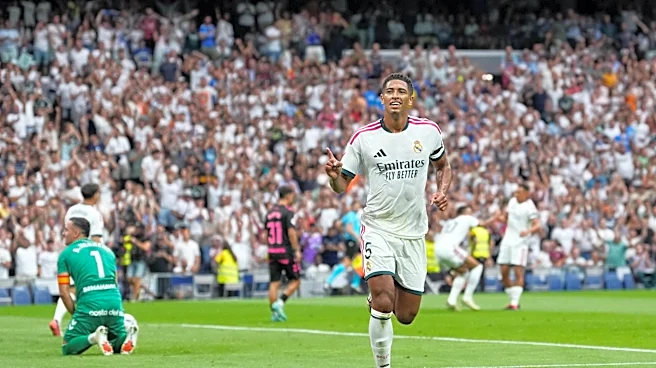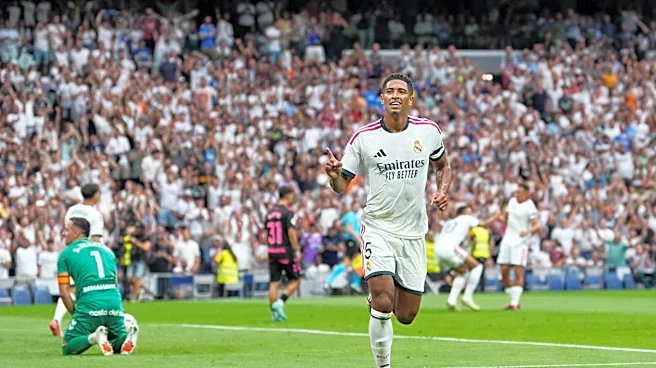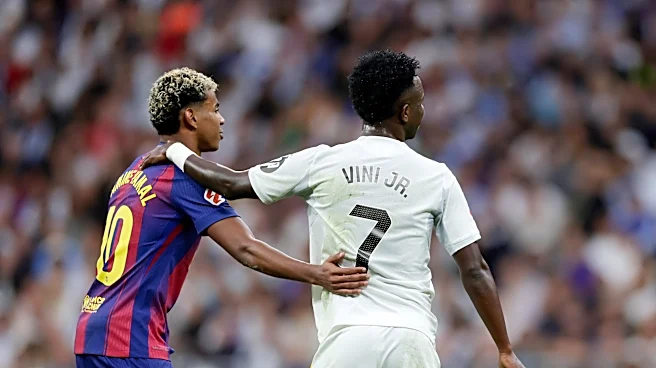

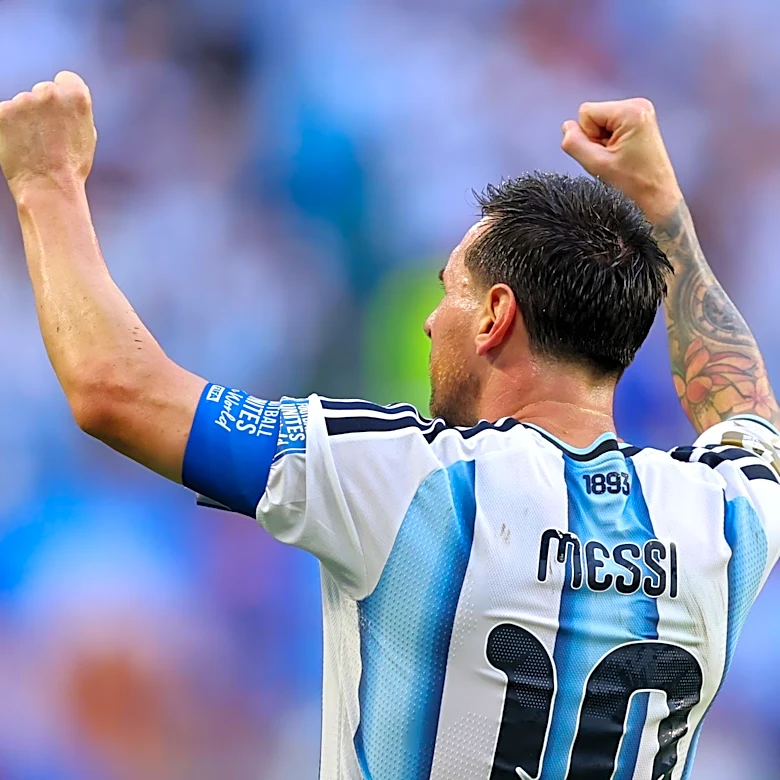

Take-on counts tell us who beats defenders and how many times. They do not tell us what happens next. A winger who beats his full-back and recycles possession is counted the same as one who beats him and creates a shot. This analysis looks beyond the dribble itself and measures the next action after a completed take-on: whether the ball goes inside, outside or straight; whether the run ends in a pass, cross, shot or loss; and what it produces in key passes, assists and expected threat.
Every player
is mirrored onto one attacking axis, so direction is not left or right in absolute terms. The angle is measured in degrees: 0° means straight toward goal, while a positive angle means moving inside after the take-on. Smaller positive angles mean a more direct action toward goal; larger positive angles mean a heavier inside cut. Agreement measures how often a player’s next action matches his own dominant directional pattern. Higher agreement means a more repeatable post-take-on profile, while lower agreement means greater variation. xT/run is the expected threat added by the next action after the take-on, credited only when possession is retained.
The 2025-26 take-on field was led by Lamine Yamal, who attempted 389 take-ons and completed 180 at 46%. Vinícius Júnior was second for volume with 311 attempts and 114 completions, but his 37% success rate was the lowest among the leading group. Jeremy Doku completed 123 from 267 at 46%, Michael Olise 111 from 244 at 45%, Kylian Mbappé 98 from 228 at 43%, and Yan Diomande 91 from 214 at a standout 55%. Diomande did not match the very highest volume players, but his completion rate is the closest modern figure in the group to Lionel Messi’s 2010-11 efficiency.

The historical benchmark remains severe. Messi in 2010-11 attempted 461 take-ons, completed 57%, produced 203 completed runs and added +0.0151 xT per run. Ronaldo, in the same season, attempted 246, completed 43%, produced 79 runs, and added +0.0131 xT per run. Messi’s combination of volume and success is unmatched in this sample. Yamal approaches the volume but not the completion rate. Diomande approaches the completion rate but not the volume. That is the separation.

Directionally, Messi and Ronaldo also look different from the modern wide-player group. Messi’s average post-take-on angle is +12°, and Ronaldo’s is +30°, while Yamal, Doku, Vinícius and Olise sit between +58° and +65°. The modern archetype beats a defender and turns sharply inside. The 2010-11 pair were far straighter. Some of that reflects role and starting position, but the gap is large enough to define two different styles of post-take-on action.

The strongest driver of value is location. Runs beginning in the final third are far more productive than those in deeper zones: +0.013 xT, 18.8% shot rate, 8.6% key-pass rate and 1.39% assist rate. Middle-third runs produce only +0.004 xT, while own-third runs produce +0.001. The closer the take-on is to goal, the more the next action matters.
Direction also matters. On pass-ending runs, going inside produces +0.015 xT and a 10.3% key-pass rate, compared with -0.002 xT and 1.3% for outside actions. Straight actions sit at +0.008 xT and 4.8% key passes. Square-inside actions still create key passes at 8.3%, but their xT falls to +0.005, suggesting that turning too far can give value back even after the defender has been beaten.


Transition roughly doubles the output. In settled play, post-take-on runs produce +0.007 xT, an 8.0% shot rate, 4.5% key-pass rate and 0.58% assist rate. In transition, those rise to +0.015 xT, 18.6% shots, 9.9% key passes and 2.25% assists. The effect survives even when looking only at final-third runs: transition still leads settled play by +0.019 to +0.012 in xT and 25.9% to 17.4% in shot rate.
The type of next action matters too. Crosses are the most valuable outcome after a take-on, producing +0.023 xT compared with +0.006 for a short pass, despite completing only 23% of the time. The same relationships appear in the 2010-11 sample: final-third actions beat middle-third actions, inside beats outside, transition beats settled play, and crosses beat short passes. Fifteen years apart, the structure of post-take-on value is broadly the same.
Mbappé is the clearest stylistic outlier in the modern group. His 2025-26 agreement is only 0.40, well below the cluster around 0.62 to 0.69, and his average direction is +22° rather than the +58° to +65° range occupied by Yamal, Doku, Vinícius and Olise. He is not locked into one pattern: he goes inside, straight and outside in turn. Context helps explain that spread, because 26% of his runs come in transition, more than double Olise or Diomande. He also shoots more than anyone else here, ending 21% of completed runs with a shot.


Doku is the output outlier. He has the highest xT per run in the group at +0.0203, and that is not simply because of his direction profile. His value comes from crossing, where he generates +0.124 xT per cross against a league average of +0.101, and from reaching the final third on 62% of his runs. He is also the only player in the sample whose production is essentially indifferent to context, generating similar value in transition and settled play.

Diomande deserves his own note because his profile is unusual. He has the best 2025-26 completion rate in the modern group at 55%, but the lowest agreement of all eleven player-seasons at 0.34. That means he is not repeating one dominant direction after beating a man. He also turns square most often, on 44% of his runs, which is the habit most associated with giving value back. His transition output is worse than his settled output, though that comes on a small sample.


Yamal is the outlier for what he does not convert. He leads the field in attempts with 389, has the best sweet-spot discipline at 79% inside, and yet has the lowest xT per run in the sample at +0.0082. The shape of the actions is right, the locations are right, and the volume is exceptional, but the end value is not yet matching the process.

Vinícius is the clearest case of stability. Across 2021-22, 2023-24 and 2025-26, his direction sits at +66°, +52° and +60°, while his completion rate is 40%, 37% and 37%. His agreement has risen from 0.49 to 0.62, so the pattern has become more consistent, but the broad profile is the same: high-volume, inside-cutting, lower-efficiency take-on play.


The modern wide players are closer than they first look. Lamine Yamal, Jérémy Doku, Vinícius Júnior and Michael Olise all beat their man and usually come inside. The interesting part is what happens after that. Doku turns those moments into more threat. Yamal gets into the right shapes but has not yet got the same return. Vinícius has stayed remarkably steady over time. Olise looks the most repeatable. The dribble gets them into the conversation, but the next action is what separates them.