




With the player additions mostly finalized for this offseason, many fans are curious where the Panthers stand in terms of cap space and distribution. In this series, we’ll take a look at just how much the Panthers have tied up in specific position groups over the next couple of seasons, what contracts could be terminated or extended, and what percentage of the cap each group takes up. For this series, I’ll be using the numbers at Over the Cap. Next on our list, the running backs!
On the Books
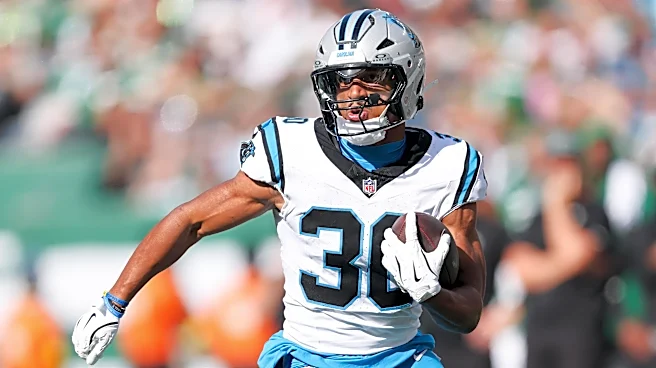
Chuba Hubbard is
the bell cow for this team, and he’s paid like it: his cap hit this season is just under $7.5 million. Jonathon Brooks is still on his rookie deal, and he’ll count about $2.3 million against the cap. AJ Dillon was signed this offseason to a one year deal that is worth up to $1.262 million, but only $100,000 of the contract is guaranteed. Trevor Etienne is also still on his rookie deal, but his later round selection and earlier year of the contract make the cap hit much lower than that of Brooks, around $1.25 million. The Panthers also have some camp invites on the roster, but we won’t count them for this exercise.
Next Year
The running back room will likely look pretty similar next year. Cutting or trading Brooks and/or Etienne would cause a loss of cap space, and the team loves Chuba so I doubt they’ll cut or trade him. Chuba’s cap hit next year is set to be about $9 million, but cutting him would save about $6 million against next year’s cap. I wouldn’t be shocked to see some kind of contract extension to free up a couple million next offseason. If AJ Dillon makes the team and performs well this year, he might get a small contract next year as well.
Measuring Up
The Panthers have about 3.24% of the 2026 cap tied up in the running backs, which puts them 15th in the league so right at middle of the road. The Packers, Saints, Jets, Vikings, and Colts are the teams allocating over five percent of their cap to their collection of backs. Meanwhile, the Browns, Giants, Dolphins, and Commanders are spending less than one percent of the cap on the position. The devaluation of the running back position definitely plays a role in this disparity, with the higher spending teams paying a lot for the elite backs while other teams just rely on late round draft picks and other dart throws.