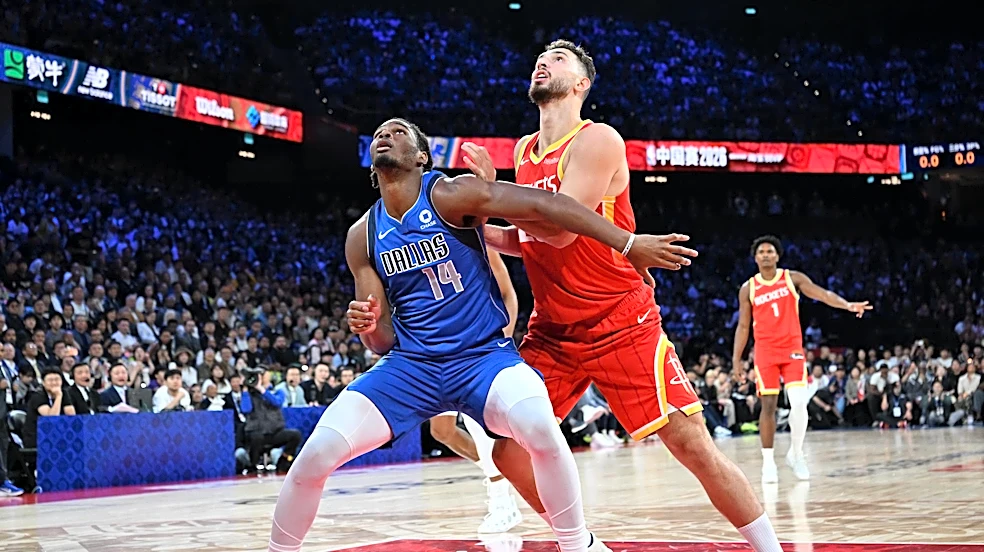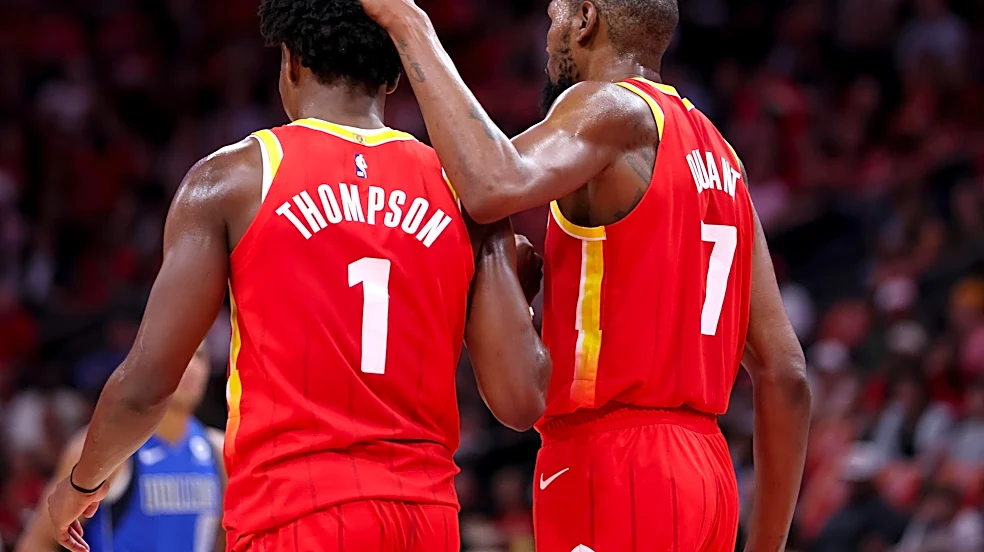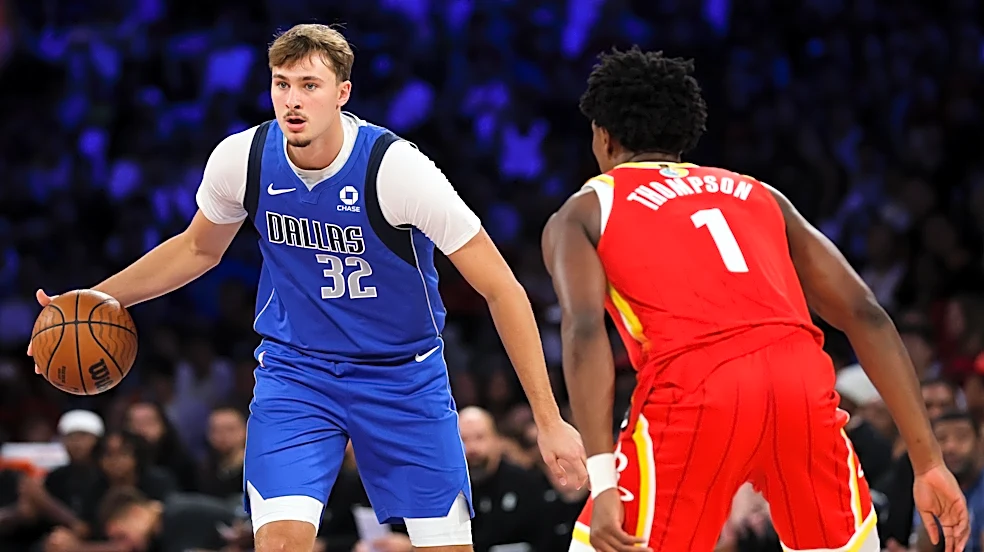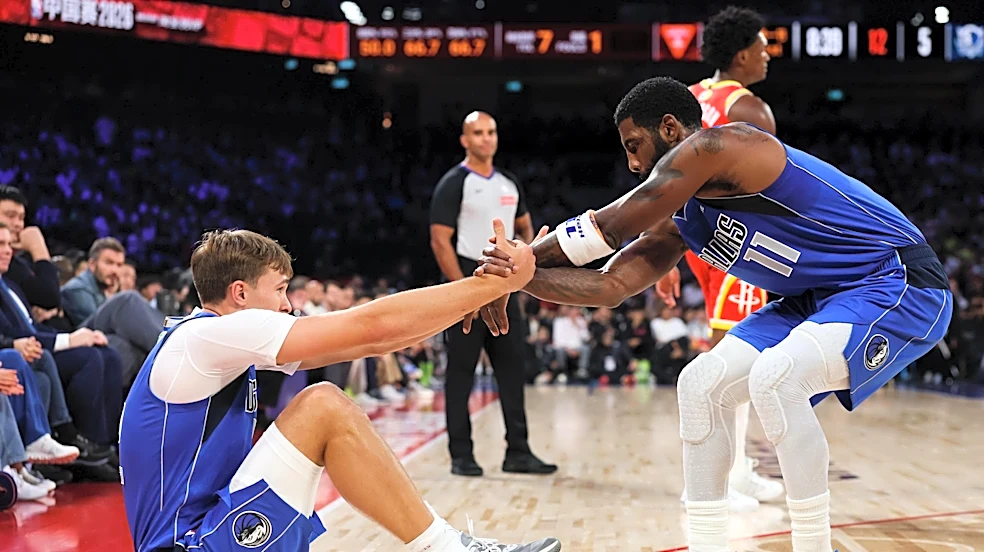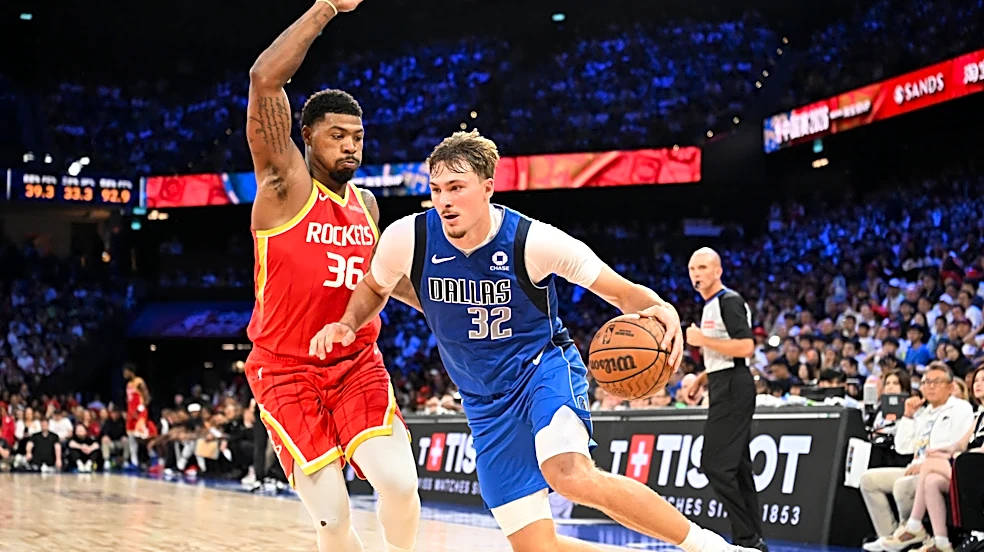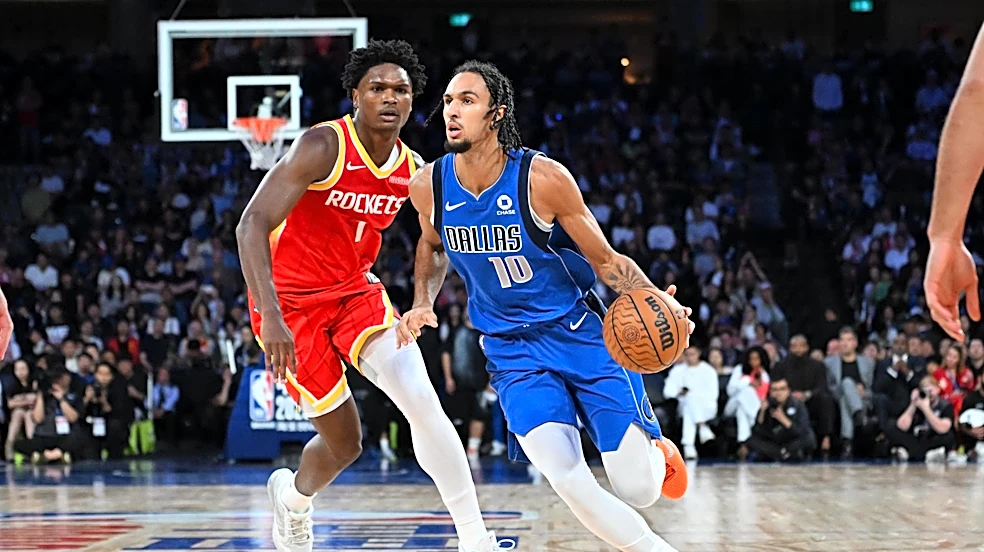


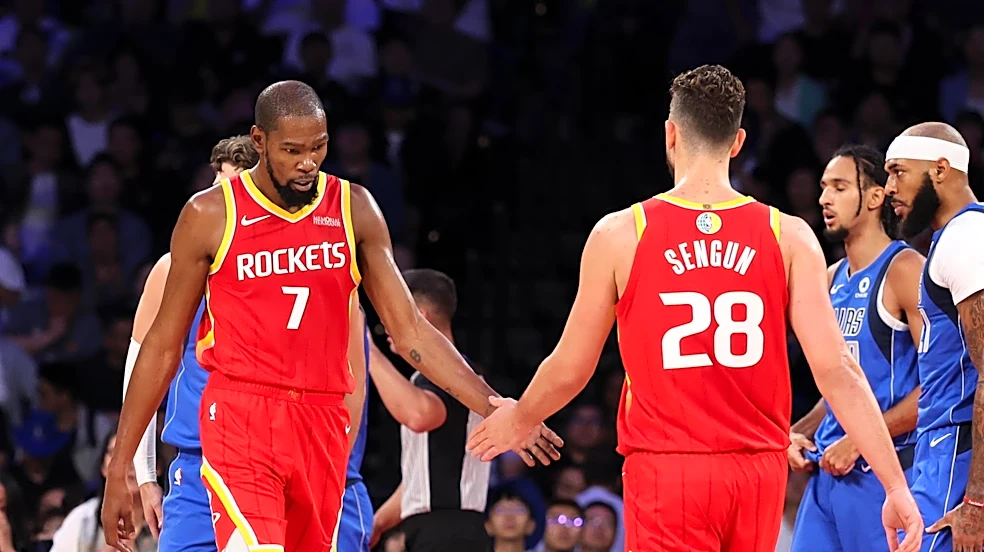
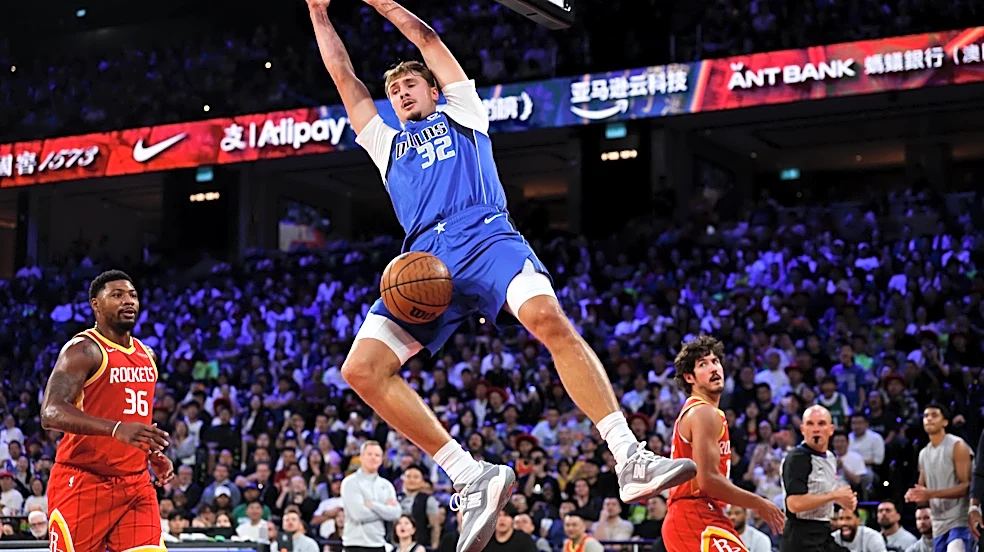

It was a pitiful second-quarter performance that did the Dallas Mavericks (0-1) in on Wednesday in the team’s season opening 128-110 loss at the Houston Rockets (1-0). That much is clear.
Second-year star Cooper Flagg says it’s an identifiable trend, already, even this early in the season. First-year head coach Dusty May said it came in response to the Rockets landing the first punch on offense.
The second-quarter wobble shot the wheels off of the Mavericks’ wagon, but there were also some bright spots.
Flagg had a brilliant second half. Reserve guard Marcus Sasser looked great.
Here’s what May and several Mavericks had to say at the postgame press conference following the season-opening loss.
Dusty May
Opening statement

Well, we were pleased with our first-quarter performance, with the way we played. We felt like we had a couple breaks not go in our favor, and we just didn’t hold our composure, and we let go of the rope as a group. Overall, I felt we played and competed three out of four quarters. Just the second, when we couldn’t figure out a way to right the ship, so obviously some learning experiences from this, but their front line was sensational.
What happened in the second quarter?
A number of things. Obviously, it’s a make-or-miss game. I thought a lot of our looks were guys that we wanted the shots for. Once they went on a run, I thought we started playing a little too quickly and shooting some shots — some semi-open shots instead of getting back, making them work a little bit, finding some connection.
What went wrong with the transition defense, especially in that second quarter?
First and foremost, the communication. Halfcourt and fullcourt — we’ve spent a lot of time — that was one of our priorities in training camp: to fix the transition defense. We thought we had made strides, and tonight, when things weren’t going well, we let go of our principles, we lost our urgency, and that was ultimately when the game got away from us, when they were just — we had three or four guys back, and we were assuming one guy was going to match up with Jabari [Smith Jr.] or whoever. They outworked us, to be honest. They did a better job.
On output from first unit after starting Max Christie instead of Zaccharie Risacher:
I thought the first unit played well. I thought the second quarter is what killed us. Even with that first unit, I thought we were competing. We were playing good basketball. We made some errors, some mistakes. We lost a couple loose basketballs that, you know, we just don’t have the margin for. We’ve got to get all those possessions.
What do you think changed for [Cooper] Flagg at halftime? (23 of 32 points in second half)
I thought he was setting us up. In the first half I thought he was being very intentional with getting his teammates shots, and then, in the second half, we did a better job of getting some off-ball movement. We played a little bit faster, and then obviously if you’re not taking the ball out of the net, you can get it up and attack quickly. I thought that was the biggest difference. We just — our pace got a lot better in the second half.
On Flagg’s ability to get to the free-throw line (11-of-13 FT shooting):
That’s been a point of emphasis, and that’s one thing, when we evaluated ourselves after four [preseason] games, getting to the line wasn’t something we did well. We thought [Flagg] was the best way to capitalize in the paint. I thought he was strong. I thought he made good decisions. When we start knocking down some open shots, his assist numbers will increase.
What was the challenge in trying to slow down [Kevin] Durant and Jabari [Smith Jr.]?
Jabari — every time we gave him an inch, he made us pay. He played very well. [Durant] — he was just able to get to his spots, and he had a size advantage a lot of the night for numerous reasons, but I also thought that just, the way they outran us and stole some easy baskets in transition were the ways they really got in a rhythm and a flow, and they just make you pay.
What do you have to do to bounce back against Indiana on Friday?
Learn from what we did well. I thought we made some strides in areas we’ve struggled in. But just look at the film. The lowest-hanging fruit — what can we fix in a 48-hour period, so we’re not out here chasing every rabbit, but focus on a couple of things so we can just trust it a little bit more. From everybody, we’ll fix that area. … These extra possessions, they steamroll on you, so if we just clean up a few things, I think we’ll make a significant jump.
When is the last time a team of yours was down 30 at half?
Hoo, 30 at half. Yea, I don’t know. I don’t think…
On Kyrie Irving getting nine shots and being blitzed by the Rockets’ defense:
He’s obviously the focal point. They put two on the ball. I thought he made the right plays, the right decisions. There [are] going to be puzzles we’re going to have to figure out. Playing four-on-three with our other guys — we’ve got to do a better job and find some solutions, but I thought there in the second half, he showed a real — his true character — in being a leader when things weren’t going well, I thought he set a great example. Our bench was phenomenal. They were cheering for each other. We’re worried about getting better, especially starting with a couple games on the road like we are. We’re focused on getting better, and I was proud of the way the guys stayed connected and stayed fighting until the end. That showed some character.
Moving forward, how do you balance giving [Flagg] time to develop and allowing [Irving] time to settle in?
Coop — we’re trying to develop by film, by practice tomorrow, by the Pacers game. Obviously, games expedite the development, but we’re trying to play good ball every single possession.
Kyrie Irving

On getting outscored 38-12 in second quarter:
Ah, man, it was just the effort. It was horrendous, to be honest with you. I don’t want to use a graphic word to negatively put it on one person, or even just myself; it was a total team effort. We were just horrendous defensively, and when you score 12 points in an NBA game and give up 38, fast-break points, turnovers, it’s going to look like that, so, it was rough to go through, but I think we needed it. It was necessary for us to grow as a group and to develop this chemistry moving forward that we’re going to need to win basketball games.
Is that an easy fix in practice?
In theory, but it really comes down to effort. We can make an excuse, but we’ve jut got to take this one on the chin. They put on their boxing gloves and they beat us up pretty good in that second quarter. We got off to a great start — felt like we were in rhythm, and then starting off that second quarter, I’ve got to do a better job of leading us out and not necessarily playing so timid and getting some shots up and aggressively attacking double-teams. It surprised me a little bit when [Rockets head coach] Ime [Udoka] threw some double-teams at me, coming off those screens. First game, coming back, I knew I was going to see some different looks. I just got to adjust moving forward.
On being at the top of the Rockets’ defensive gameplan, how do you process that?
Go watch some film, work and get better, but also, you know, I take that respect very personal. Just knowing that, although I’ve been out for a while, they’re still scouting me. [Udoka] was on record saying that he saw me in the summertime as well, going against them a few times, so we were very familiar with each other’s game, but I’ve just got to do a better job of being aggressive starting off the game, and obviously my spotty minutes were, and I don’t want to say spotty minutes, but just the minutes that I was going to play, just got to get used to them. I came out very early in that first quarter. I’m used to playing 12 minutes through, or 11 minutes, 10 minutes through. I’ve got to do a better job just adjusting to what our gameplan is and just getting other guys involved.
The minutes — is that gameplan, or is that getting you ramped back up after missing so much time?
It’s a little bit of both, but I think on the latter side of just getting ramped back up, playing more minutes, getting more confident and more comfortable out there, and you know, we’ve got a great medical staff, but we’ve also had a lot of change there, so it’s a lot of pressure on a few guys in that office, and you know, we all want to make each other look good, so I do my preparation. They have their preparation. We talk. Talk to Dusty. Talk to the coaching staff as well. They had my minutes lined up, and I just got to be ver patient, so I’m just champing at the bit a little bit, but at the same time, it’s the big picture.
On in-game communication with such a young group:
It’s progressively getting better. [Having] a lot of new faces will do that. Guys coming from different teams. We have a lot of guys that want to prove themselves as well, want to play extremely well when they get out there, in those minutes — want to make it meaningful, make it impactful. Sometimes, that comes with forcing some things. It comes with some turnovers that happen [unintelligible]. But I think our communication has to be better, and it will be. But, tonight was a good challenge for us, going against a team that’s played together for a year or two, that came out here and hit us in the mouth, like I said, and we responded, but we didn’t respond well enough. When you’re getting down 30 and you start looking at the scoreboard, instead of hitting a lot of little singles and doubles, we settled for a lot of 3-pointers. Coming into halftime, we can’t have more 3-pointers than we have shot attempts at the rim. We’ve got to touch that paint. … Take our bumps and bruises and we walk.
On offering to pay the fine of Houston Texans linebacker Azeez Al-Shaair, who wore the name of a slain Palestinian child in “stop the genocide” message painted in his eye black last year in a playoff game:
[Al-Shaair] is a friend of mine, and this revolution that a lot of this generation is building — it’s a selfless act when you can show up for others that don’t necessarily have a voice for themselves, and I think we, I would assume that most of us who know what’s happening around the world globally — that it’s a lot of innocent people that are losing their lives. Children especially, and anytime there’s a war or conflict, there’s going to be unfortunate deaths and murders going on, and you know, us here in America, we get the luxury of going to bed at night in nice bedrooms and things paid for. But when our tax dollars are going towards things that we don’t necessarily agree with, then you have to stand up. I think small instances of revolutionary acts like wearing people’s names, or wearing a child’s name [unintelligible] on your face and taking the fine and stepping up to the plate — it just shows how much you’re a selfless person, how much you’re willing to sacrifice. This mission is bigger than just me and Azeez, and we know that, but our strength is in our solidarity, and how connected we are, and how united we are in our efforts. So, it’s a bigger conversation, but anytime you bring in political conversations to basketball, it does get muddy, so I try my best to do the work in silence and stand with people that are not afraid to stand with me.
What impressed you the most about Marcus Sasser’s performance (17 points, 4-of-5 3-point shooting)?
He was ultra aggressive, and I think he did an incredible job of coming in and maintaining our possession-by-possession attack in the second half. We won both quarters. Obviously that’s not good enough, but he had a lot to do with us getting back into the game. Being that other lead guard that can create and make decisions and take some pressure off of myself. Really proud of him. He had a great game — very impactful. We just want him to keep it up.
On being blitzed and trapped in the first minutes of his first NBA game back in more than a year:
The human element hit me, man; I was just like, ‘man, I’m back in an NBA game, and I’m getting double-teamed.’ I’m seeing [Alperen] Sengun come up here and trying to get the ball out of my hands. I’m seeing [Udoka] yell different commands that I’m learning. They’re yelling out things, and it’s just an adjustment period, and there were times where mentally, I was out there, and I just had to settle in and ground myself, like ‘I’m really back in an NBA game, back into the flow of things.’ Even when the ball was tipped and I was guarding Fred [Van Vleet], my body, I felt just a little bit looser than normal. I don’t know what you can really attribute it to. Maybe it is nerves or anxiety or anxiousness, but I think it’s just, more or less, like, the mental approach. Going out there, you just want everything to go right, and tonight, a lot of things did go right, but a lot of things did go wrong, and I think you’ve kind of got to laugh at it, but also the seriousness of being a competitor, Like, I want to play perfect every game, even though it’s dang near impossible. You look around the NBA tonight, it’s a few teams getting their butts kicked, so maybe it is just a Tuesday or Wednesday night in the NBA. Another night in the office, but a lot of lessons learned. Hard lessons. You’ve got to give credit to [the Rockets]. They came out, they made adjustments from our preseason games, and they wanted to make a statement here on their home floor, and they did that.
On Flagg’s comments on trying to get Irving involved in the game:
It’s great recognition by the young fellow, and I want him to continue to do that. But I think he has to worry about being able to be a voice for us out there, and also not necessarily worry about veterans like myself. He’s a caring individual, and I want him to continue that, and I think tomorrow, once we watch film, or once we get to Indy, we’ll talk more about how we can attack together, even in some of our actions together. We cause a lot of chaos when we’re in plays and actions together, and I think we can do more of that, so I appreciate him looking out for me, but you know, it is a great thing that I’ve got my 19-year-old copilot looking out for me, making sure I’m getting going. But I looked at him a few times, and you know, just like, ‘It’s on me. I’ve got to push the pace.’ I’ve got to dive more into the game and just lose myself into the instincts of it, and you know, just live with the results instead of just trying to think about little plays, that ‘I’ve got to go score.’ For the past few years, that’s been the pattern. I get a chance to come into the game, ease my way into it, but now, playing on this minutes restriction or whatever the case may be, I’ve got to be in attack mode soon, as soon as I get the ball, and as soon as the ball is tipped.
On giving back to the community through the Uncle Drew Circuit:
I’m very adamant on setting a good example for the youth, for the next generation. The Uncle Drew Circuit was a step in that direction. Kind of challenging the AAU circuit and what it’s been like for the past 20, 30, 40 years. You know, it’s become very much money-driven. Parents are running coaches into the ground. Everybody’s the No. 1 player in the country in their minds, and I feel like there’e more of a pigeonhole for top players. They all play on the same circuit, so they all play around the same camps, and, you know, at the end of the day, it was very much brand-driven. When I was growing up, you had Nike, Adidas, Under Armor camps, and they all try to keep everybody in-house. But nowadays, I think we should all have an open dialogue about how we bring everybody together. It’s a competitive shoe market, obviously, but when it comes to the youth, we should all lower down our guards a little bit, and that’s what I feel like Uncle Drew Circuit represents. Obviously, Anta is representing it, but you never know, we might have championship games against Jordan Brand or Nike or Adidas, and it just brings everybody together to the table, because people want to see the best of the best, and you also want to include those that are playing the game for the love, and also to get an education, to get a scholarship, You know, people are playing basketball for different reasons, and I feel like that Uncle Drew Circuit represents all walks of life when it comes to that. From the beginners, all the way to some of the experts of the game, some of the top players, you know, I’m looking to attract those individuals as well, and just having a balance and a competitive market. So, I look forward to the opportunity this next year. We’ve got girls as well, from 12 to 18 years old, and we’re all about inclusion. I think it’s more or less just been put on my heart for the last few years, just, how can we engage more of the youth into conversations about playing meaningful basketball and learning the nuances of the game, learning the rules, learning who came before you, learning about the ABA, learning about the NBA, learning about the CBA, learning about the EuroLeague. Basketball is a broader sport now. And I think maybe media has included that as well in terms of just that package that everybody can watch basketball. So, the love is there, and Uncle Drew circuit represents that love.
Cooper Flagg
What happened in the second quarter, getting outscored 38-12?
Got stagnant. They obviously went on a run, and we just didn’t have any answers. We weren’t organized. We weren’t getting back in transition. Just got out of the norm for us, in what we’ve been doing since training camp started, and it showed. People were doing things that they don’t normally do, and it really showed.
How difficult is it to dig out of that hole when it’s so deep, so early?
I mean, it’s difficult. Down, what, 32 at halftime? It’s not ideal. It’s not where you want to be, and honestly, that’s been the thing for us, is second quarters. Like, all preseason, it’s been bad second quarters. Going into the half and trying to come out in the third quarter and dig ourselves out of a hole. We’ve got to find ways to combat that, and have better second quarters, and leave off on a god foot going into the second half.
Assess the communication through training camp and tonight:
Yea, I mean, I think up to this point, in practice it’s been good. It’s died down in the games. You know, we’ve got to find guys, myself included, that you know, are going to pick up our level of communication and be leaders out there. I don’t think we really had that tonight. We didn’t really have anyone who was setting a tone defensively, communicating, getting everybody on the same page. It really showed in that second quarter, when we weren’t getting stops; we weren’t scoring on offense, so we’ve got to have somebody step up and be really vocal in those moments.
Does the second-quarter trend you talked about frustrate you — that the same thing keeps happening?
For sure. Yea, it definitely is. We’ve got to find ways to keep our level up through the first half, into the second half, and not, you know, get lackadaisical in the second quarter, and go into halftime and have these conversations every time of, you know, we’ve got to come out with some fire, and pick up our level. So, we’ve got to find ways to have our level high at all times and be able to be fresh at all times. Hold our level to what we hold our standard to. I think that’s a big part of it. It’s definitely frustrating.
On Marcus Sasser’s performance:
Sasser’s been great. Obviously, he’s dealt with an injury through most of the preseason and a lot of training camp, where he wasn’t able to be full practice. Getting him back, getting into game shape, I think he’ll be really good for us. Obviously he’s a really good scorer — a really versatile scorer, and can pass it, play defense, pick up 94 [feet], so just having him bring that energy and be composed and get into game shape is going to be good for us.
What happened for you in the second half?
Just being aggressive. We had talked about, going into the half, we had shot more 3’s than 2’s, and, you know, that’s ok if you’re making them. But, I mean, we weren’t knocking them down, so just getting to the rim, starting the domino effect of creating advantages, getting downhill and [the Rockets] weren’t over-helping too much, so just taking what they were giving us, getting to the rim and making them pay.
Are you still feeling out who needs the ball in the first half before it’s your time to be aggressive?
It’s just the flow of the game. I think I’ve got to do a better job of in the second quarter, I could have done a better job of getting us set up and being vocal, and being that leader, and getting us set up into actions. It didn’t have to be me taking shots, but just getting us into the right actions, and another thing. We missed a lot of easy shots, too, during that stretch. Things weren’t going well, and we were missing a lot of the easy ones that I think could go in on any given night. Yea, I think being aggressive vs. feeling out is a part of it, but you know, I’ve got to be there, and be that leader and be vocal as well.
What can you take from this game individually, and what can you carry over as a team?
I think just holding our level all the way through the first half, and not letting it dip down with different lineups and things like that. I thought we played some 2-3 [zone defense] tonight, and I thought it looked good, and kind of gave us some energy through the second half. Maybe we experiment with that a little earlier. I don’t know what that looks like, but just experimenting with different things, different lineups, but the bottom line is just playing to our standard and playing to our level that we’ve done all training camp and all preseason. Just got to do a better job of that.
Takeaways from Irving’s first game back?
Kai is Kai. We can do a better job of helping him. I think Kai is a one-of-a-kind talent, so obviously he’s going to be really good for us, and we’ve just got to do a better job, me included, of helping him, getting him some easier looks, getting the pressure off of him. They’re going to just try and be really physical, and just pick up 94 [feet] on me and him, so I think as a team a big thing for us is finding ways to combat that and having some guys step up, bring it up and set us up into actions.
Marcus Sasser
What happened in that second quarter, when you were outscored 38-12?
I left like we just let go of the rope a little bit — let our offense come to determine our defense. Missed a good amount of shots, and it led to them getting easy buckets.
How difficult is it to come back when you dig yourself in a hole that quick?
Yea, it’s tough, man, especially when you get down that big, vs. a good offensive team like that. But I feel like we did a good job, for the first game, just fighting back. Not letting up. We’ve got some work to do, but I feel like we did alright.
How does the Rockets’ length affect players like you and [Irving], who are under 6’6”?
They’re a good, long team, so you’ve just got to use your ball fakes and be decisive with what you’re doing. Use your speed, but I feel like we did a good job of doing that, for sure.
How would you rate your play overall?
I feel like I played alright. I feel like I could have played better defensively. Especially impacting the ball more. I feel like they [were] a little comfortable getting into their sets and stuff, so I feel like I could have done better there, for sure.
On Flagg and Irving flipping a switch in the second half:
That’s what they do. They’re great players, and I feel like that’s what we’re going to need going forward, so that just gives us a confidence boost, especially when them two got it going, it kind of makes it easier for everybody else.
Your own mindset switch from second quarter to second half?
Just being ultra-aggressive. I passed up a couple shots in the first half, so just trusting myself, and my teammates kept giving me confidence to shoot the ball, so that was the difference between [the] first and second [halves].