








The College World Series final is here, and the MLB Draft is not far behind it.
That combo made me ask a simple Rockies question: Are there any players in Omaha this weekend who could soon be wearing Rockies purple?
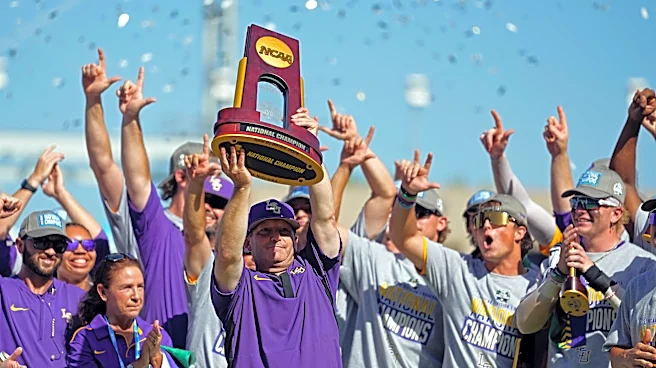
North Carolina and Oklahoma open a best-of-three championship series tonight — Saturday, June 20 — at 5 pm MDT at Charles Schwab Field in Omaha, Nebraska.
Game 2 is scheduled for Sunday, June 21, and Game 3, if necessary, would be played Monday, June 22.
The 2026 MLB Draft is scheduled for July 12-14 in Philadelphia as part of All-Star Week festivities. The Rockies currently hold six picks in the first 200 selections: No. 10, No. 37, No. 38, No. 76, No. 104 and No. 136.
Colorado’s 2026 draft picture starts at No. 10, but none of the players taking the field in Omaha this weekend are expected to be in that conversation.
The top of the 2026 class is generally centered around names such as Roch Cholowsky, Grady Emerson, Vahn Lackey and Jackson Flora, all of whom have spent much of the year near the top of public draft boards. Those players are not part of this championship series.
That does not mean there is no draft relevance in Omaha. The Rockies have multiple picks after the first round, and several players in this matchup could reasonably fall into the range where Colorado will be selecting. Teams build a lot of organizational depth in this part of the draft, and a few of the more interesting names are wearing North Carolina or Oklahoma uniforms this weekend.
Owen Hull, OF, North Carolina
Baseball America rank: No. 73
MLB.com rank: No. 158
Potential Rockies selection: No. 76, with No. 37/No. 38 becoming a possibility if the helium keeps building
Owen Hull is one of the more recognizable draft names in this series, and his profile starts with a pretty clear player type: a left-handed hitting outfielder with center-field experience, plus speed and a contact-oriented bat.
On the 20-80 scouting scale, MLB.com grades Hull with a 50 hit tool, 45 power, 60 run, 45 arm, 50 field and 45 overall. That lines up with the statistical profile. This is not a huge raw-power outfielder, but there are enough contact, athleticism and center-field traits to make the profile interesting.
Baseball America has Hull at No. 73, while MLB.com has him at No. 158, but his stock appears to be moving closer to the higher end of that range. Hull has already been discussed as a possible second-rounder, and with some mocks pushing him up to the 58th overall pick.
Hull will turn 22 in July, so he is not a young prospect, but he has hit everywhere. Across 636 career college plate appearances between George Mason and North Carolina, Hull has hit .374/.484/.575 with a 1.059 OPS, 41 doubles, five triples, 17 home runs and 62 stolen bases. He also has 92 career walks against 97 strikeouts.
This season, Hull has hit .398/.506/.614 with 26 doubles, eight home runs, 47 walks and 44 strikeouts in 310 plate appearances. That is more walks than strikeouts, a 14.2% strikeout rate and plenty of extra-base contact without selling out for power.
MLB.com noted his physicality, plus speed, improved power and strong postseason run in a recent look at draft prospects gaining momentum in Omaha. The swing questions and age caveat are real, but the production, athleticism and center-field experience make Hull an interesting fit once the Rockies get past their first few picks.
The roster-fit is the question. If Cole Carrigg and Sterlin Thompson — or Zac Veen (No. 9 PuRP), Jared Thomas (No. 5 PuRP), Max Belyeu (No. 15 PuRP), Roldy Brito (No. 11 PuRP) — are part of the next Rockies outfield mix, Hull may not line up as neatly with the depth chart, and Colorado’s bigger organizational need is probably on the mound.
That should not take him off the radar, especially if the bat keeps pushing him up boards, but it is part of the conversation.
Jason DeCaro, RHP, North Carolina
Baseball America rank: No. 90
MLB.com rank: No. 125
Potential Rockies selection: No. 76, No. 104 or No. 136
Jason DeCaro is one of the more interesting pitching names in this series for Colorado.
The public rankings put DeCaro more naturally around Colorado’s No. 104 or No. 136 picks, but that range may be moving up (a common theme). Baseball America recently mocked DeCaro at No. 65.
The appeal is the starter profile. DeCaro is just 20 years old on draft day, but already has a three-year track record in North Carolina’s rotation. He has a durable 6-foot-5, 225-pound frame and works with a four-pitch mix: fastball, curveball, slider and changeup. The fastball is not overpowering, usually sitting in the low 90s, but it has been up to 97 mph and can generate weak contact with its shape and running life.
The secondaries give him more ways to work through a lineup. His curveball is generally viewed as the best of the group, with solid depth and enough upside to miss bats when he lands it. He also throws a low-80s changeup with fade, a slider and enough feel to sequence his mix instead of relying only on velocity.
In 2026, DeCaro has a 2.28 ERA with 84 strikeouts, 38 walks and a 1.28 WHIP over 87 innings. The strikeout rate is solid rather than dominant, and he does not project as a huge swing-and-miss arm right now. But the workload, age, run prevention and rotation track record point toward a starter candidate.
The Rockies need starting pitching, and the future of Colorado’s rotation is murky. DeCaro does not have overwhelming stuff, but he checks several starter boxes: size, age, workload, pitchability and a full arsenal.
His delivery and pitch mix are worth a look on video.
Jake Schaffner, SS, North Carolina

Baseball America rank: No. 91
MLB.com rank: No. 91
Potential Rockies selection: No. 76 or No. 104
Jake Schaffner is a clean middle-board fit, and the more you look at the profile, the more interesting it gets.
Both Baseball America and MLB.com rank Schaffner No. 91, which puts him directly in the Rockies’ No. 76/No. 104 window. Baseball America also recently mocked Schaffner at No. 75, one pick before Colorado’s fourth selection.
Like Hull, Schaffner appears to be moving up boards. The public rankings still place him in the 90s, but recent mock-draft placement suggests teams may be higher on him than that.
The profile is built around contact, speed and defensive reliability. Schaffner hit .352/.467/.551 with six home runs, 19 doubles, 47 walks, 30 strikeouts and 28 stolen bases this season after transferring from North Dakota State to North Carolina. That is a 9.3% strikeout rate in 324 plate appearances, which is hard to ignore.
The larger track record backs it up. Across 813 college plate appearances, Schaffner owns a .353/.448/.486 line with 37 doubles, 13 triples, nine home runs, 89 walks, 95 strikeouts and 60 stolen bases.
The swing helps explain the numbers. Schaffner has a short, compact left-handed stroke, and he does not have much wasted movement. He is not trying to sell out for power, and the approach shows up in the strikeout totals. This looks more like a contact, line-drive and gap-power bat than a home-run profile, but there is value in that if the hit tool carries into pro ball.
The defensive question is the arm. Schaffner has the actions, athleticism and reliability to handle shortstop now, but multiple reports note that his arm strength could push him to second base or third base in pro ball. For the Rockies, that may not be a bad outcome. Colorado needs a second baseman, and Schaffner’s profile could fit there.
Schaffner is probably not a future superstar, but there is a little “ballplayer” quality here: low strikeouts, good at-bats, defensive value and enough athleticism to impact the game without needing one loud carrying tool.
He will probably get drafted by the Brewers.
Other options in the Rockies’ pick range
A few other players from the matchup show up on public boards as possible middle-round options.
Ryan Lynch is the highest-ranked arm in this group, with a low-slot fastball/slider foundation and some reliever risk. Camden Johnson is a corner-infield bat, while Brendan Brock’s value depends partly on whether he can stay behind the plate.
Jaxon Willits hit .305/.400/.505 with seven home runs, six triples, 17 doubles, 37 walks, and 51 strikeouts this season at Oklahoma. He is a switch-hitting infielder with approach, some power growth, and a possible second-base fit. It is also worth mentioning that Willits is the older brother of 2025 No. 1 overall pick Eli Willits. The Rockies took Ethan Holliday (No. 2 PuRP) at No. 4 in the 2025 draft.
LJ Mercurius is a later-range Oklahoma arm with a fastball that can touch 97 mph, a slider/changeup mix and enough starter background to be interesting. The question is whether the command points him toward a rotation or a relief role.
Future names to file away
The 2026 draft names are the focus, but some of the higher-end talent in this series may be in future classes.
For North Carolina, Caden Glauber is the big one. The freshman right-hander has gone 11-0 with a 2.13 ERA and 103 strikeouts over 84 ⅔ innings. Sawyer Black, an outfielder, is another UNC underclassman to remember.
Oklahoma has two freshman arms worth tracking in Cord Rager and Xander Mercurius. Rager is a 6-foot-6 left-hander who has already played a major role in the Sooners’ postseason run. Mercurius, LJ’s younger brother, is a longer-range right-handed arm with future draft intrigue.
So, will any of them become Rockies?
There is no way to know. Draft boards move, bonus-pool strategies matter and teams do not always line up with public rankings.
But one thing is certain: there will be plenty of good baseball this weekend (and maybe Monday) in Omaha.
North Carolina is led by Hull, DeCaro and Glauber, while Oklahoma has a deep roster led by Brock, Willits and the Mercurius brothers. Schaffner, Lynch, Johnson, Gallaher, Rager and others add more names to know across the two rosters.
Maybe one of them eventually becomes a Rockie. Maybe none of them do.
Either way, there are real future pros in this series, the national championship is on the line and the draft conversation is just warming up.
On the Farm
Triple-A: Albuquerque Isotopes 9, Sugar Land Space Cowboys 3
The Albuquerque Isotopes beat the Sugar Land Space Cowboys 9-3 on Thursday night, improving to 38-35 while Sugar Land fell to 31-41. Albuquerque never trailed, got a long first-inning homer from Zac Veen (No. 9 PuRP) and broke the game open with a five-run fifth.
Veen supplied the first swing. After Charlie Condon (No. 1 PuRP) walked with two outs in the first, Veen jumped a first-pitch 90.6 mph fastball from Josh Hendrickson and crushed it to right field. The ball left the bat at 104.4 mph and traveled 455 feet for Veen’s 11th home run of the season and a 2-0 lead.
Evan Shawver got the rare start and allowed two runs in the second, but Eiberson Castellano stopped the inning by striking out Shay Whitcomb on an 83.9 mph curveball below the zone. Castellano gave Albuquerque 4.1 innings, allowing two hits, one earned run and four walks while striking out six. He improved to 2-0 with a 0.87 ERA.
The Isotopes put the game away in the fifth. Veen singled, Chad Stevens followed with another hit, and Nic Kent drove both home with a triple to right. Ryan Ritter added another triple later in the inning, lining a 96.5 mph ball into the right-center gap for his first triple of the season and two more runs.
Veen finished 2-for-5 with a home run, two RBI and two runs. Ritter went 1-for-3 with a triple, two RBI, two walks and a stolen base, while Kent added two hits and two RBI. Mickey Moniak went 0-for-5 in his second rehab start and is 0-for-8 through two games with Albuquerque. John Brebbia, TJ Shook and Seth Halvorsen each threw a scoreless inning to finish it out.
Double-A: Reading Fightin Phils 4, Hartford Yard Goats 2
The Reading Fightin Phils beat the Hartford Yard Goats 4-2 on Thursday night, improving to 29-38 while Hartford fell to 38-28. Reading built an early lead, and Hartford’s offense did not get much going until Conner Capel’s two-run homer in the seventh.
Jake Brooks gave Hartford length, but took the loss after allowing four runs on nine hits over seven innings. He walked two, struck out three and allowed one homer, with his ERA moving to 4.17. Reading scored once in the first, once in the third and twice in the fourth before Brooks settled in and finished seven.
The Yard Goats’ only real swing came from Capel, who hit his 12th home run of the season in the seventh with one on and one out. The homer cut the deficit to 4-2, but Hartford did not score again. Bryant Betancourt had one of Hartford’s better offensive nights, going 1-for-3 with a walk. Aidan Longwell also reached twice with a hit and a walk, but the Yard Goats finished 0-for-2 with runners in scoring position and left six on base.
High-A: Vancouver Canadians 12, Spokane Indians 5
The Vancouver Canadians beat the Spokane Indians 12-5 on Thursday night, improving to 28-39 while Spokane fell to 29-38. Spokane had 12 hits and a three-run homer from Ethan Hedges (No. 29 PuRP), but Vancouver kept adding on and finished 6-for-14 with runners in scoring position.
Jordy Vargas (No. 21 PuRP) took the loss, allowing five runs on five hits and four walks over four innings. He struck out five, but Vancouver made him work and pushed across runs in the second, third and fourth before breaking the game open later against the bullpen.
Hedges gave Spokane its biggest swing in the third. With Max Belyeu (No. 15 PuRP) and Roynier Hernandez aboard, Hedges hit his fifth home run of the season to left-center field, tying the game 3-3. He finished 3-for-5 with three RBI. Spokane added two more in the fifth after Vancouver had pulled ahead 9-3. Jack O’Dowd brought in Belyeu with a sacrifice fly, and Alan Espinal followed with a sharp single to center to score Hedges. That was as close as the Indians got. Spokane went 2-for-8 with runners in scoring position and left eight runners on base. Vancouver finished with 12 runs, 13 hits, two homers and 12 RBI.
Vancouver did most of its damage against Francis Rivera, who allowed five runs, three earned, over three innings. Tyler Hampu finished the game with two innings, allowing two runs while striking out five.
Single-A: Inland Empire 66ers 16, Fresno Grizzlies 4
The Inland Empire 66ers beat the Fresno Grizzlies 16-4 on Thursday night, improving to 29-38 while Fresno fell to 36-31. Inland Empire scored seven runs in the fifth and four more in the sixth, turning a manageable early deficit into a blowout.
Angel Jimenez started for Fresno and took the loss, allowing six runs on five hits and one walk over 4.1 innings. He struck out six and gave up Dervy Ventura’s two-run homer in the second, but the game got away in the fifth after a hit batter and back-to-back doubles from Aiden Taurek and Cesar Quintas.
Bryson Van Sickle followed and had a rough inning, allowing eight runs on seven hits and three walks while recording three outs. Grif Hughes gave Fresno its cleanest inning, striking out two in a perfect ninth. By then, the game had already been decided. Inland Empire finished with 16 runs, 16 hits and seven extra-base hits.
Fresno’s offense had moments, but not enough to keep up. Kyle Fossum singled in Tanner Thach in the fourth, and the Grizzlies added three more in the ninth on a bases-loaded walk to Cameron Nelson, an Ashly Andujar (No. 20 PuRP)groundout and a Luis Mendez infield single. Nelson went 2-for-4 with a walk and an RBI, Carlos Renzullo had two hits, and Mendez added a hit, a walk and an RBI. Fresno went 2-for-10 with runners in scoring position and left nine runners on base.
Rockies Cole Carrigg and Kyle Karros thriving, thanks to their buddy system | denverpost.com ($)
In this Denver Post piece, Patrick Saunders writes about how Cole Carrigg and Kyle Karros have arrived in Colorado with different personalities but a shared history that has helped both settle into the majors. Carrigg brings the “hair on fire” energy, while Karros offers the calmer counterweight, and the two have leaned on that balance since their climb through the Rockies’ system. Their friendship now gives the Rockies’ young roster a built-in support system at the big league level.
As Condon heats up in Triple-A, could he be nearing a call-up? | MLB.com
In this MLB.com piece, Thomas Harding writes about Charlie Condon’s recent surge at Triple-A Albuquerque and whether it could move him closer to a Rockies call-up. Condon entered Friday with a .343/.425/.971 slash over his previous nine games, with six home runs, four walks, 16 RBI and triples in back-to-back games. The article also frames his development beyond the bat, noting his recent work in right field and Paul DePodesta’s emphasis on making sure prospects have a solid foundation before reaching the majors. The big question is less whether Condon is forcing his way into the conversation and more whether the Rockies can create enough playing time when the big league roster gets healthier.
Weekly Pebble Report: Cam Nelson is finding his footing with the Rockies in Fresno | purplerow.com
In this week’s Pebble Report, Eli Whitney looks at Cam Nelson’s emerging offensive profile in the lower levels of the Rockies’ system. Nelson’s patience is the carrying tool, as he leads the California League in walks and ranks near the top of the league in on-base percentage. The piece also traces Nelson’s path from Wake Forest to Fresno and frames him as a player whose value comes from getting on base, scoring runs and fitting a clear role.
Join the conversation!
Sign up for a user account and get:
- Fewer ads
- Create community posts
- Comment on articles, community posts
- Rec comments, community posts
- New, improved notifications system!
Please keep in mind our Purple Row Community Guidelines when you’re commenting. Thanks!